Coffee Culture in Vietnam: Strong and Slow drip
Well, first of all, without any exaggeration, coffee is just about everywhere in Vietnam, and I love coffee. Anytime anywhere!

Fun fact: Vietnam is the world's second-largest coffee exporter behind Brazil.
Coffee has a relatively recent history in Vietnam, only arriving in 1857 when a French Catholic priest introduced an Arabica tree. Initially, coffee cultivation was concentrated in the north and central regions but soon spread across the country. The introduction of Robusta and Excelsa coffee by French colonists in 1908, particularly in the central highlands, marked a significant shift in Vietnamese coffee production.
Today, Vietnam is predominantly known for its Robusta coffee, with the Central Highlands, especially the Da Lat region, serving as a major cultivation area.
By the late 1990s, Vietnam had emerged as the top coffee producer in Southeast Asia and the second-largest globally, trailing only Brazil. In the present day, Vietnam's coffee industry primarily focuses on Robusta beans, contributing around 20 percent to global coffee production and 40 percent of the world's Robusta beans.
In Vietnam, drinking coffee is a social pastime and a chance for bà tám, a phrase that loosely translates to "gossip." Very similar to our pastime with Chai and Adda.
Traditionally, coffee is brewed in individual portions using a phin filter, which consists of a small cup, a filter chamber, and a lid that also functions as a container to catch dripping cups of exquisitely aromatic black coffee. Watching the coffee, drip by drip, forces you to slow down, sit for a few minutes, and savor the moment.
Vietnamese coffee took off when they started mixing in sweetened condensed milk with their strong dark roast, creating that killer iced coffee everyone loves. Even though Robusta beans (which they mostly use) are high in caffeine but not as fancy as Arabica, that condensed milk trick turned their coffee from just a pick-me-up into something pretty awesome.
Types of Vietnamese Coffee
Vietnamese coffee isn't just about black or sweetened versions. There's a whole world of unique coffee-based drinks to try out there. Before diving into the exotic stuff, make sure you've had a taste of the classic Cà Phê Sua Dá, the famous Vietnamese iced coffee.
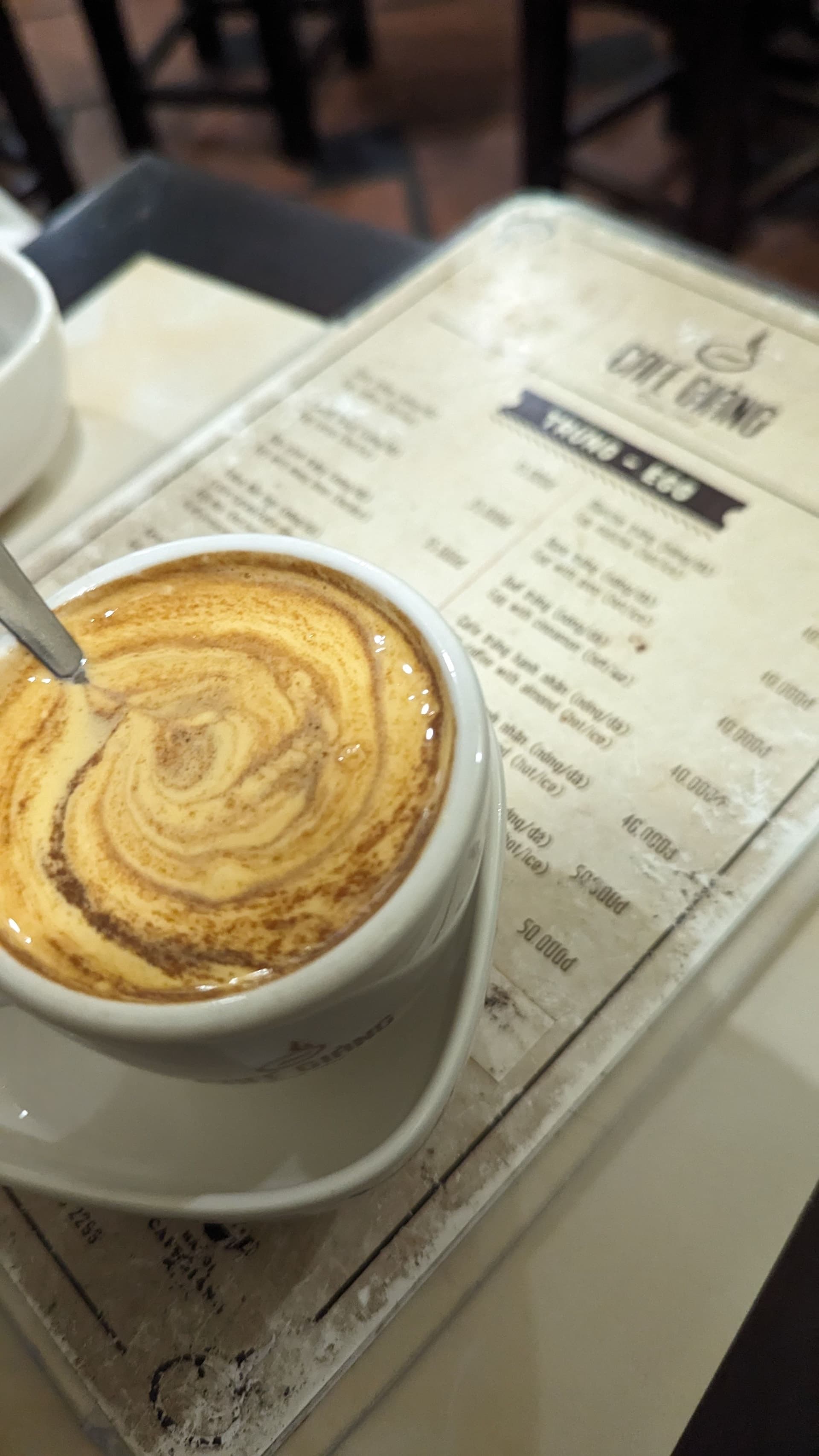
Then, there's egg coffee. It's been buzzing online lately. Instead of milk, you get this creamy mix of whipped egg yolk and sweetened condensed milk, combined with traditional Vietnamese coffee. It's like a cappuccino with a sweet, foamy twist.
Coconut coffee is another hit, especially in Hanoi. It's like a coffee-meets-coconut smoothie – sweet, strong, and perfect for summer.
And don't miss out on salt coffee. Coffee and salt (cà phê and muoi) are both strong flavors but they lead the mind in opposing directions: surely they couldn't go together. But, as is so often the case in Vietnam when it comes to flavors, salt coffee just works. This was common in Central Vietnam but not much in the north. So do try it out in Hoi An or Da Nang.
Each of these drinks offers a whole new way to enjoy Vietnamese coffee!
Leave a Note at The Note Coffee
One cafe that deserves a special shoutout is The Note Coffee. This charming little spot has a unique twist – customers are encouraged to leave a handwritten note on colorful sticky paper, which then becomes part of the decor. Picture this: a three-story building where every inch of the wall is a mosaic of vibrant notes. It's a whole experience in itself!


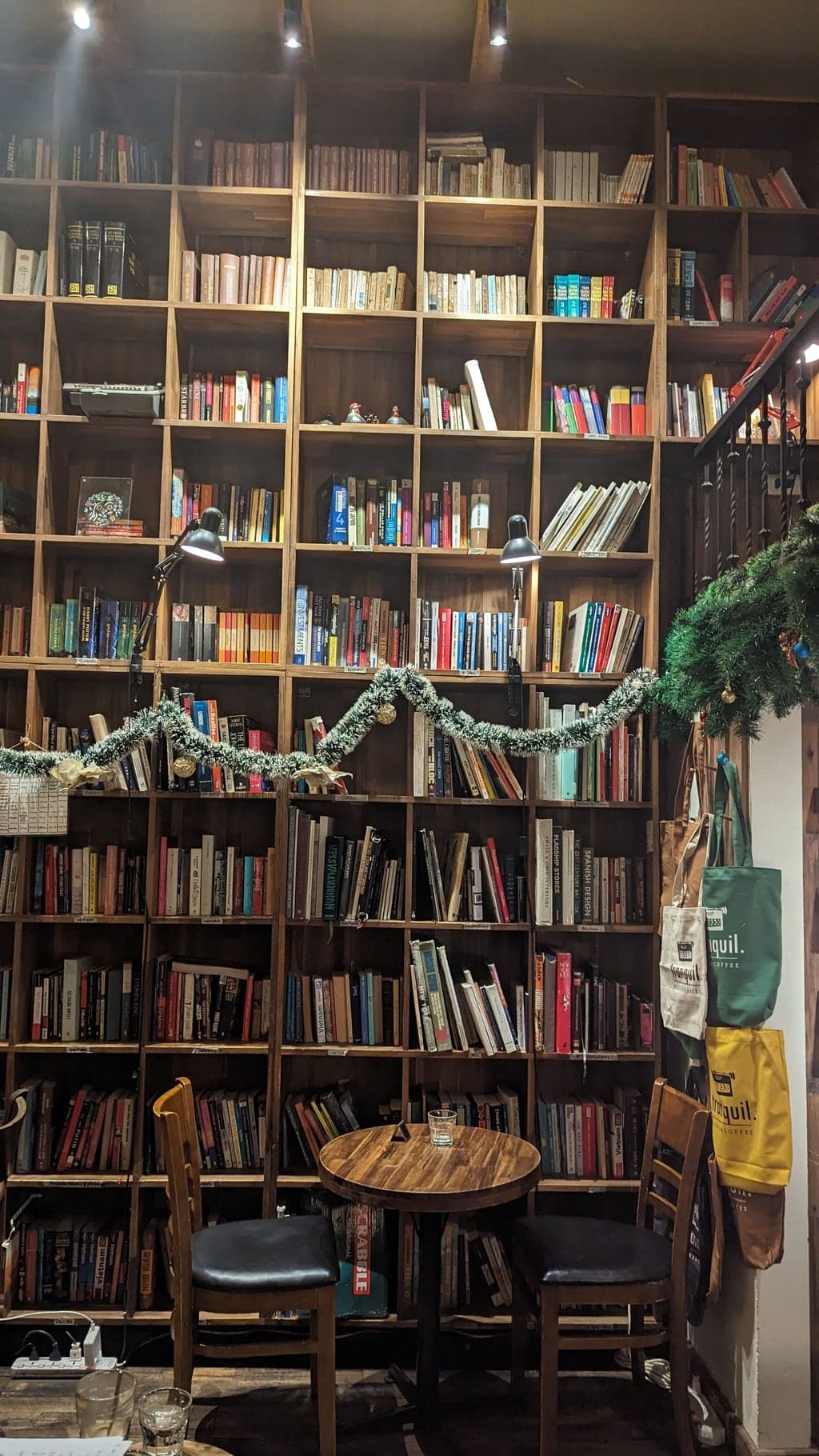
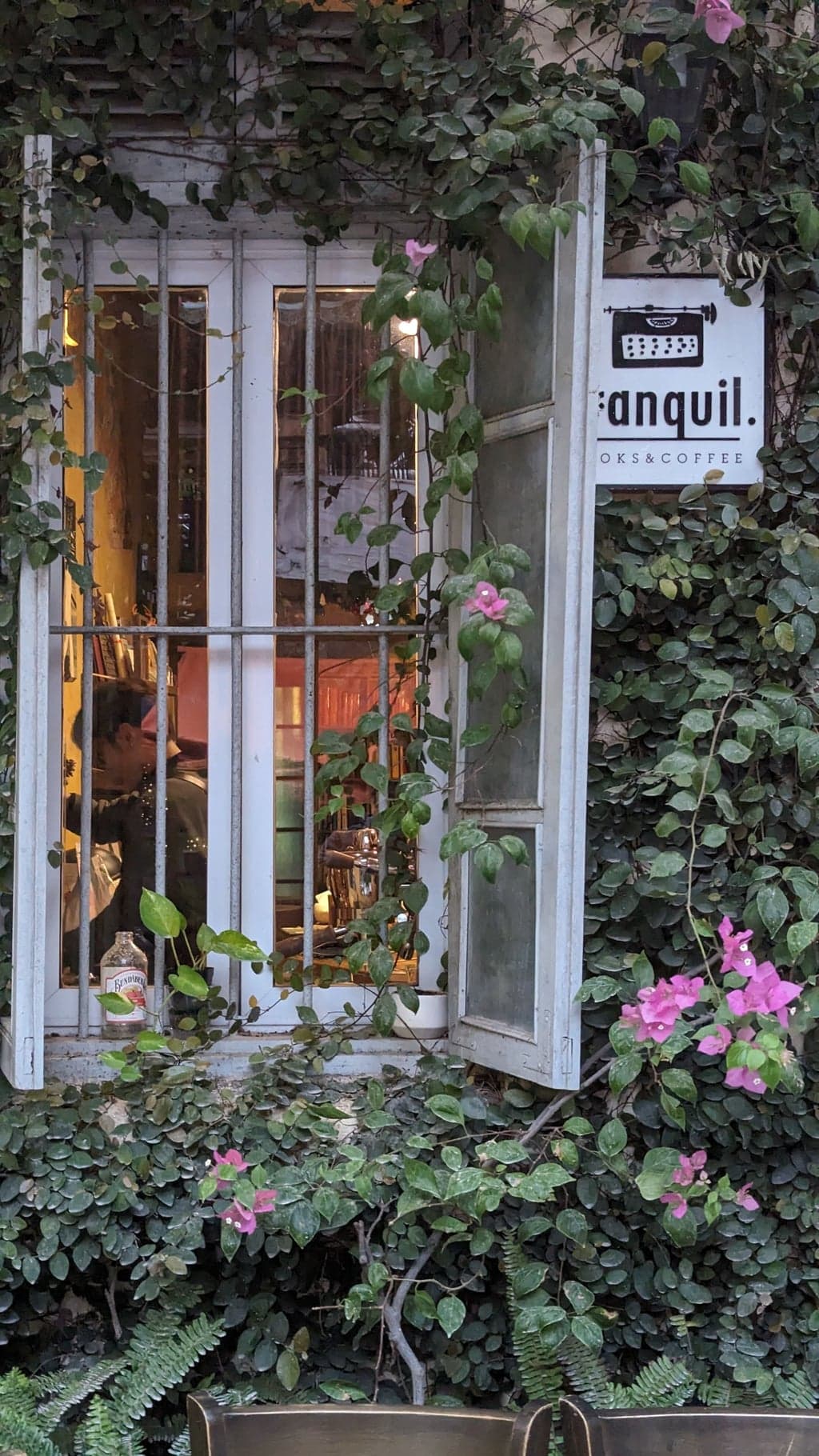
Read a book at the Tranquil Books & Coffee
This was one of my all-time favorite cafes in Vietnam. It's an escape from the hustle and bustle of Hanoi — a proper independent bookshop-café with floor-to-ceiling shelves, a gentle buzz, and coffee that doesn't rush you out the door. The kind of place you find yourself staying in for two hours longer than planned.


The OG Ca Phe Trng at Cafe Giang
Tucked away in a narrow lane of Hanoi's Old Quarter, Cafe Giang might look unassuming, but its bustling atmosphere tells a different story. Famous for its ca phe trung or egg coffee, this cafe owes its fame to Nguyen Van Giang, its inventor in 1946. As a barista at Hanoi's first five-star hotel, Giang created this unique beverage during a milk shortage by substituting egg yolks for milk. Whipped with sugar and combined with coffee, this concoction is sweet, frothy, and packs a punch, reminiscent of eggnog or a liquid tiramisu.

Wrapping up our coffee journey in Vietnam, it's clear that here, coffee's way more than just a drink. It's a part of life, mixing old traditions with cool new twists. From the busy lanes of Hanoi to chill spots like The Note Coffee, every cup's got a story. Whether it's kicking back with a classic iced coffee or getting adventurous with egg coffee, Vietnam's got a brew for every mood and moment. So, here's to the rich, diverse world of Vietnamese coffee – a real slice of the local vibe!
If the coffee has you curious about the rest of the food scene, our Vietnam food guide covers everything from the best Banh Mi stalls to a dinner at a local family's house in the Hoi An countryside. And for the full trip, see our 10-day Vietnam itinerary.
Photos from Coffee Culture in Vietnam: Strong and Slow drip
Related Galleries

Destination Guide
Vietnam Slow Roads
From Hanoi's street corners to Hoi An's lantern-lit lanes — a slow travel guide to Vietnam. Where to base yourself, when to go, and what to read before you arrive.