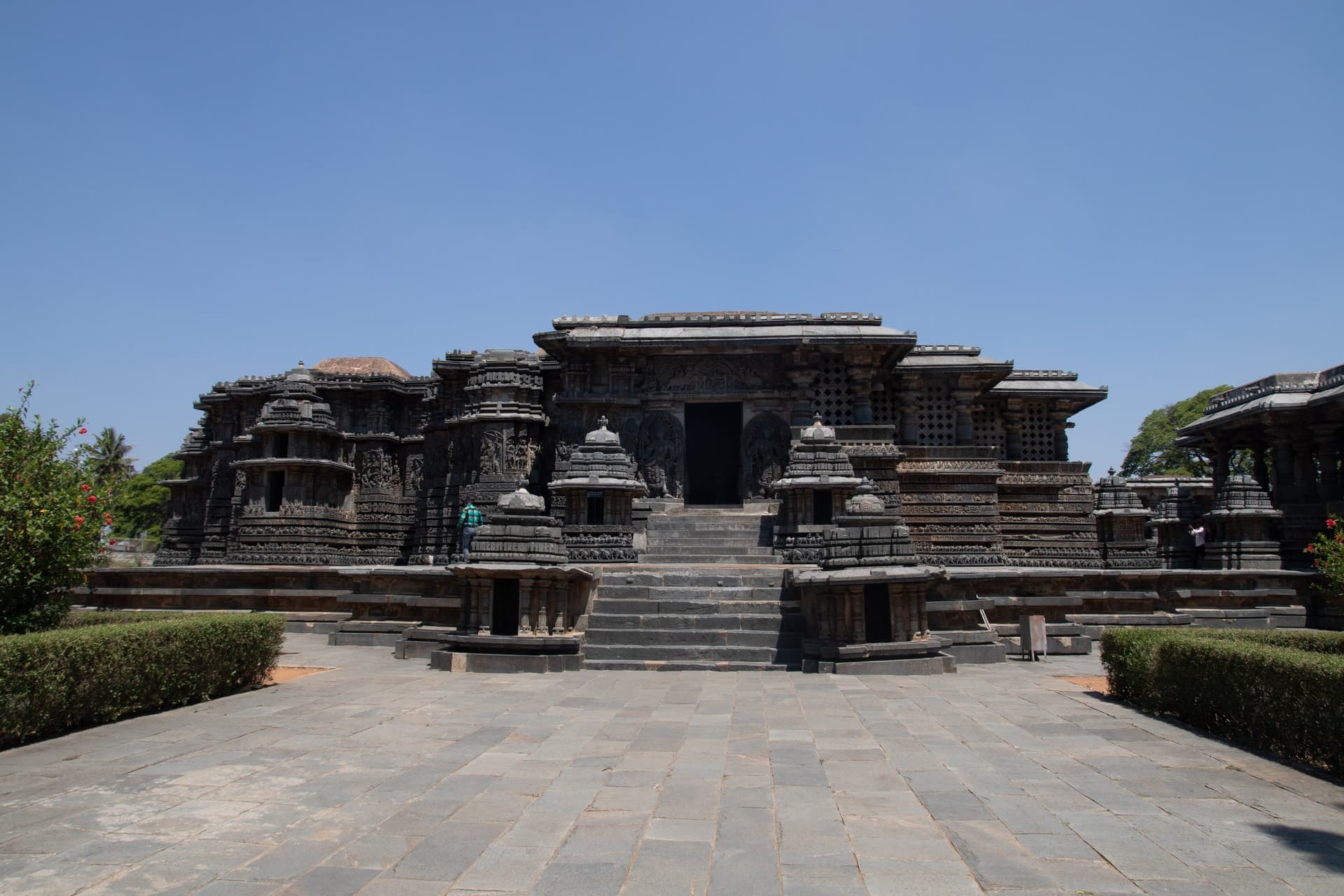
Halebidu and Belur: Experiencing the Twin Jewels of Hoysala Architecture | Roadtrip from Bangalore
A heritage-focused road trip from Bangalore, best paired with Chikmagalur
Quick Answer
Halebidu and Belur are two 12th-century Hoysala temples located just 16 km apart in Karnataka.
When traveling from Bangalore, they are best visited together and easily combined with a Chikmagalur trip, offering one of South India's most rewarding heritage road journeys.
There's a question that comes up often when planning a cultural road trip in Karnataka:
Halebidu or Belur?
It sounds reasonable. Time is limited. Distances add up. Chikmagalur already promises misty hills and coffee estates.
But this question misses the point.
Halebidu and Belur are not alternatives.
They are companions.
Barely 16 kilometers apart, these two temple towns together reveal the full artistic ambition of the Hoysala dynasty—a dynasty that treated stone not as structure, but as narrative.
If you're driving from Bangalore, especially to Chikmagalur, visiting only one of them feels like stopping halfway through a sentence.
Halebidu and Belur Pair Perfectly with Chikmagalur
What makes Halebidu and Belur especially easy to plan is how naturally they fit alongside Chikmagalur.
With both temples located within an hour's drive, they don't feel like separate destinations that need their own trip. Instead, they slot neatly into a Chikmagalur itinerary—whether you're already there for coffee estates or planning a short getaway from Bangalore.
Bangalore → Chikmagalur → Belur → Halebidu → Bangalore
- Bangalore to Chikmagalur: ~240 km | 5–6 hours
- Chikmagalur to Belur: ~25 km | 45 minutes
- Belur to Halebidu: ~16 km | 30 minutes
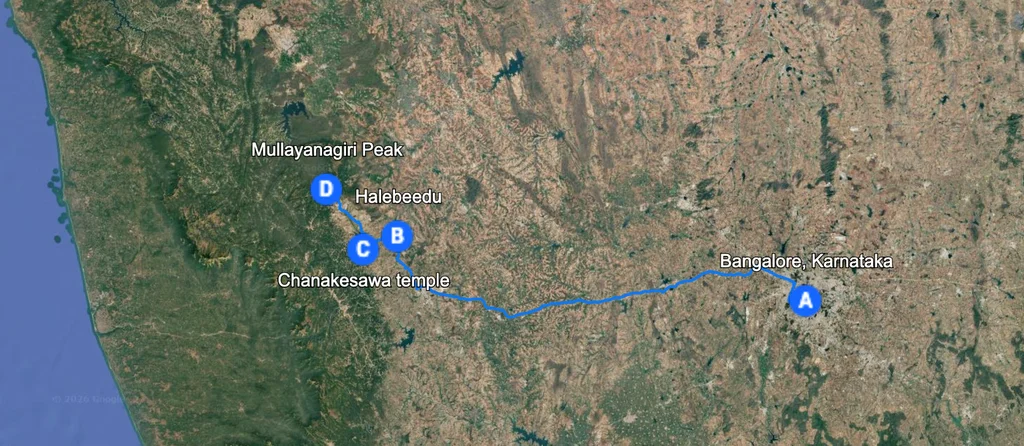
Many travelers also add Belur and Halebidu as a half-day heritage circuit while staying in Chikmagalur. The distances are short, the drives are relaxed, and there's no sense of rushing between places.
Chikmagalur adds variety to the trip—nature and downtime alongside history—without complicating logistics. It turns what could be a single-purpose temple visit into a more rounded, satisfying journey.
On our trips through this region, we make it a point to always stop at Halebidu — not just for the architecture, but for the time it allows you to slow down.
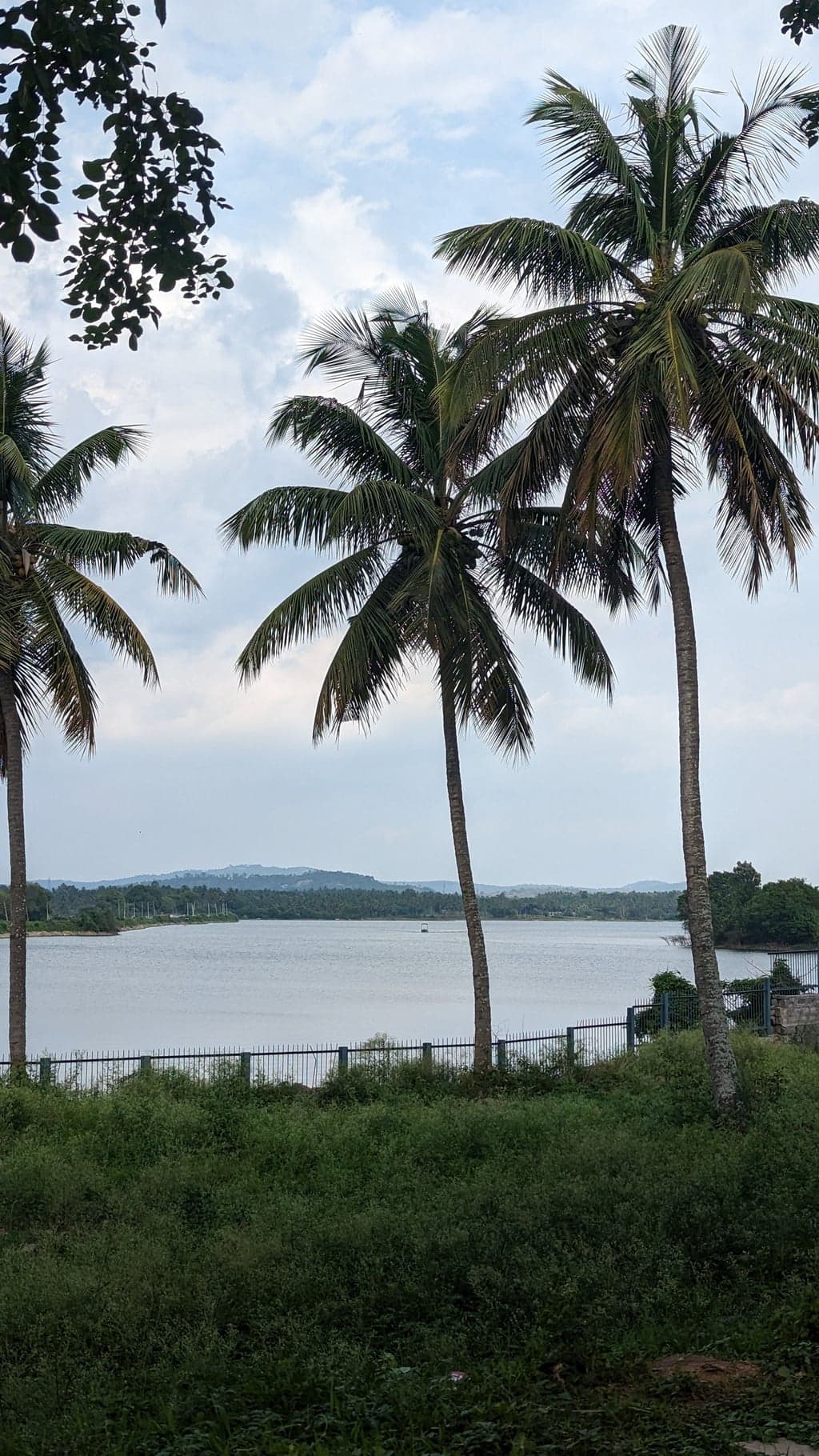
Halebidu works best when you don't rush it. A couple of hours here feels unhurried and complete. Time to walk around the temple more than once. Time to sit by the lake nearby, watching the temple change character as the light shifts. Time to return to a carving that caught your eye earlier and notice something you missed the first time.
Halebidu: Where Detail Takes Over Time
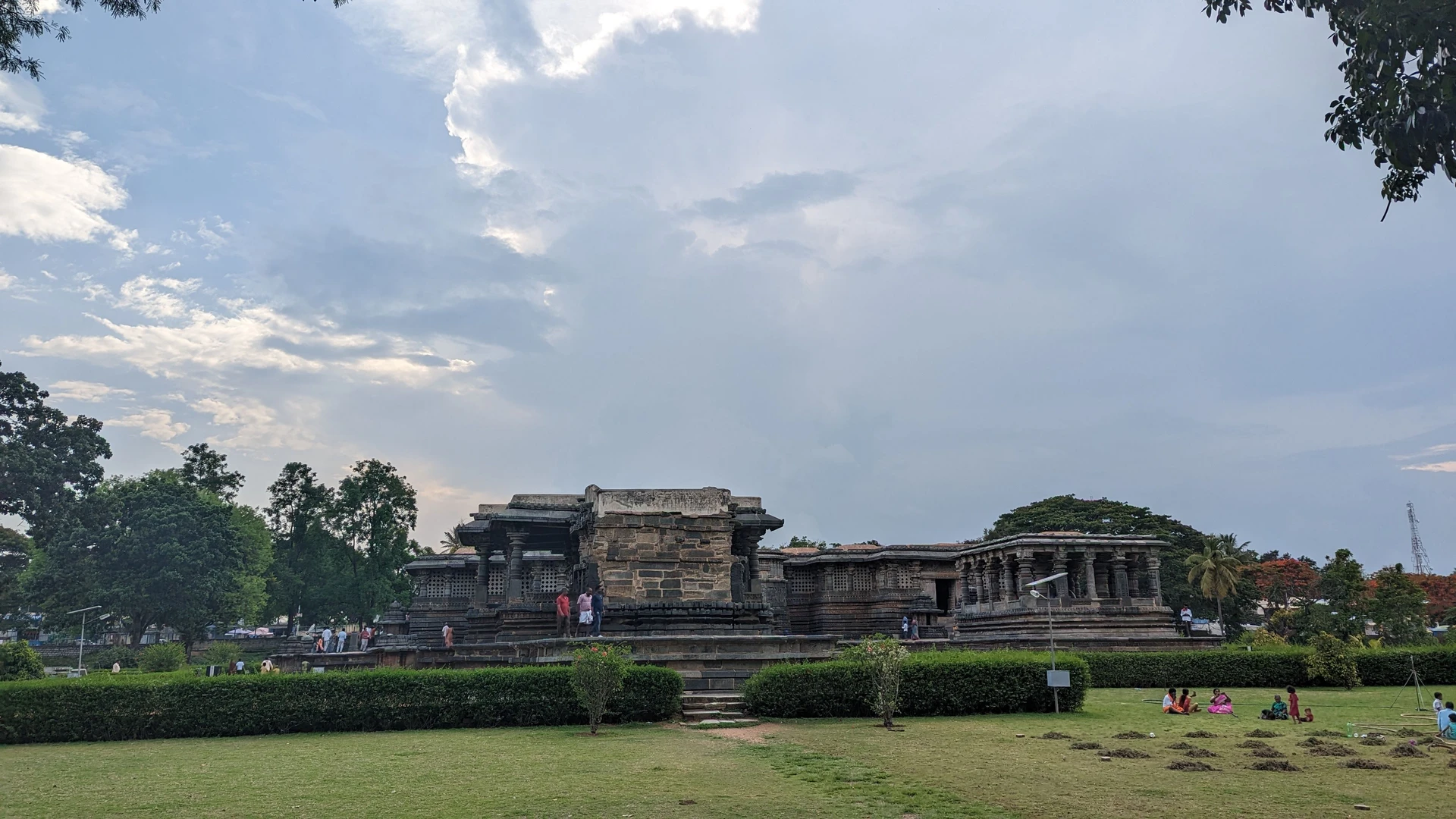
At the Hoysaleswara Temple, the first thing you notice isn't scale.
It's density.
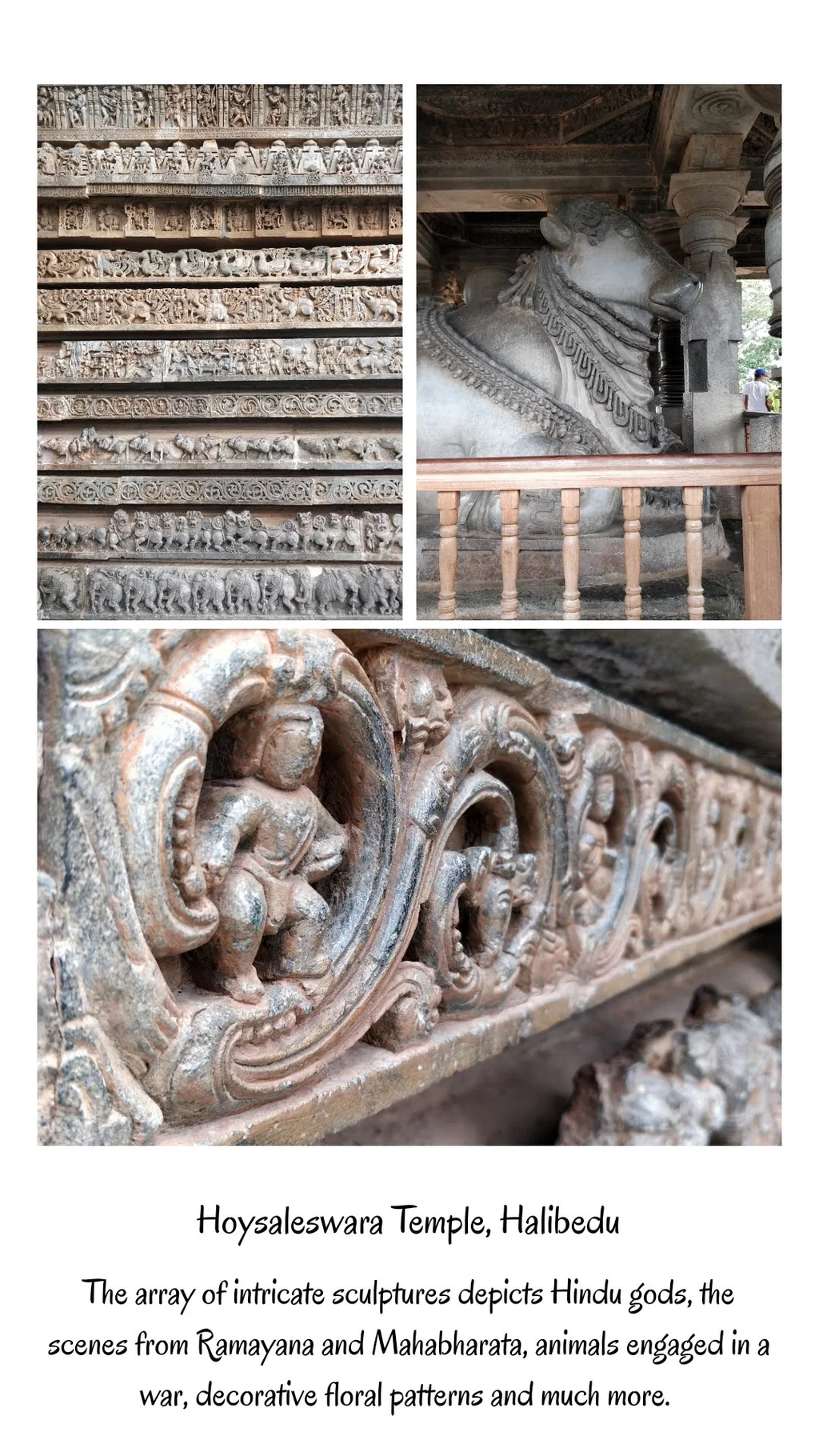
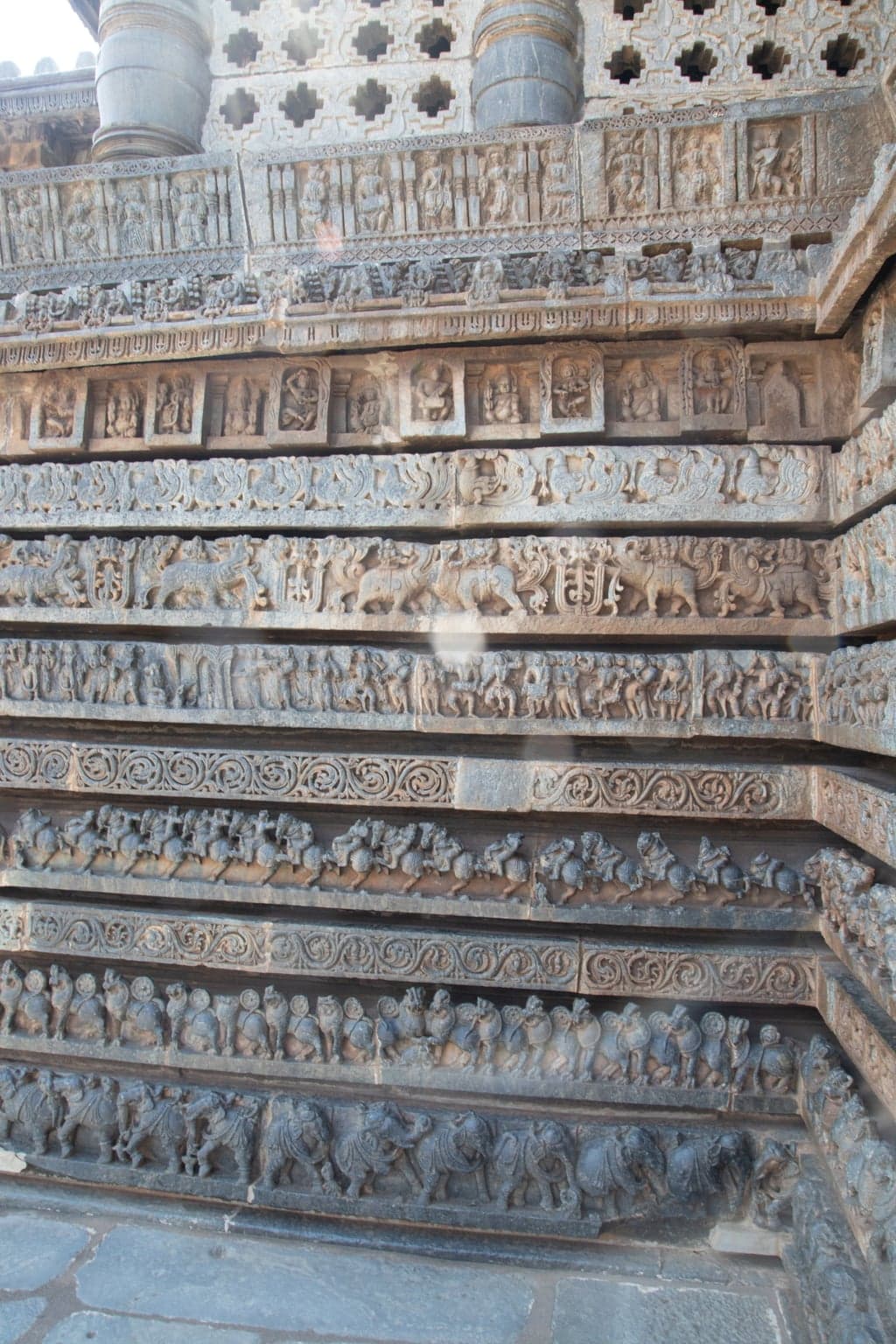
The outer walls are packed with life—processions of elephants at the base, horses charging above them, mythological scenes layered one over another. Gods, dancers, warriors, animals—none repeated, none rushed.
This isn't a temple you "see."
It's a temple you circle, pause at, and slowly decode.
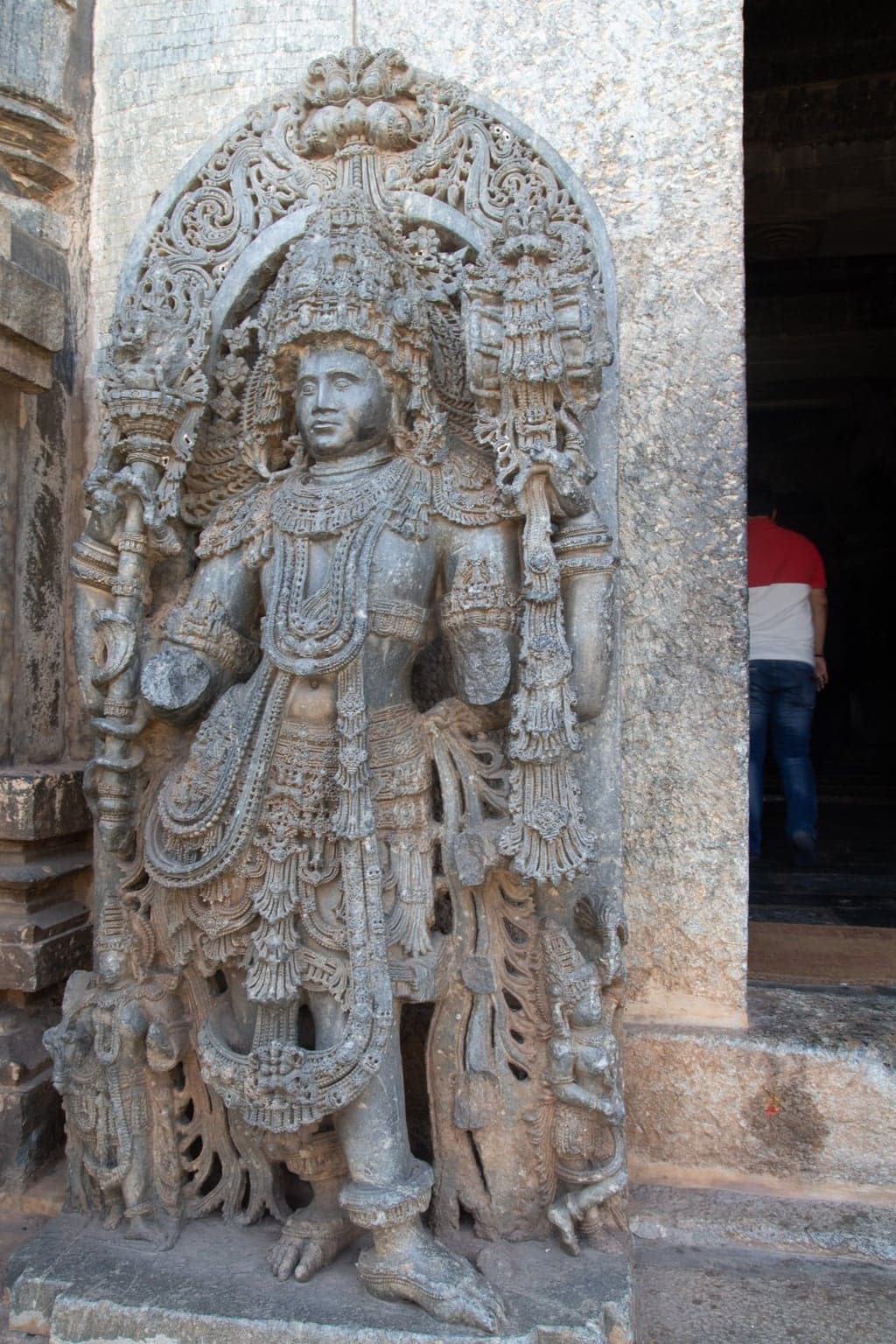
Halebidu feels inward-looking. Almost private. The crowds are thinner, the pace quieter. You begin to notice the micro-details—facial expressions, jewelry patterns, slight variations in posture.
It's easy to imagine artisans spending decades perfecting work most visitors might miss in seconds.
Halebidu rewards patience.
The longer you stay, the more it gives.
Quick Facts: Halebidu (Hoysaleswara Temple)
- Built in: 12th century (c. 1121 CE)
- Commissioned by: King Vishnuvardhana
- Primary deity: Lord Shiva (twin shrines)
- Material used: Soapstone
- Architectural style: Mature Hoysala
- Famous for: Dense narrative friezes and sculptural detail
- Ideal time to spend: 1–1.5 hours
- Crowd levels: Generally low
Belur: Where Grandeur Makes a Statement
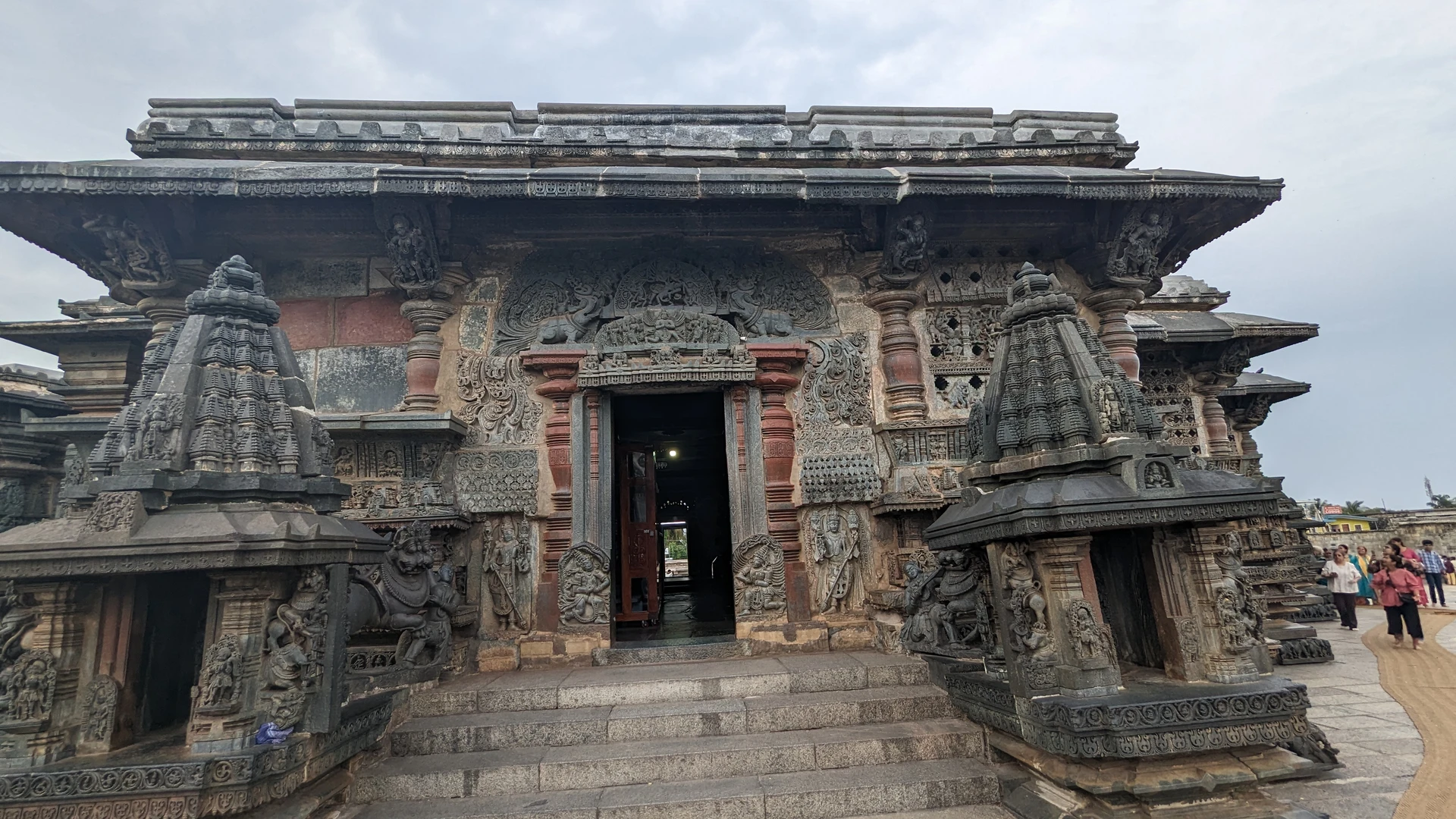
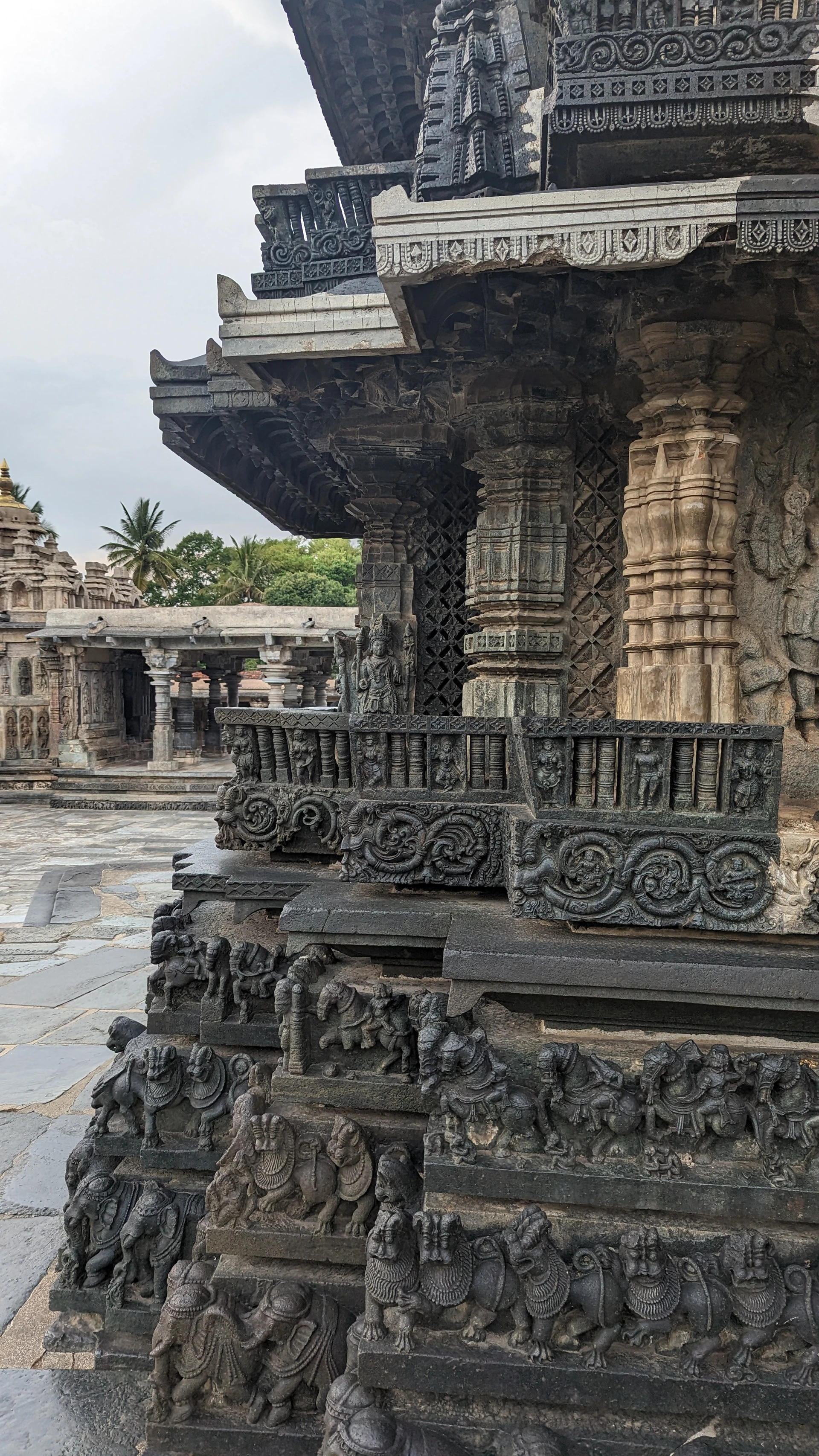
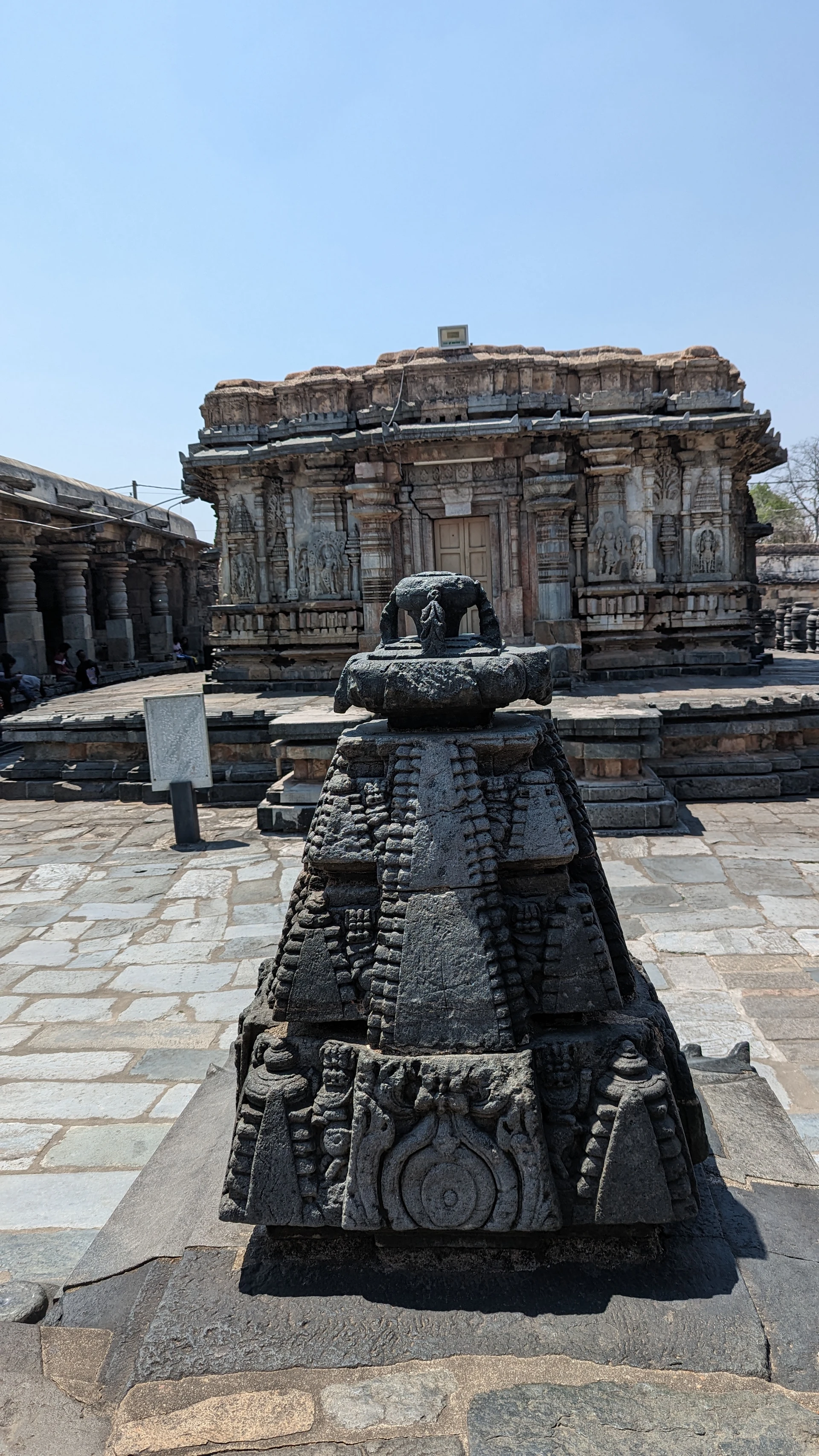
Belur feels different from the moment you enter.
The Chennakesava Temple stands tall, open, and confident. Built to commemorate a military victory, it announces the Hoysala dynasty's arrival on the imperial stage.
Here, the carvings feel composed.
The famed madanikas—celestial dancers carved on brackets—capture movement with extraordinary grace. Hair mid-sway. Anklets frozen in rhythm. Jewelry etched with surgical precision.
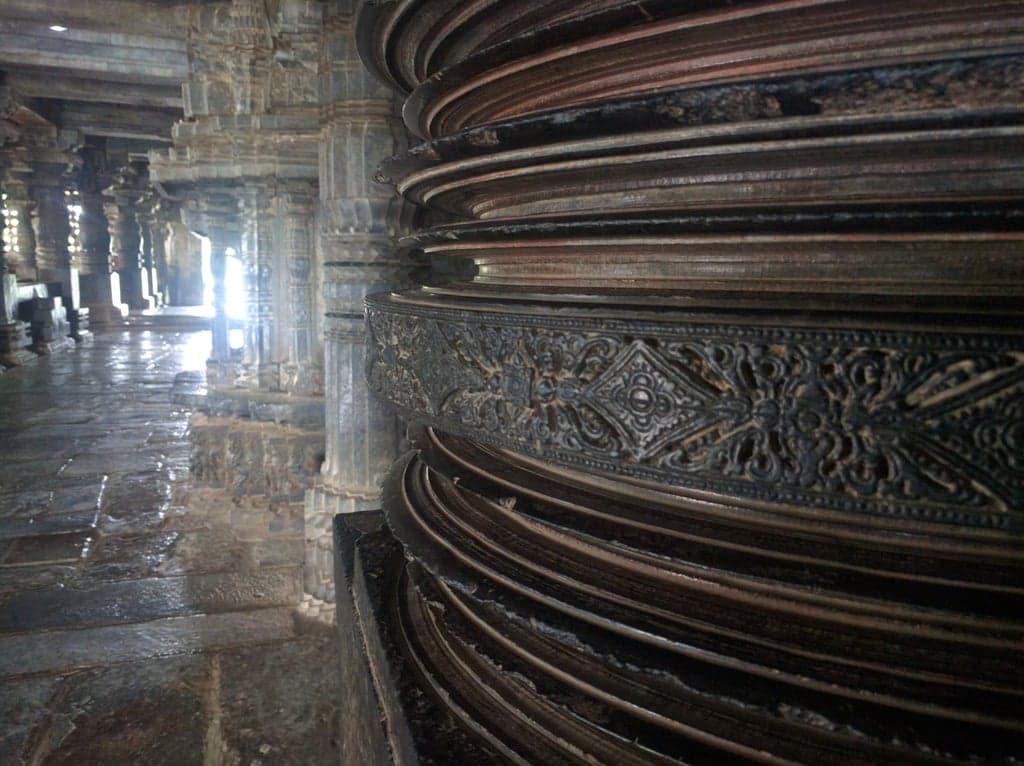
Inside, the polished pillars reflect light softly. Space feels intentional. Ceremonial.
Where Halebidu pulls you close,
Belur asks you to step back and admire the whole.
Quick Facts: Belur (Chennakesava Temple)
- Built in: 1117 CE
- Commissioned by: King Vishnuvardhana
- Primary deity: Lord Vishnu (Chennakesava)
- Material used: Soapstone
- Architectural style: Early–mature Hoysala
- Famous for: Madanikas, lathe-turned pillars
- Ideal time to spend: 45 minutes to 1 hour
- Crowd levels: Moderate to high
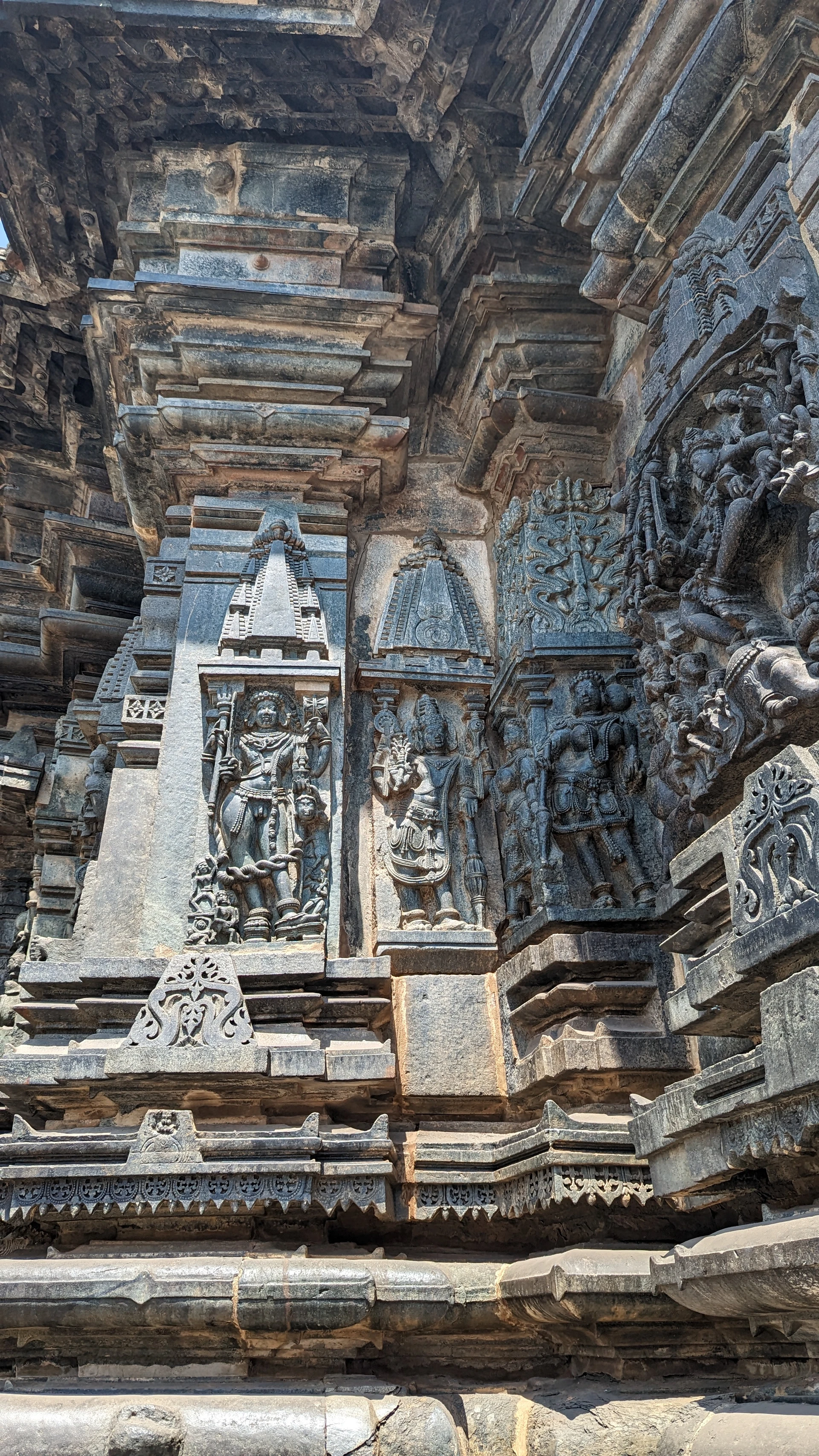
Two Temples, One Story
Seen together, Halebidu and Belur stop being monuments—and start becoming a conversation.
- Halebidu is obsessive, intimate, inward
- Belur is celebratory, confident, outward
One whispers.
The other declares.
Together, they show the full emotional range of Hoysala architecture—devotion and ambition, meditation and announcement.
Quick Tips for the Road & the Temples
- Visit Belur first, Halebidu second
Belur eases you in. Halebidu demands depth. - Try to explore in the golden hours
Morning light brings out carving depth and avoids peak crowds. - Hire a local guide (even briefly)
A short explanation unlocks symbolism you'd otherwise miss. - Wear comfortable footwear
You'll walk, circle, pause, and stand for long stretches. - Photography tip
Exterior carvings photograph best in angled light; interiors are dim. - Don't compress both into an hour
These aren't checkbox monuments. They're slow experiences.
Final Thought
Halebidu and Belur don't ask to be compared.
They ask to be experienced together.
From Bangalore, paired with Chikmagalur, they form one of Karnataka's most complete heritage road trips—quiet, profound, and endlessly rewarding.
Visit both.
Let them finish each other's sentences—etched permanently in stone.
Want to see the carvings up close? The Hoysaleswara photo essay goes deep into the outer frieze — thirty photographs from multiple visits, with the friezes read bottom to top.
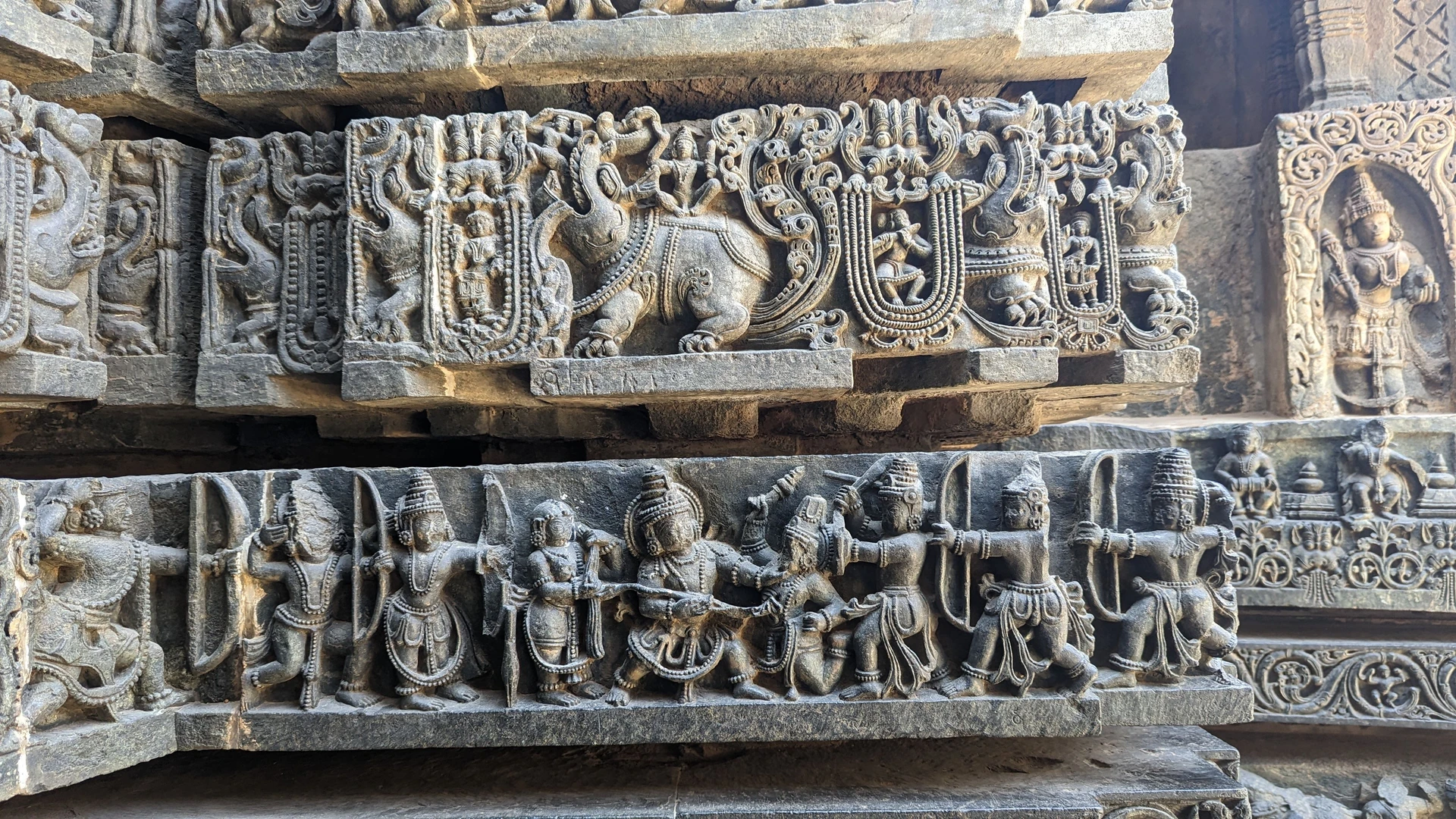
Photos from Halebidu and Belur: Experiencing the Twin Jewels of Hoysala Architecture | Roadtrip from Bangalore
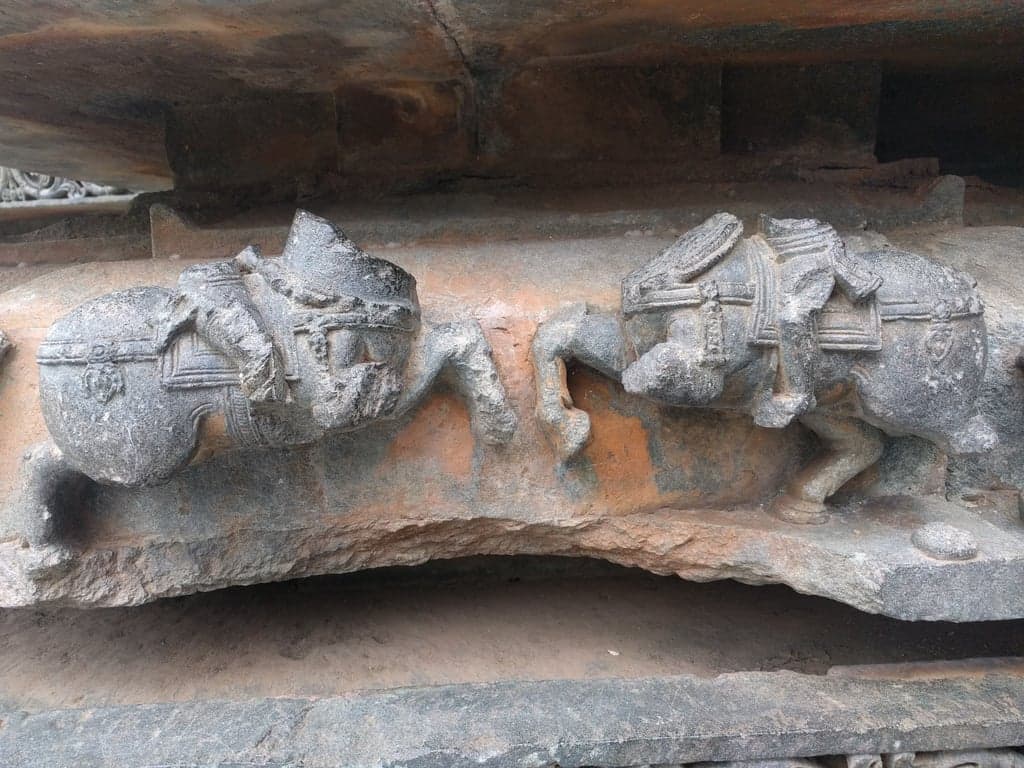
Beauty in Ruins: The Broken Charge of Halebidu
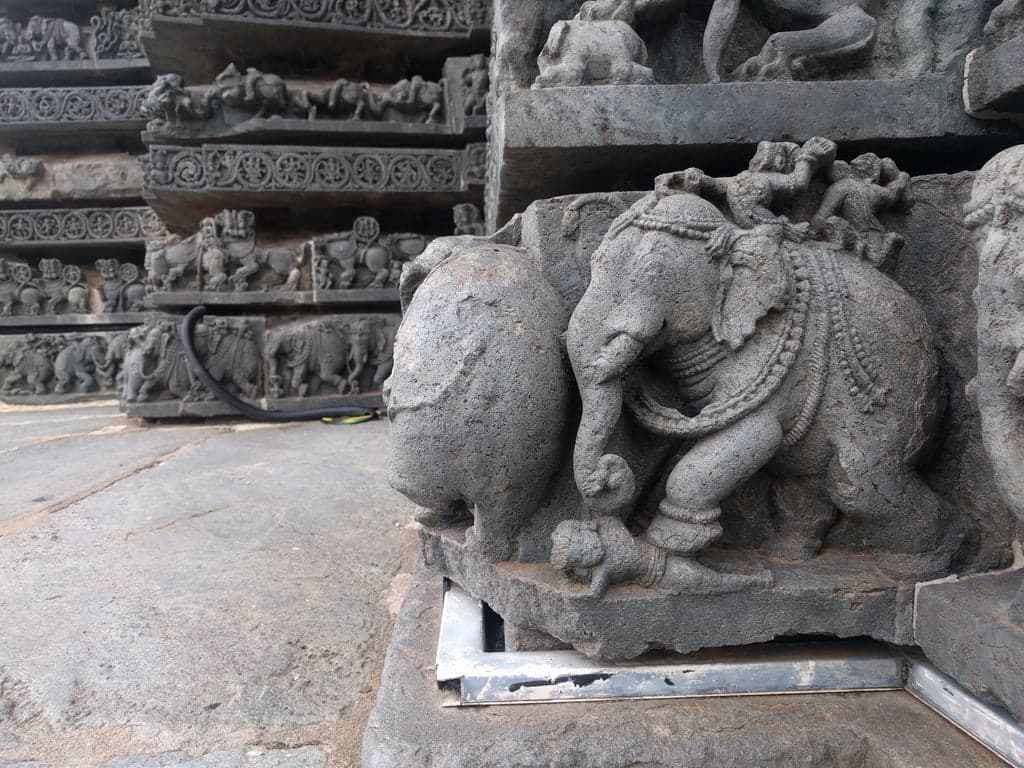
Hoysaleswara Temple: Unfinished Exterior, Full View
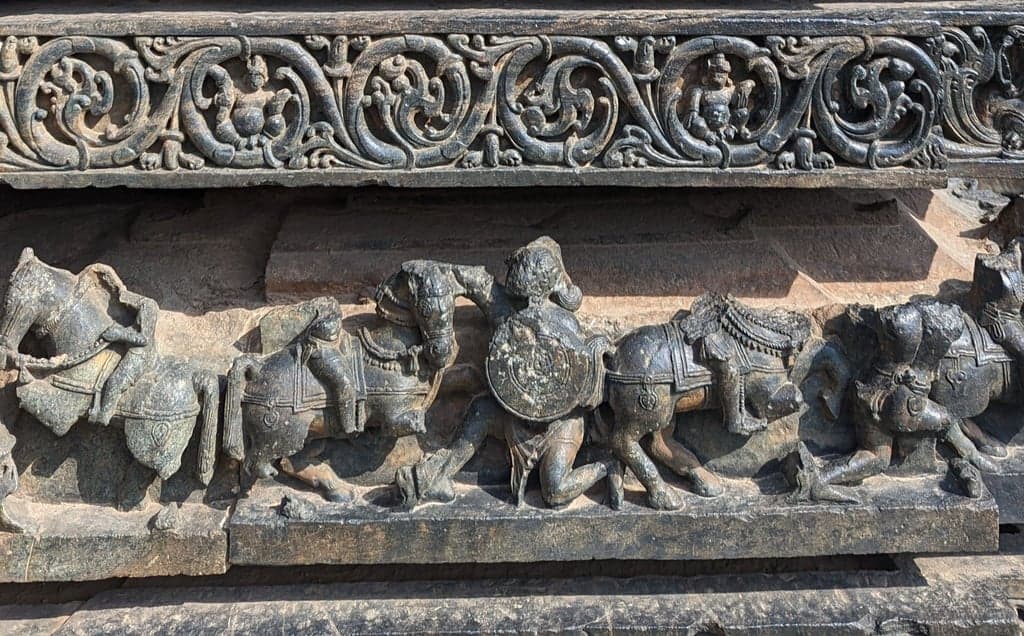
The Cavalry Row (Ashvathara): A Study in Speed
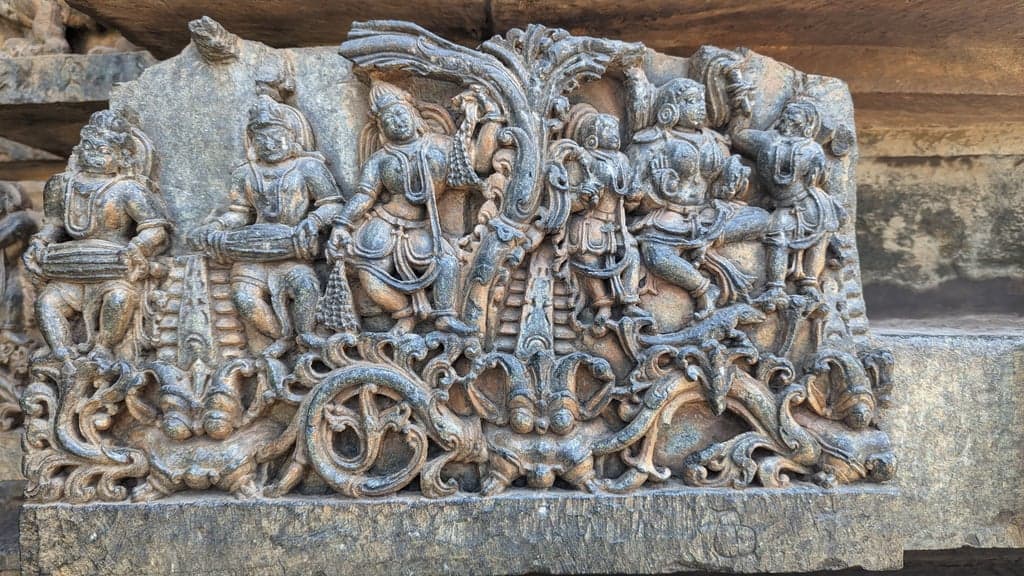
The Divine Ensemble: Musicians and Dancers
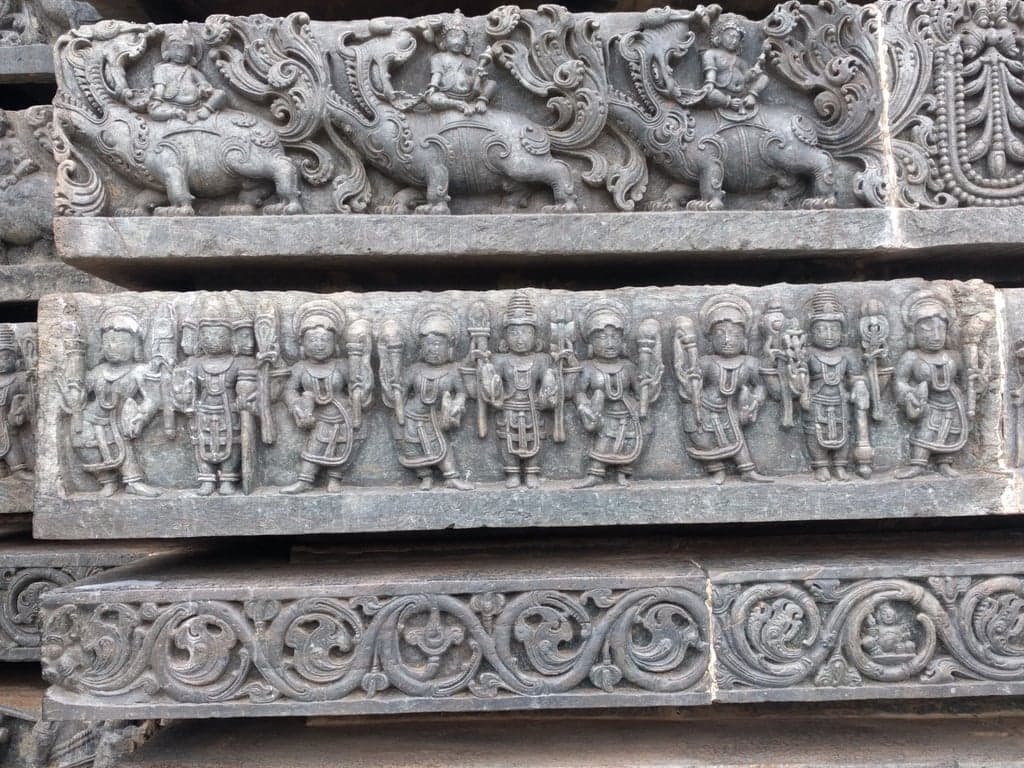
Hoysaleswara Temple: Entrance and Courtyard View
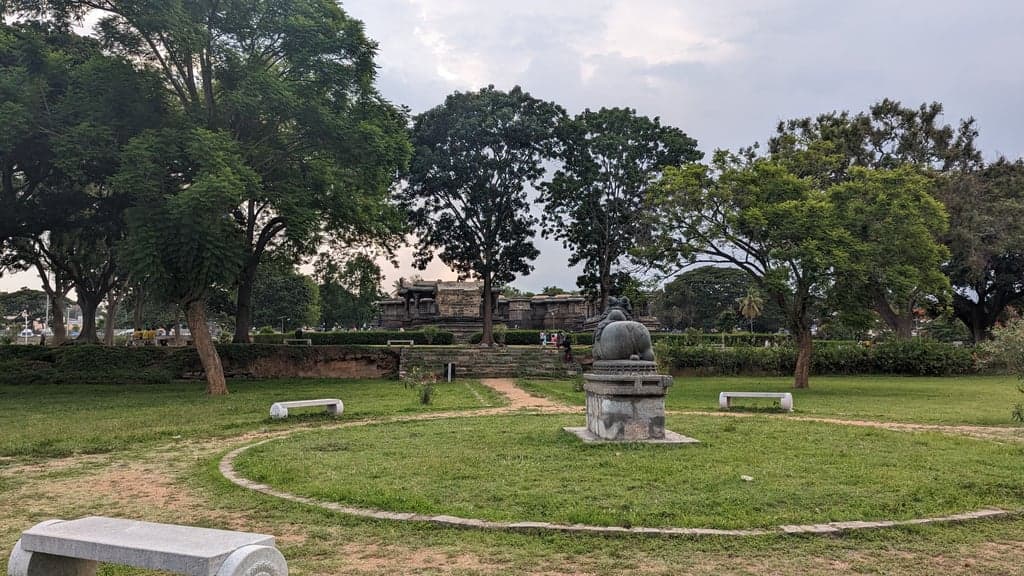
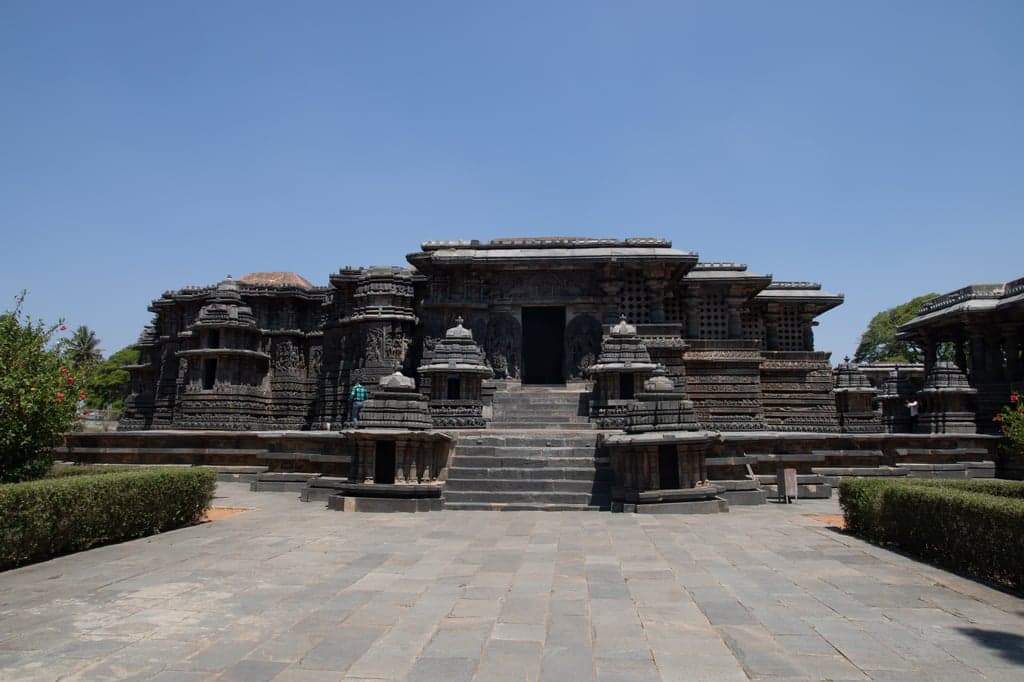
Hoysaleswara Temple Complex: Twin Shrines Overview
Hoysaleswara Temple: Sculptural Frieze, Upper Register
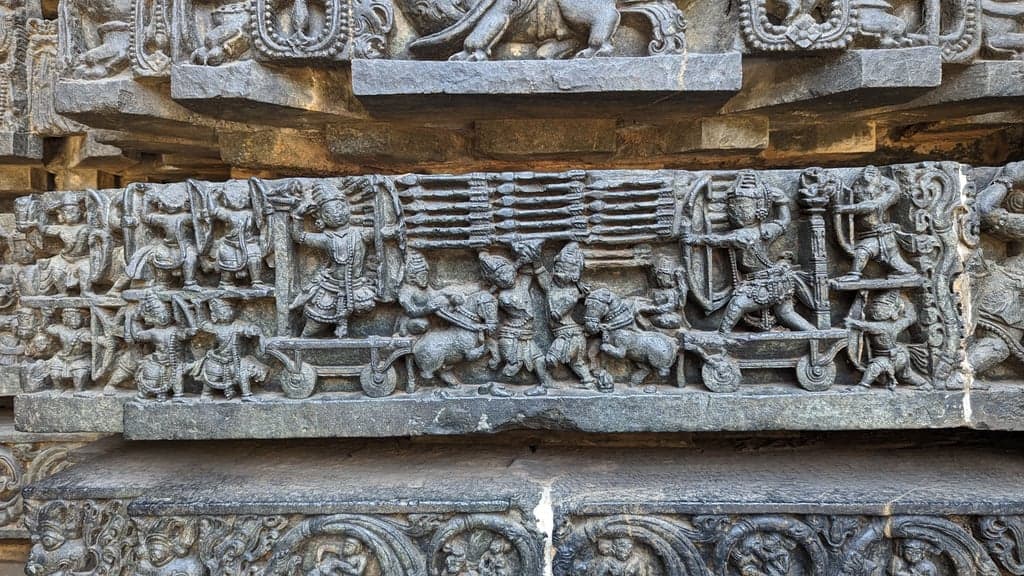
Battle of Kurukshetra: Arjuna vs. Karna
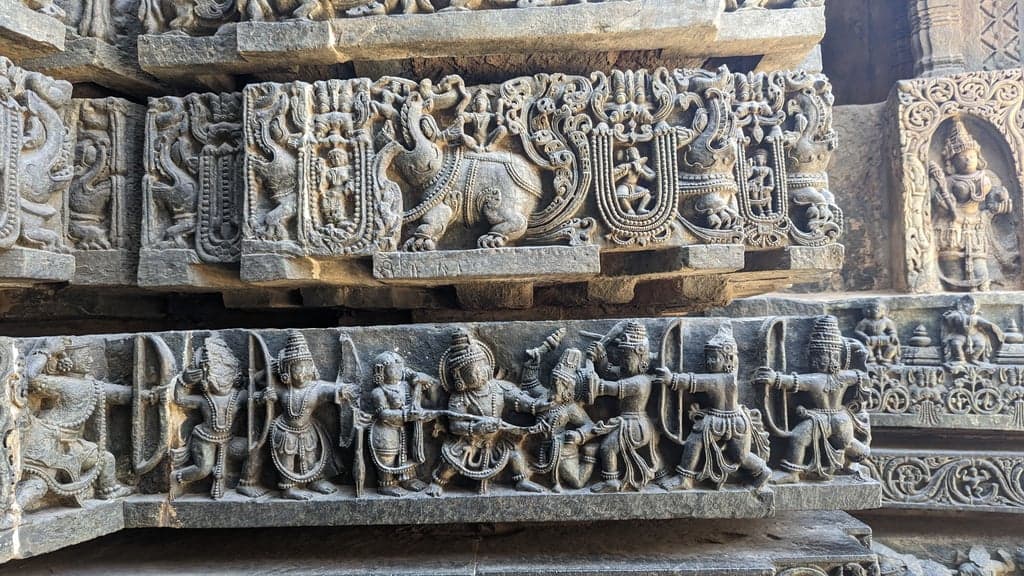
Bhima Slaying Bhagadatta’s Elephant
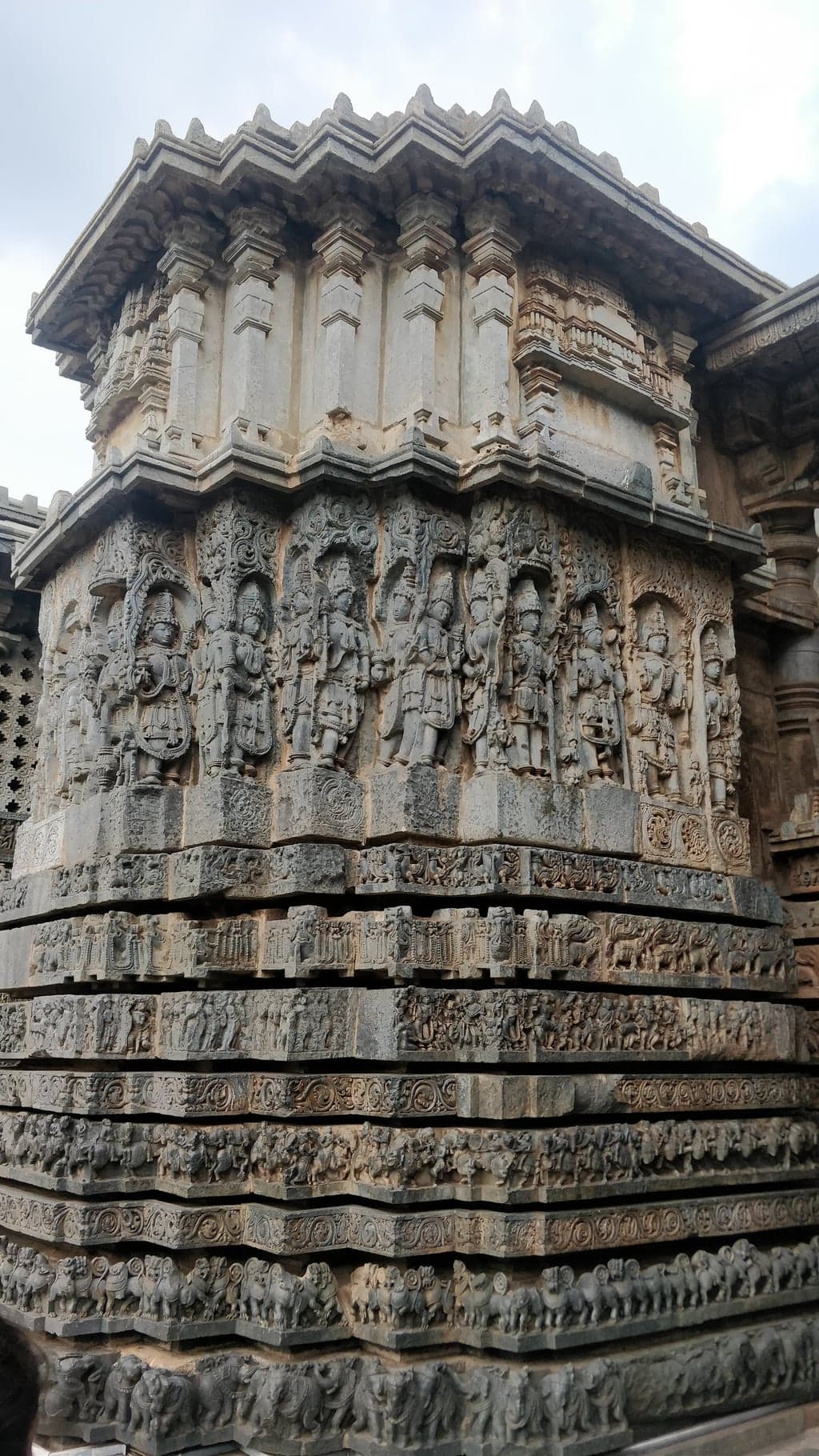
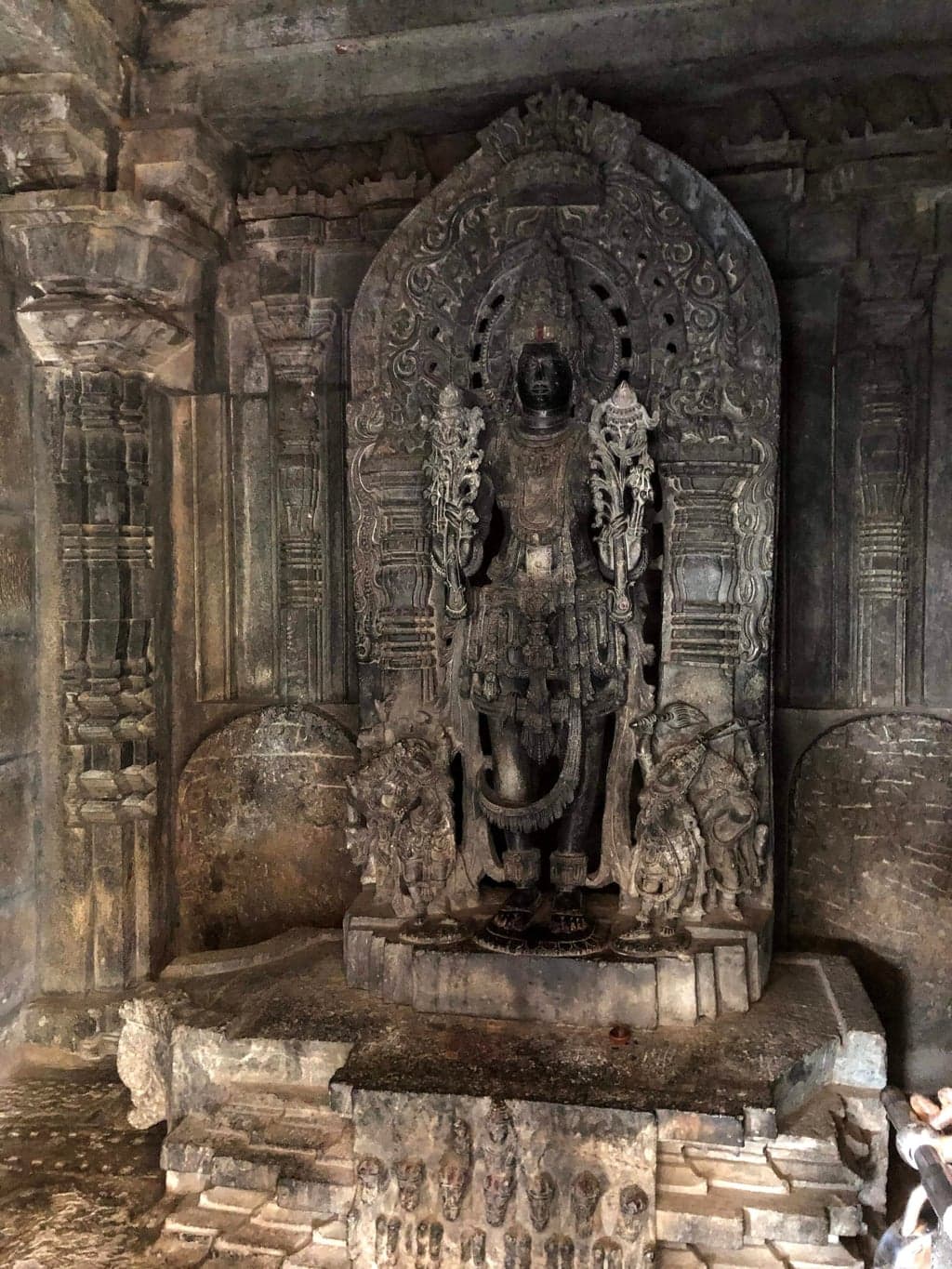
Hoysaleswara Temple: Interior View Toward the Sanctum, 2019
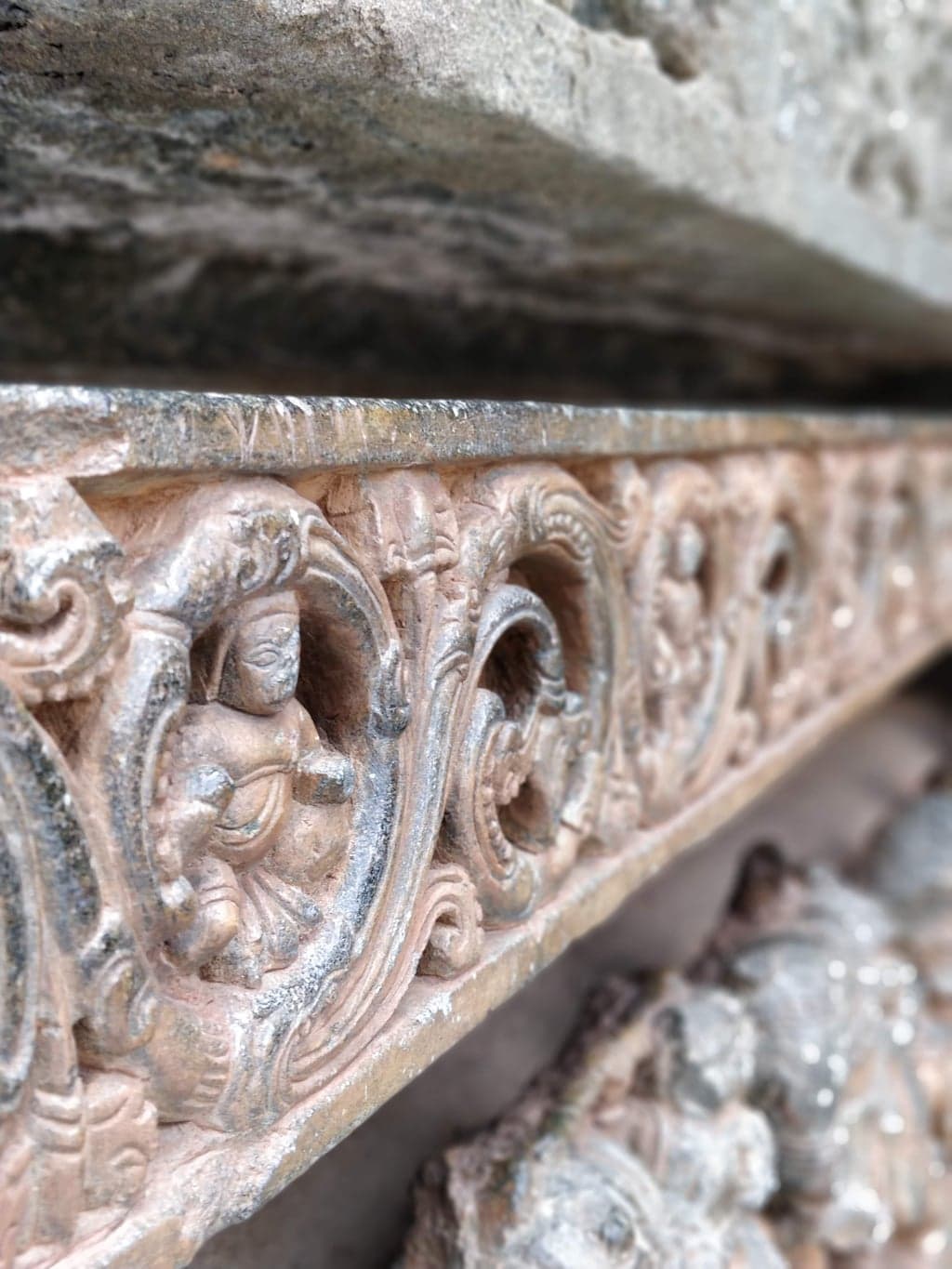
Hoysaleswara Temple: Pillar Bokeh, 2019
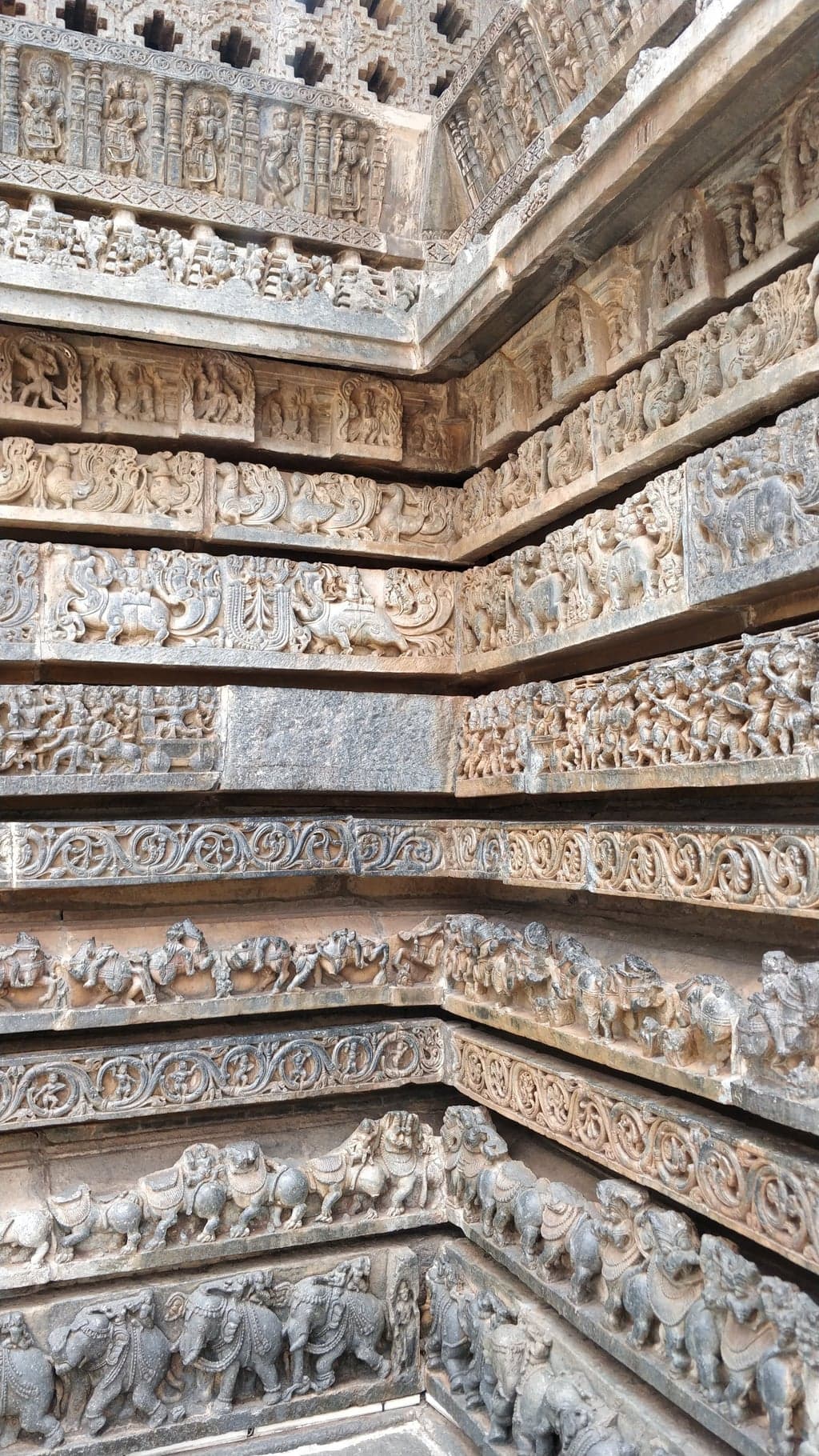
Hoysaleswara Temple: Interior Pillar Detail, 2019
Hoysaleswara Temple: Carved Wall Section Showing Frieze Sequence
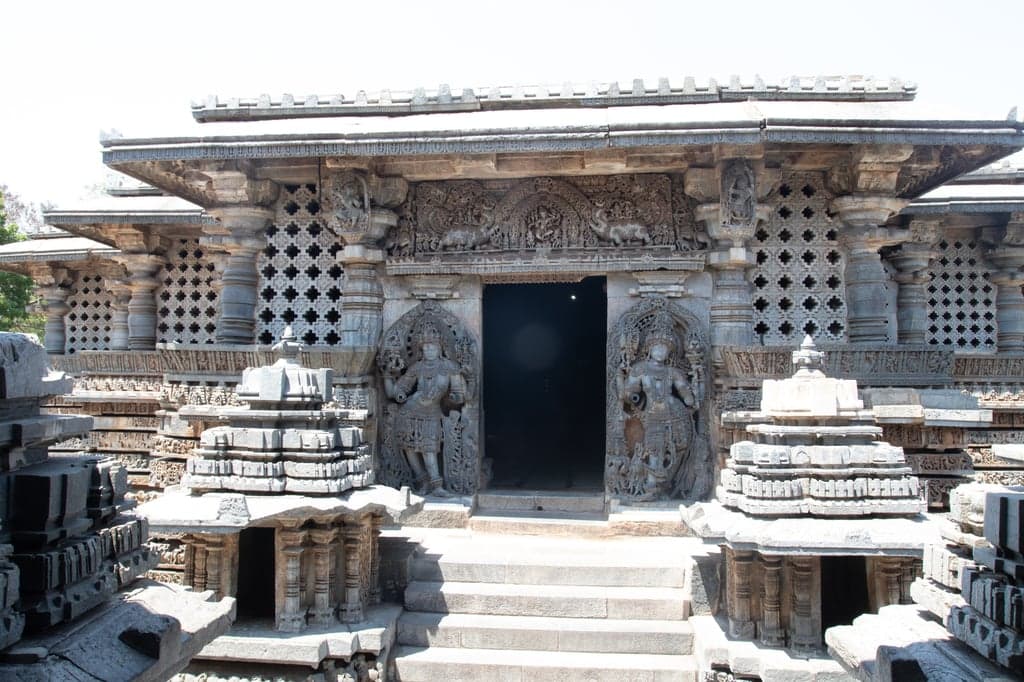
Hoysaleswara Temple: Sculptural Figures in an Upper Panel
Hoysaleswara Temple: The Nandi Mandapa
Hoysaleswara Temple: Nandi Bull in the Courtyard
Hoysaleswara Temple: Detail of the Outer Wall Friezes
Related Galleries
Destination Guide
Rajasthan
Jaipur, Jodhpur, Jaisalmer, Udaipur — a destination guide to Rajasthan's desert circuits. Where to base yourself, how long to go, and what the forts actually feel like.