Jaisalmer Itinerary: Staying Inside Sonar Kella & the Longewala Drive
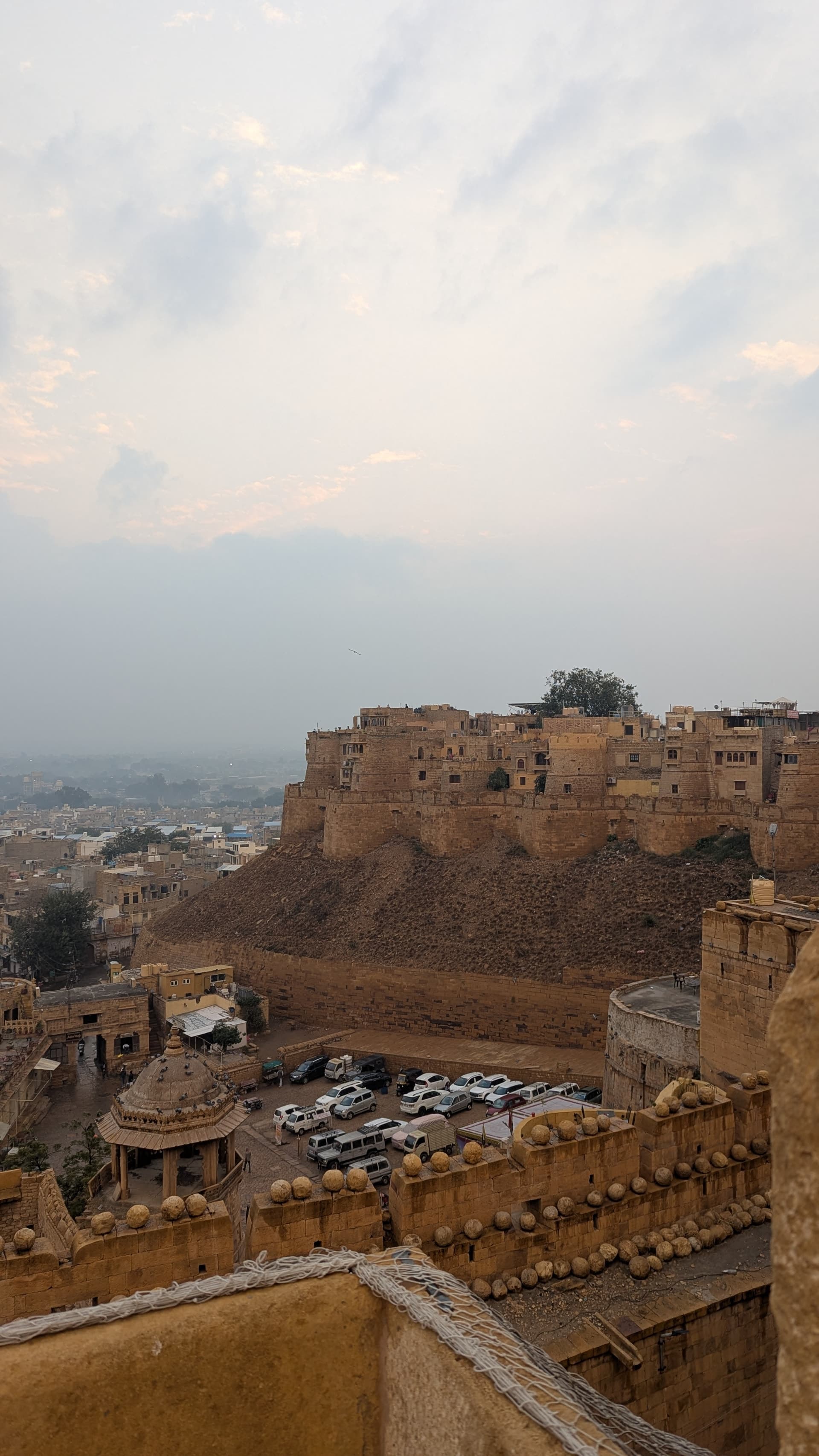
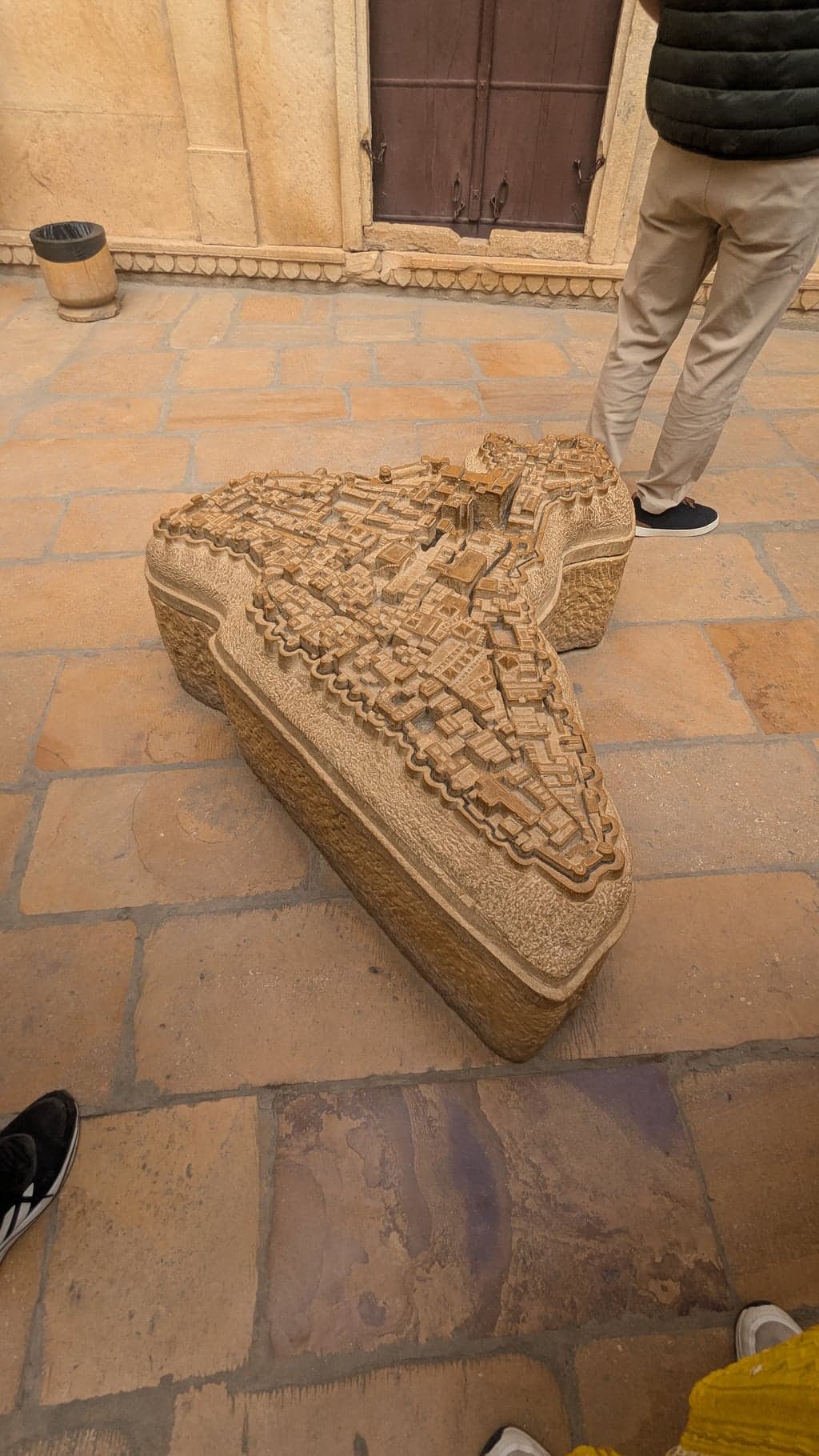
I'd been rambling about Sonar Kella since we started planning — the golden fortress Satyajit Ray put on film, the one Feluda made his own, the one I'd grown up reading about. Rajasthan isn't neutral ground for me either — I was born in Jodhpur, and my dad spent years working across this state. Jaisalmer, though, was about the fort. Maps have always held a pull for me, so I knew exactly what I was headed toward long before the bus pulled out of Jodhpur, and knowing only made the four and a half hours feel longer.
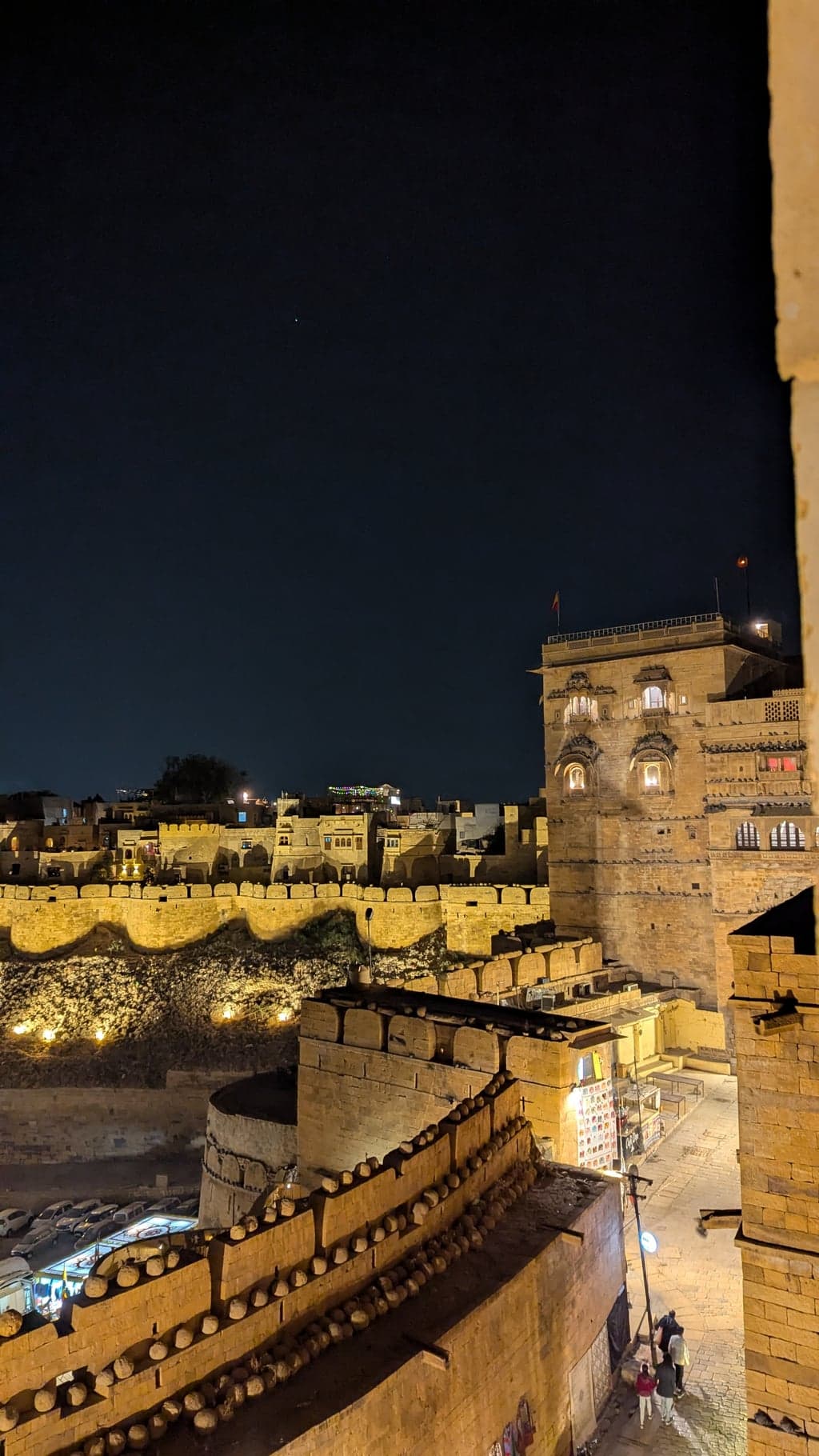
We landed just after sunset, and there it was — lit up on the hill in the exact hues the name promises, gold sliding into amber as the light dropped. Not the postcard version. The actual Sonar Kella, entirely unbothered by hours of me talking about it.
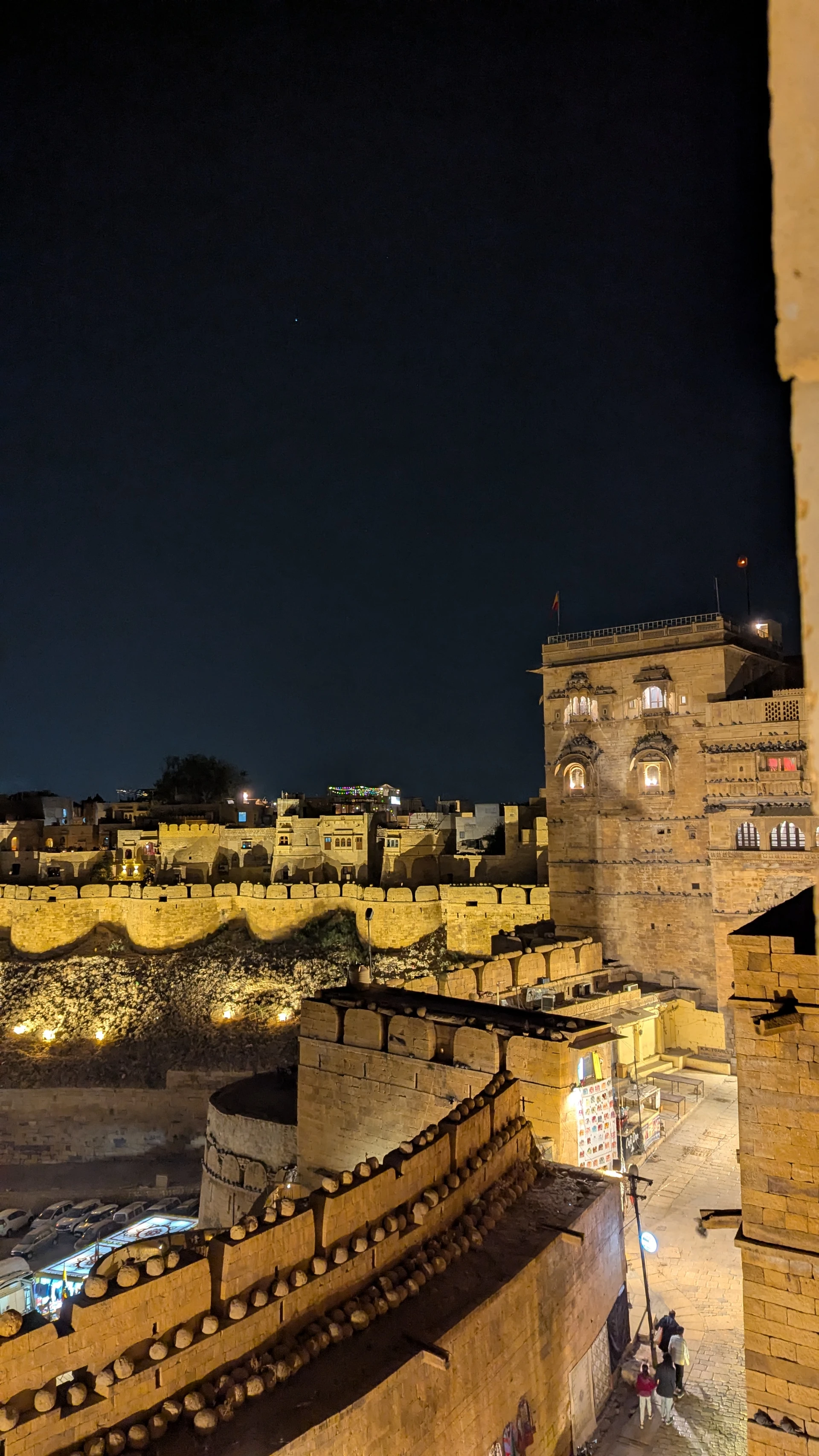
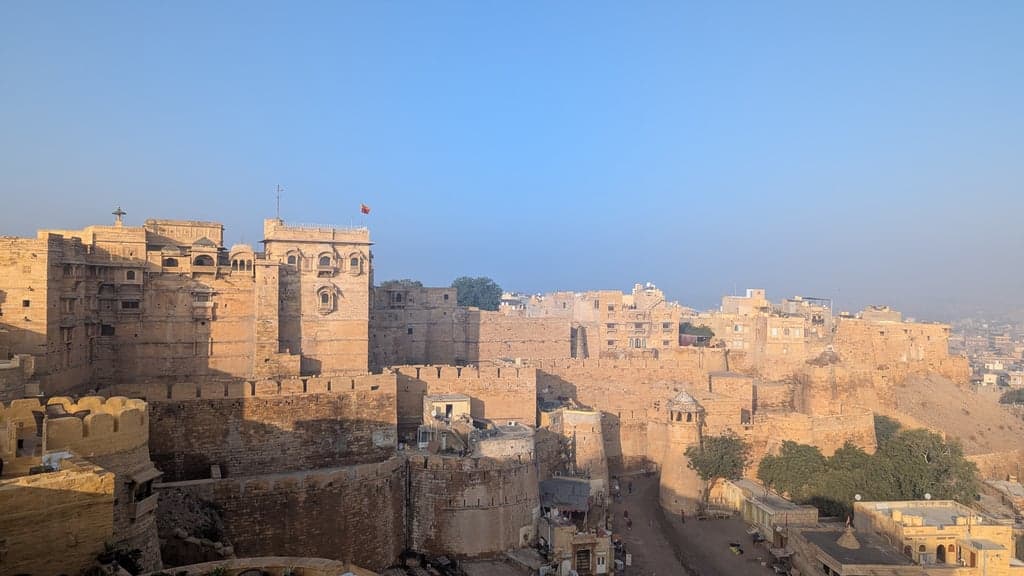
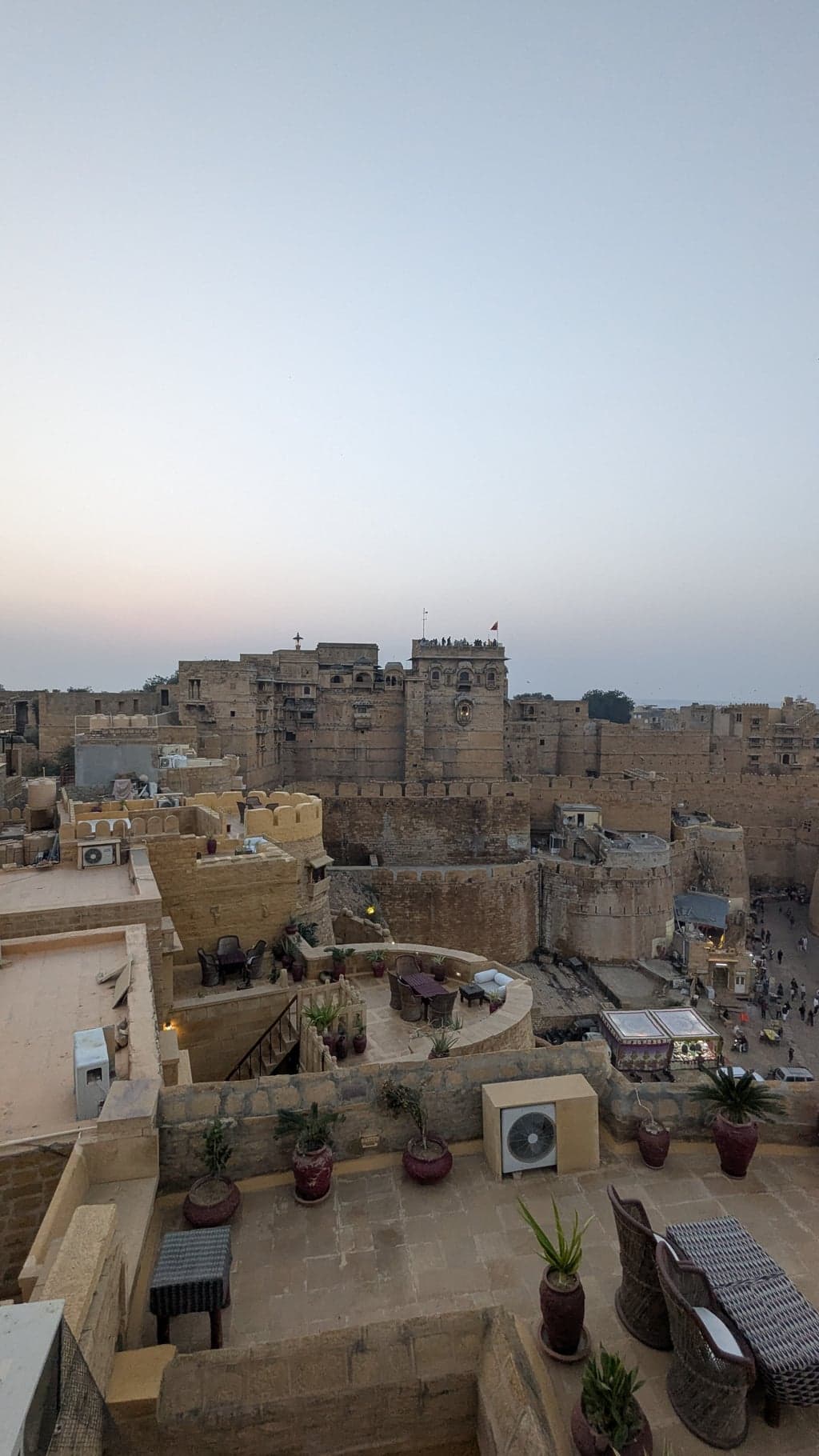
By the time we checked into KD Palace, the fort was fully lit against the dark, and I'd finally stopped talking and started just looking. And this is the first thing worth knowing if you're planning: KD Palace is inside the fort. You're not looking up at Sonar Kella from a hotel in the new city — you're living in it. The rooms are newly renovated, genuinely premium, the food's good, and it doesn't cost what you'd expect for a stay literally within the walls of a living twelfth-century fort. Book direct — it's cheaper than the aggregators.
The Trip at a Glance — 3–4 Days in Jaisalmer
Most people don't visit Jaisalmer on its own — it's the far-west anchor of a larger Rajasthan loop, usually combined with Jodhpur, Jaipur, or Udaipur. That shapes how you arrive: there's a direct airport and a railway station, but many travellers reach it overland from Jodhpur, a roughly four-and-a-half-hour bus or drive, which is what we did. Three to four days is the sweet spot once you're there.
- Day 1: Arrive; check into a fort-interior hotel; first sight of the lit fort at night
- Day 2: Jaisalmer Fort (start early to beat the crowds), Patwon ki Haveli, evening at Gadisar Lake
- Day 3: Early fort walk → drive out via the Jaisalmer War Museum, Bada Bagh and Kuldhara → overnight at a Baran/Tejsi desert camp (camel safari, sunset, bonfire, cold dune nights)
- Day 4: Longewala and Tanot Mata border run by hired car → back to the fort for a final night
- Where we stayed: KD Palace and Garh Jaisal Haveli — both inside/at the fort
- Best time: October–February. We went over New Year — busy and pricey, but atmospheric
Day One: The Fort, Done a Little Wrong
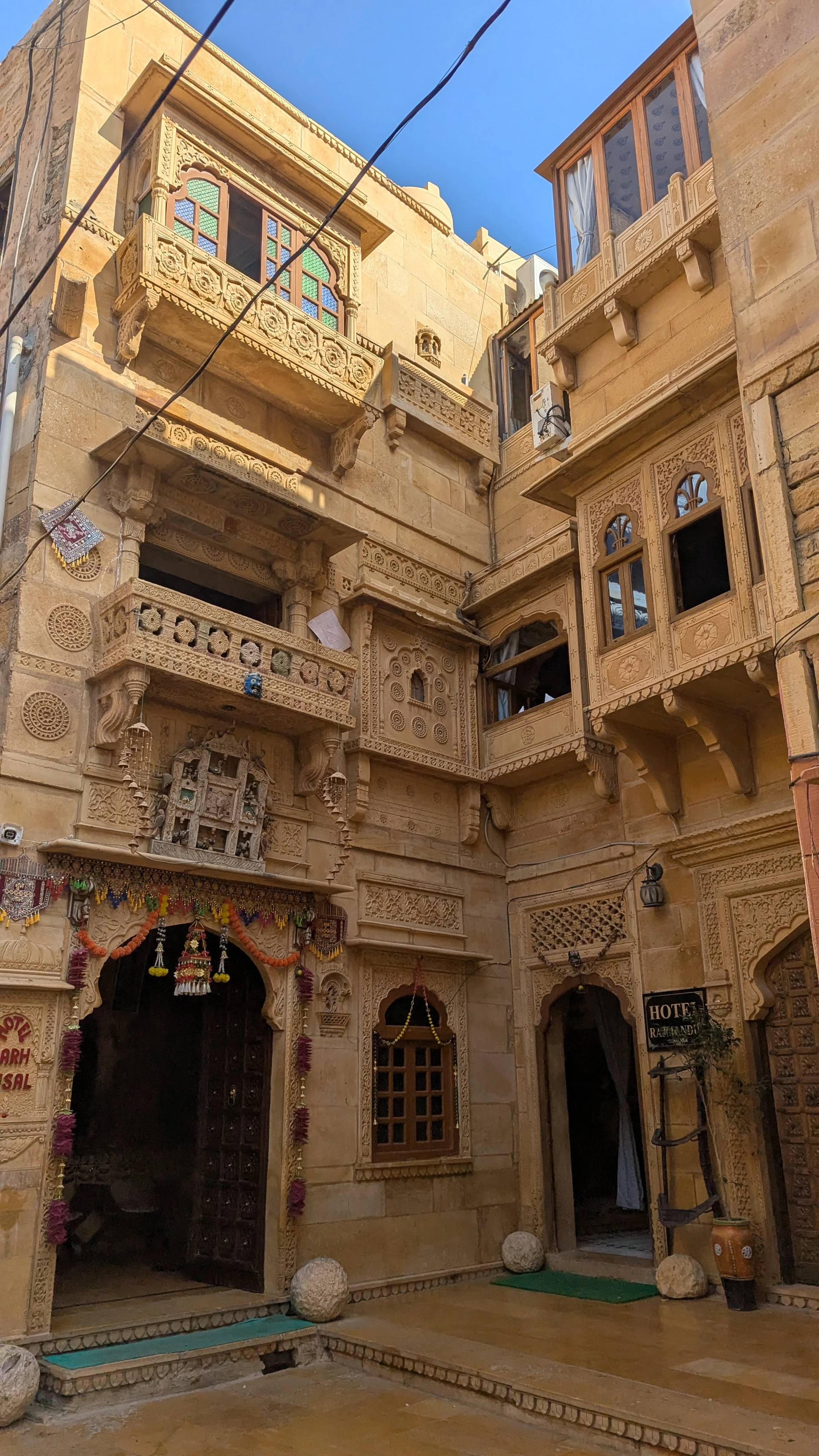
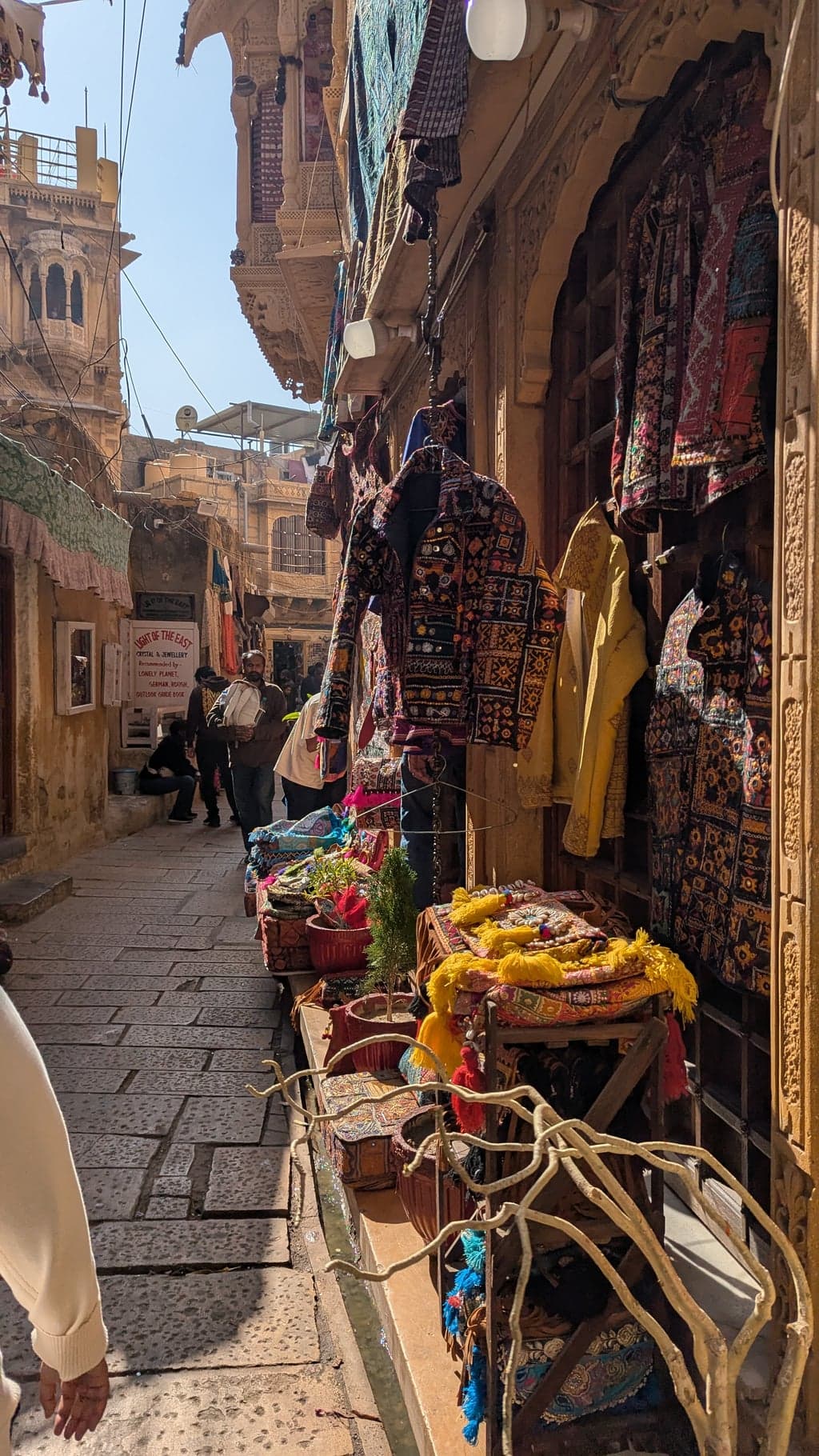
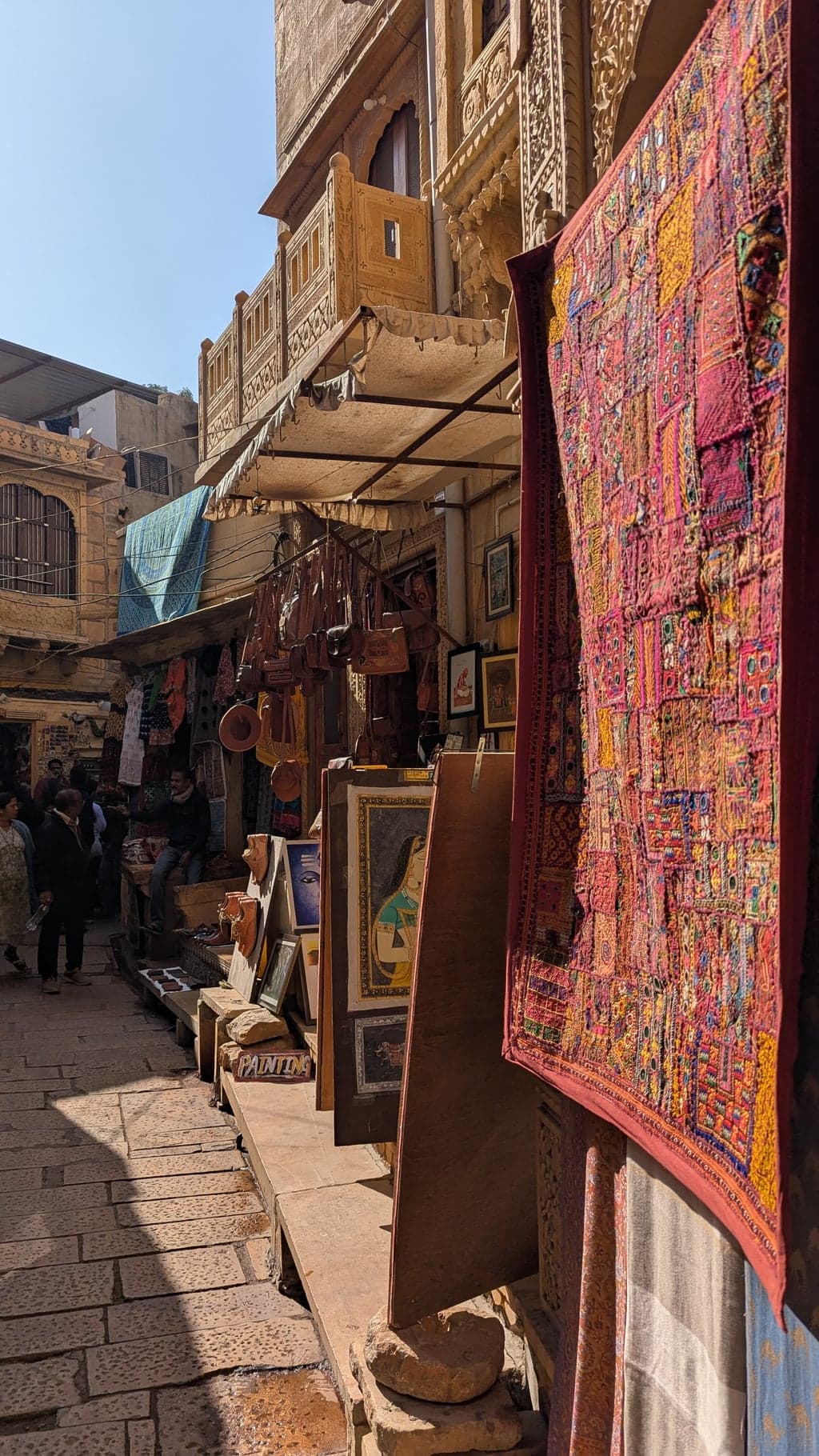
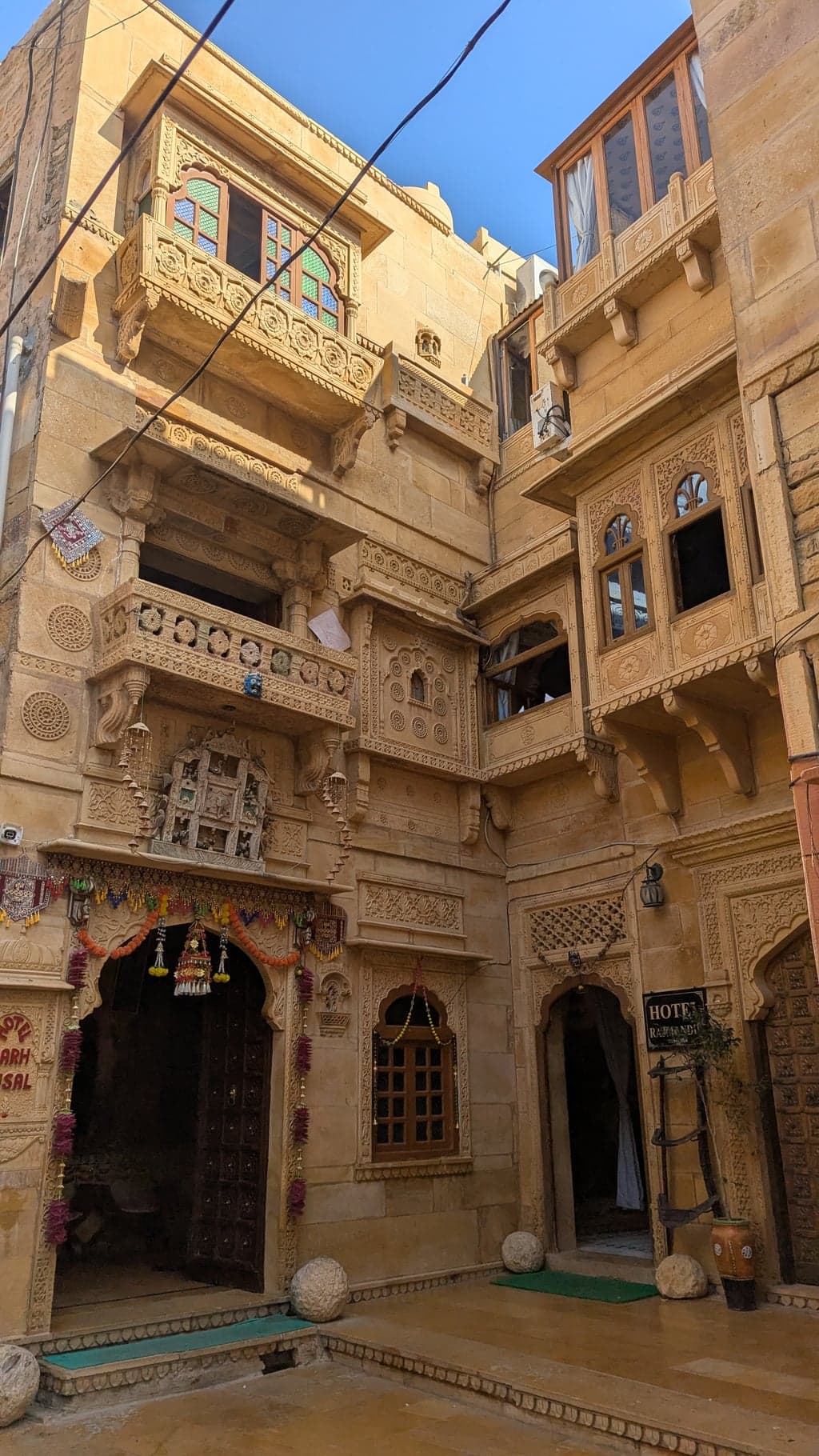
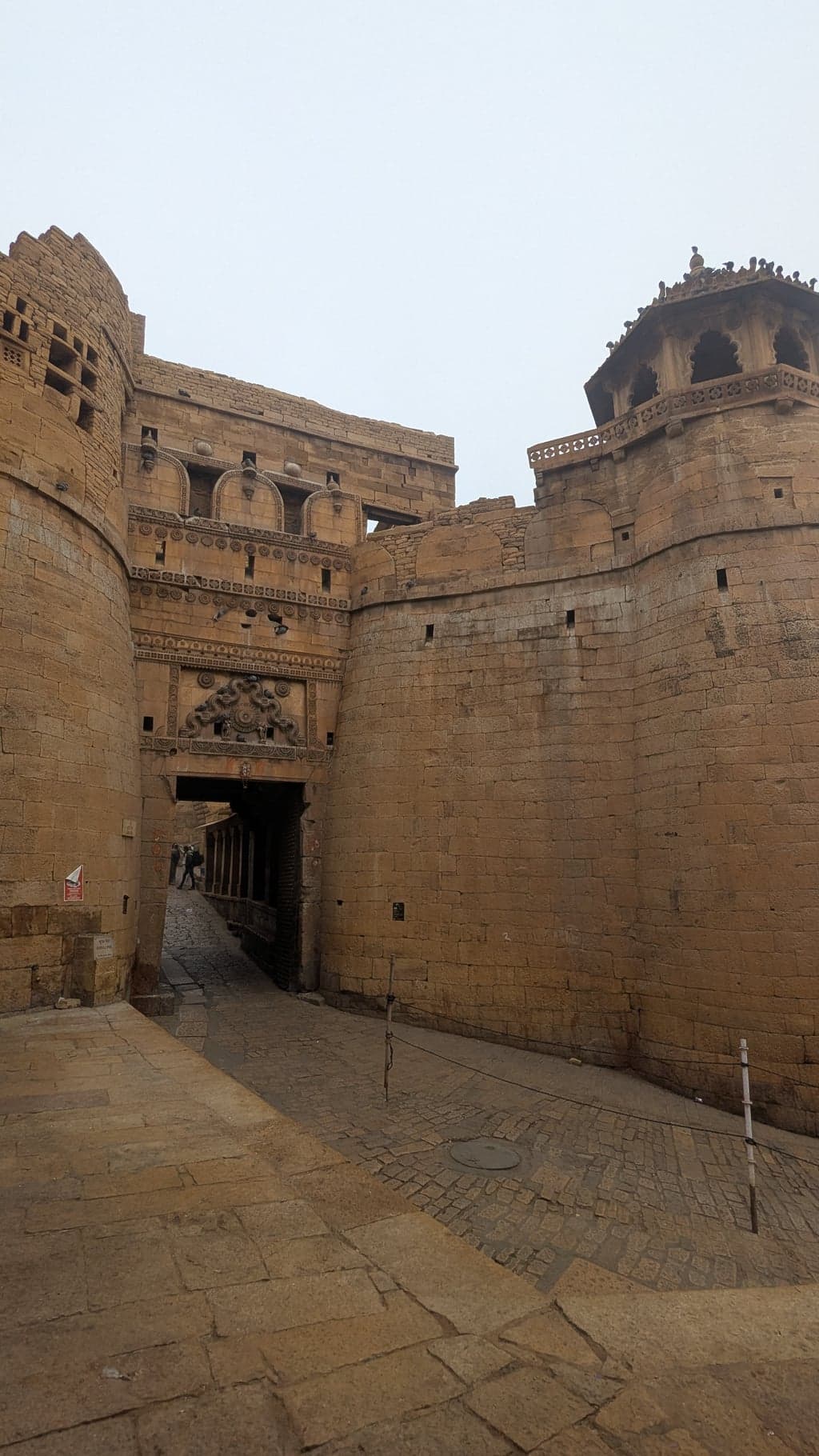
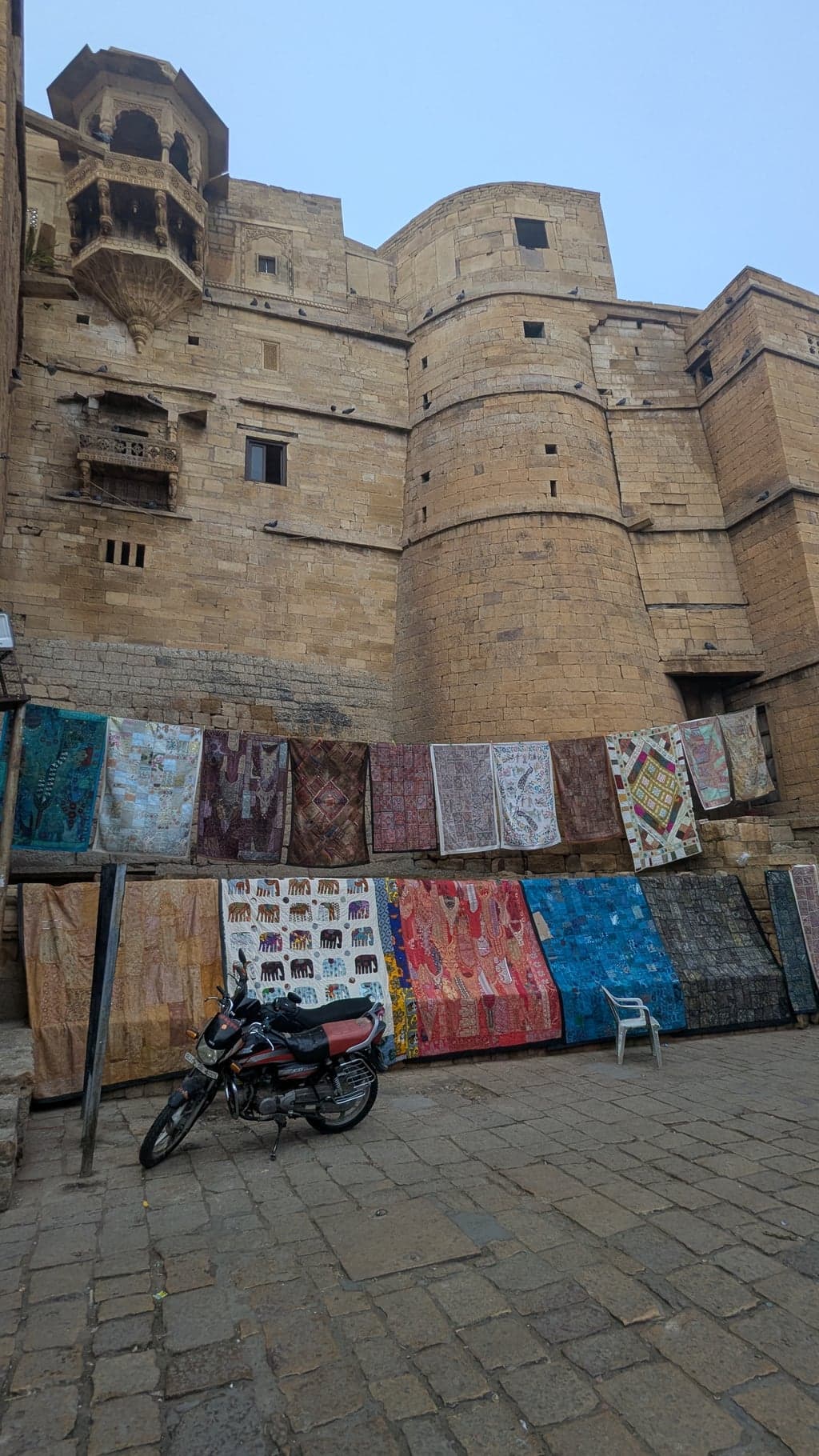
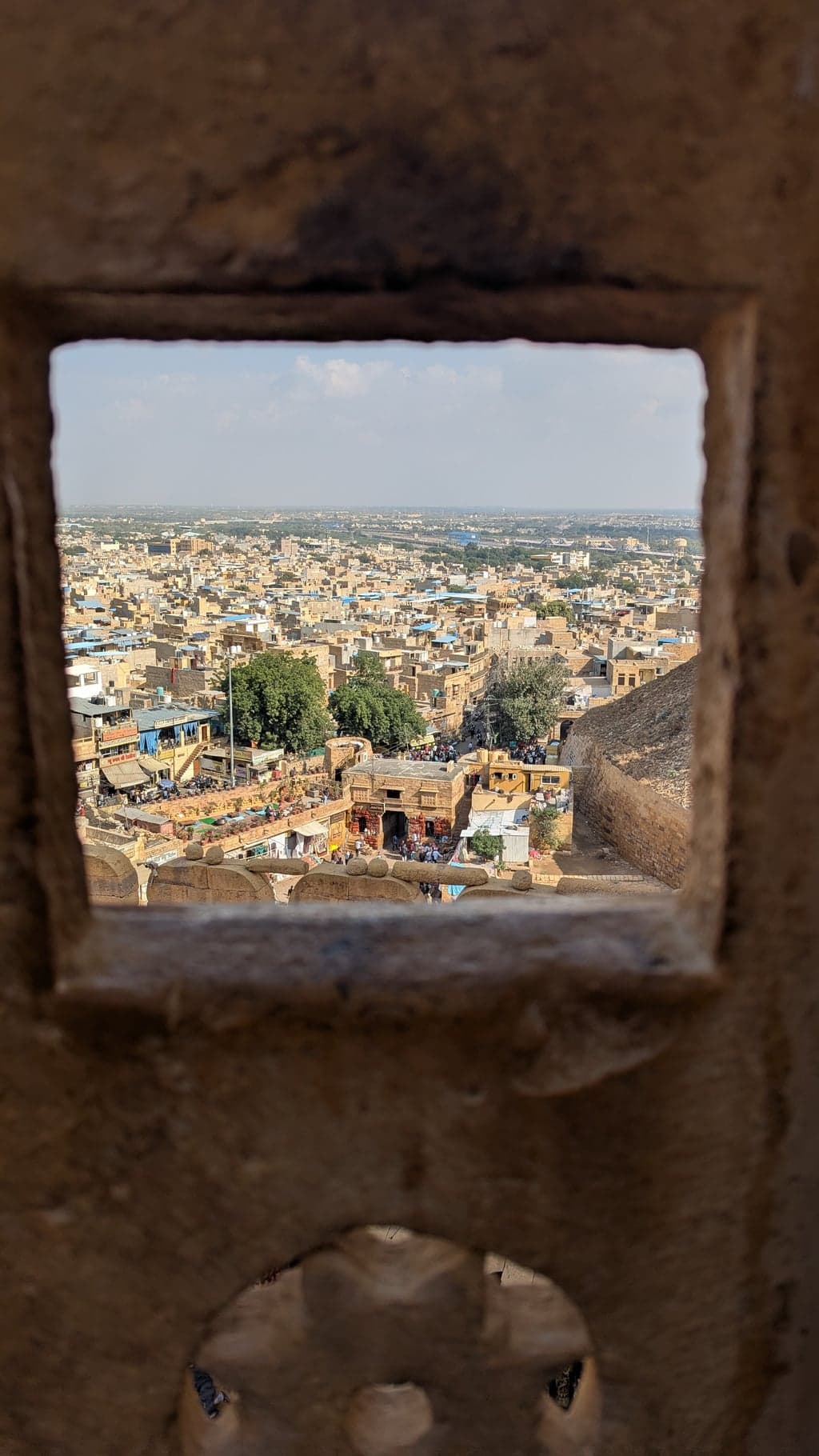
We gave the fort our first full day, and made the mistake most first-timers make — we started late, once the sun was properly up and the tour groups had arrived. Every courtyard, every haveli entrance, every good photo angle — crowded. We got our obligatory couple's photo, walked the walls, took in how much elevation the whole complex sits on, and wandered into a few of the havelis inside the fort lanes — the carved facades are the point, and they're everywhere once you start looking up. Patwon ki Haveli, the famous one down in the city, we only saw from outside; if intricate haveli interiors are your thing, budget a proper stop there, because we didn't and the facade alone suggests we missed something.
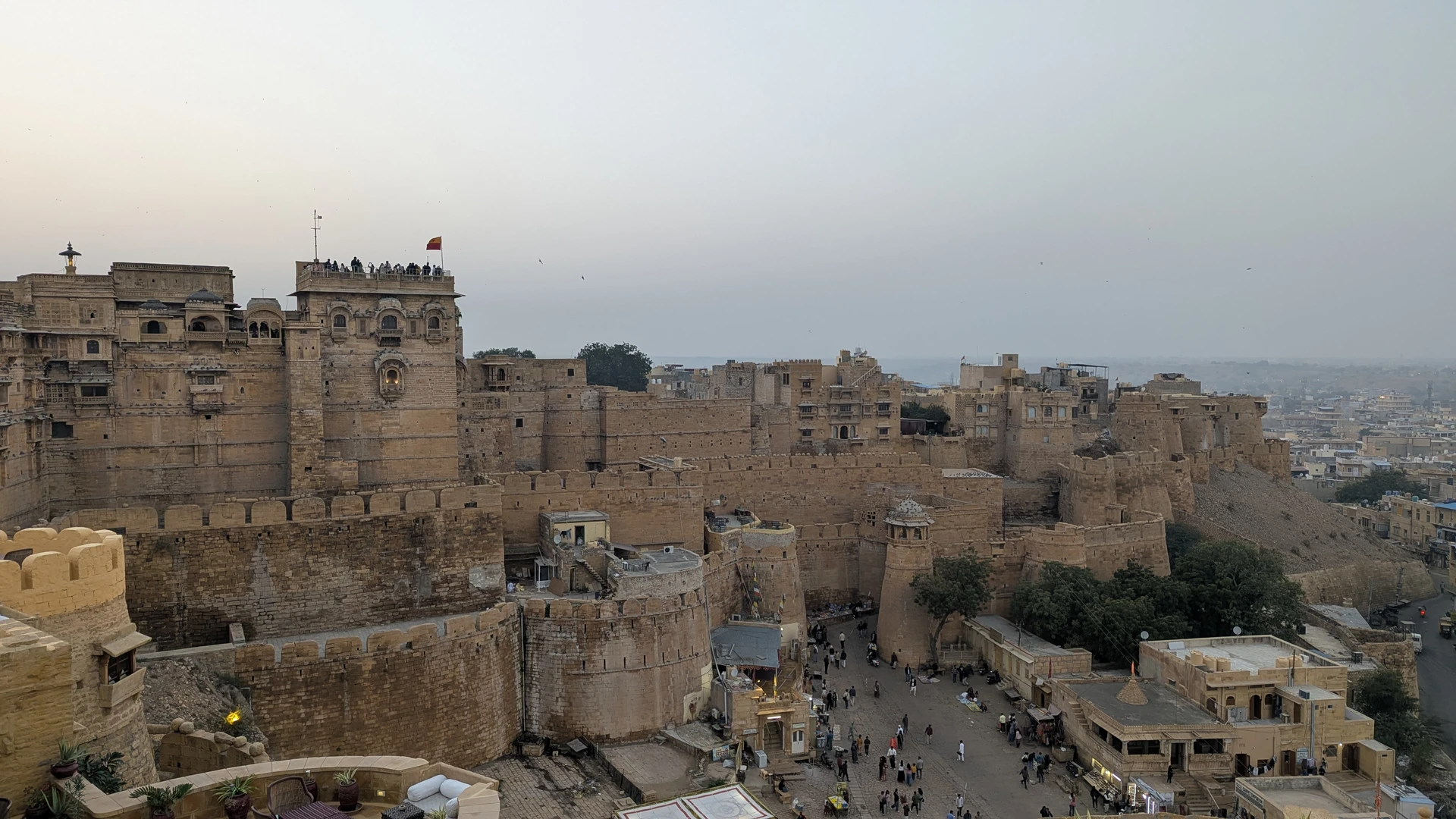
But the crowded midday fort isn't the fort. We found that out the same evening, when we walked down to Gadisar Lake as the light went gold, then kept going a bit further along the water, past the main ghats, and found a spot to just sit and watch the sunset — the fort glowing above the lake, the crowds behind us. It was New Year's Eve, and the city was in full countdown mode by the time we got back: bars, temporary stages, groups who'd clearly flown in just for the night. Being inside the fort meant we could step out of all of it whenever we wanted to.
Day Two: New Year Morning, and the Road to the Dunes
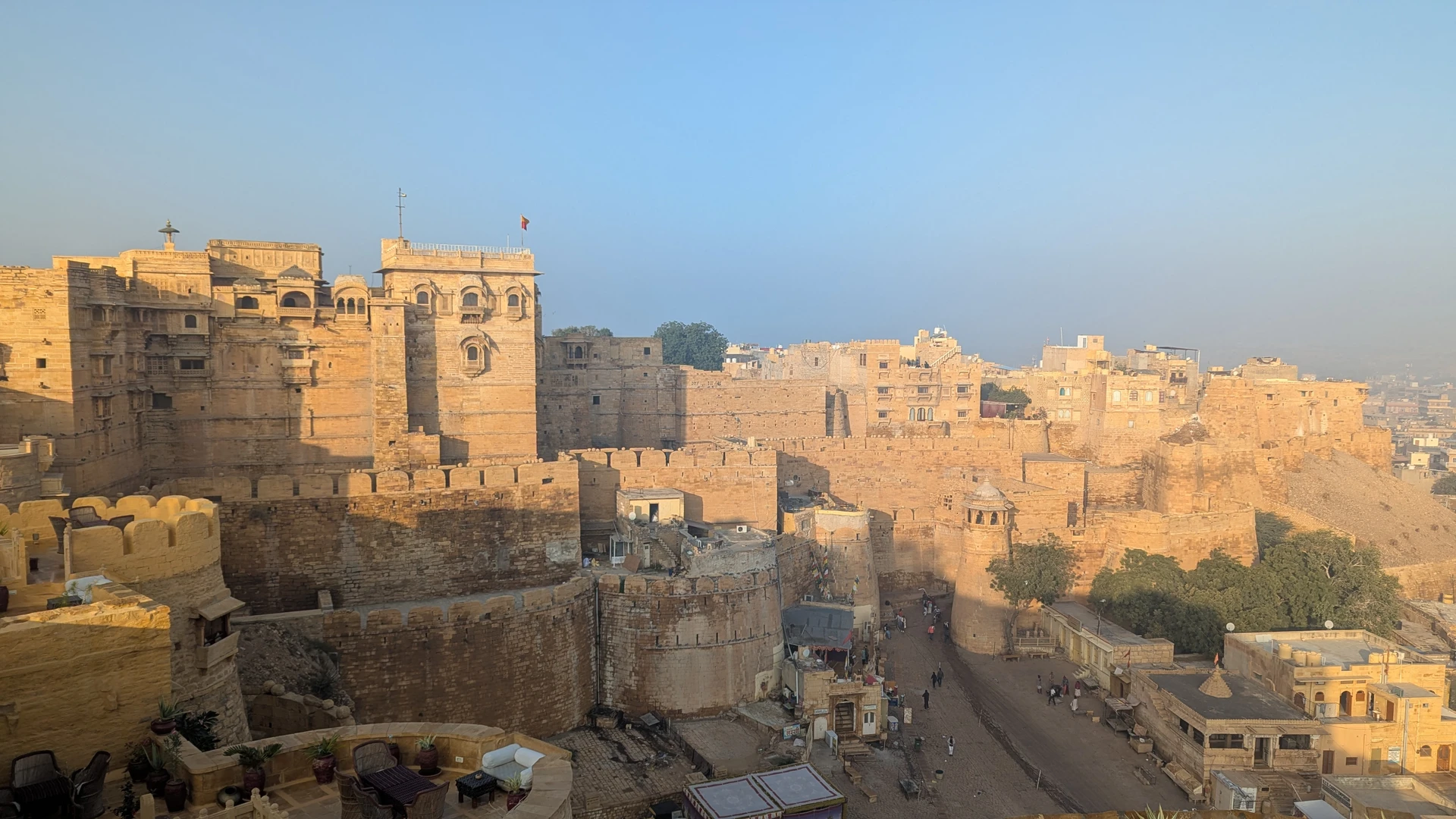
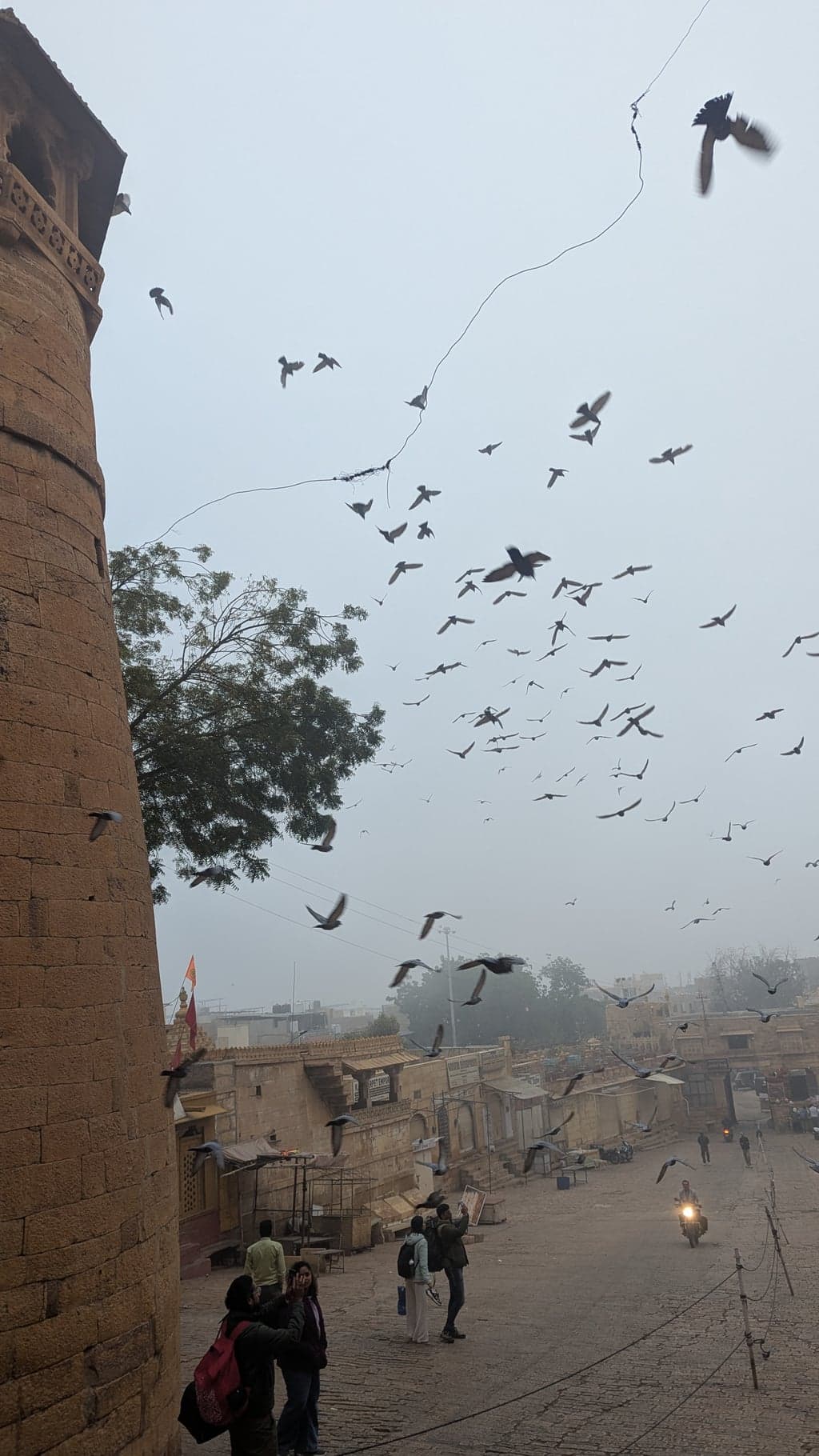
The best hour of the fort came the next morning. New Year's Day, early, the parties finally quiet — we walked the lanes with barely anyone around, the sandstone catching the first light, everything refreshingly still after the night before. This is the version of Jaisalmer Fort nobody photographs because nobody's awake for it, and it's the one worth setting an alarm for. Same lanes we'd fought through the day before, completely transformed.
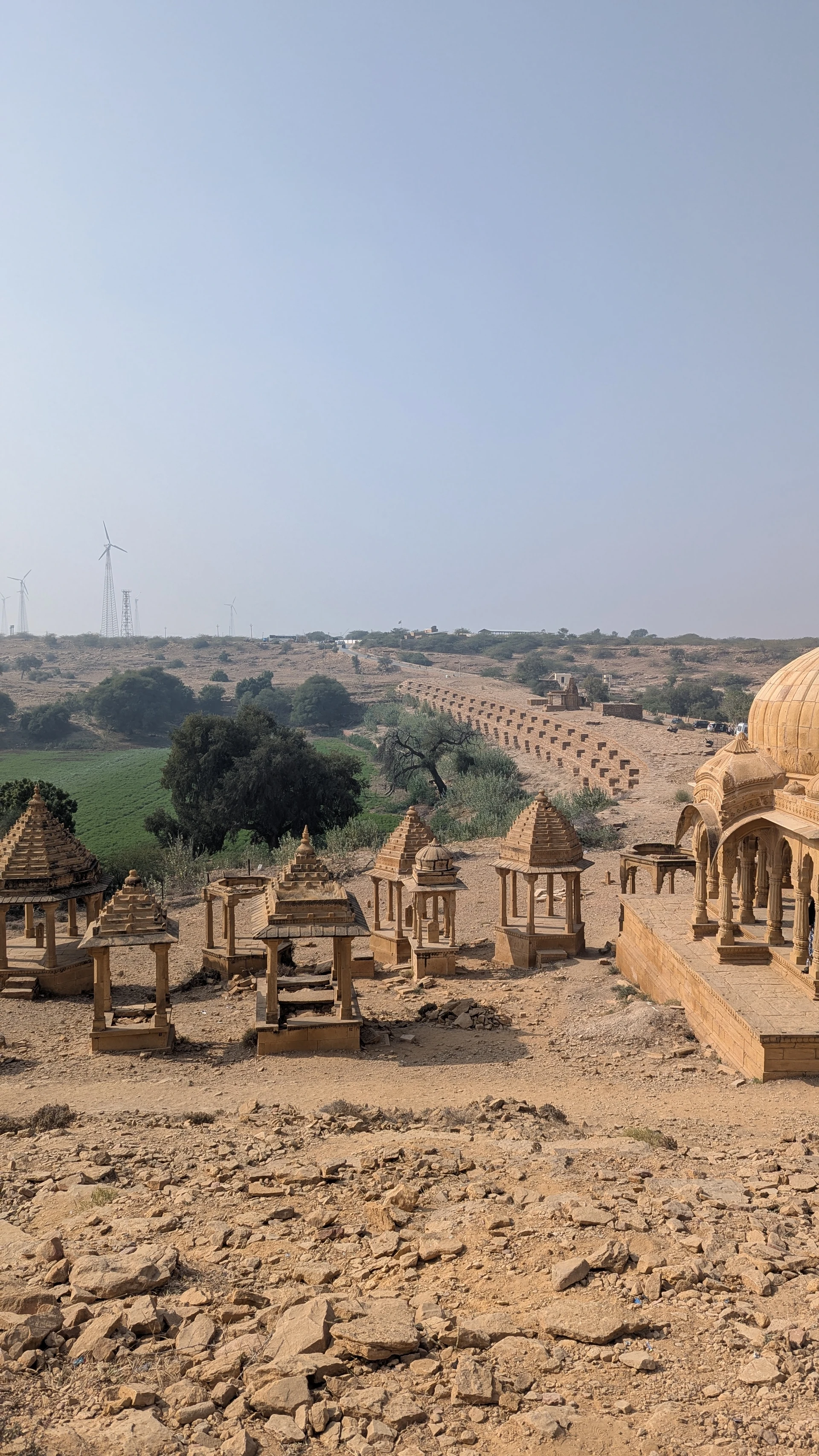
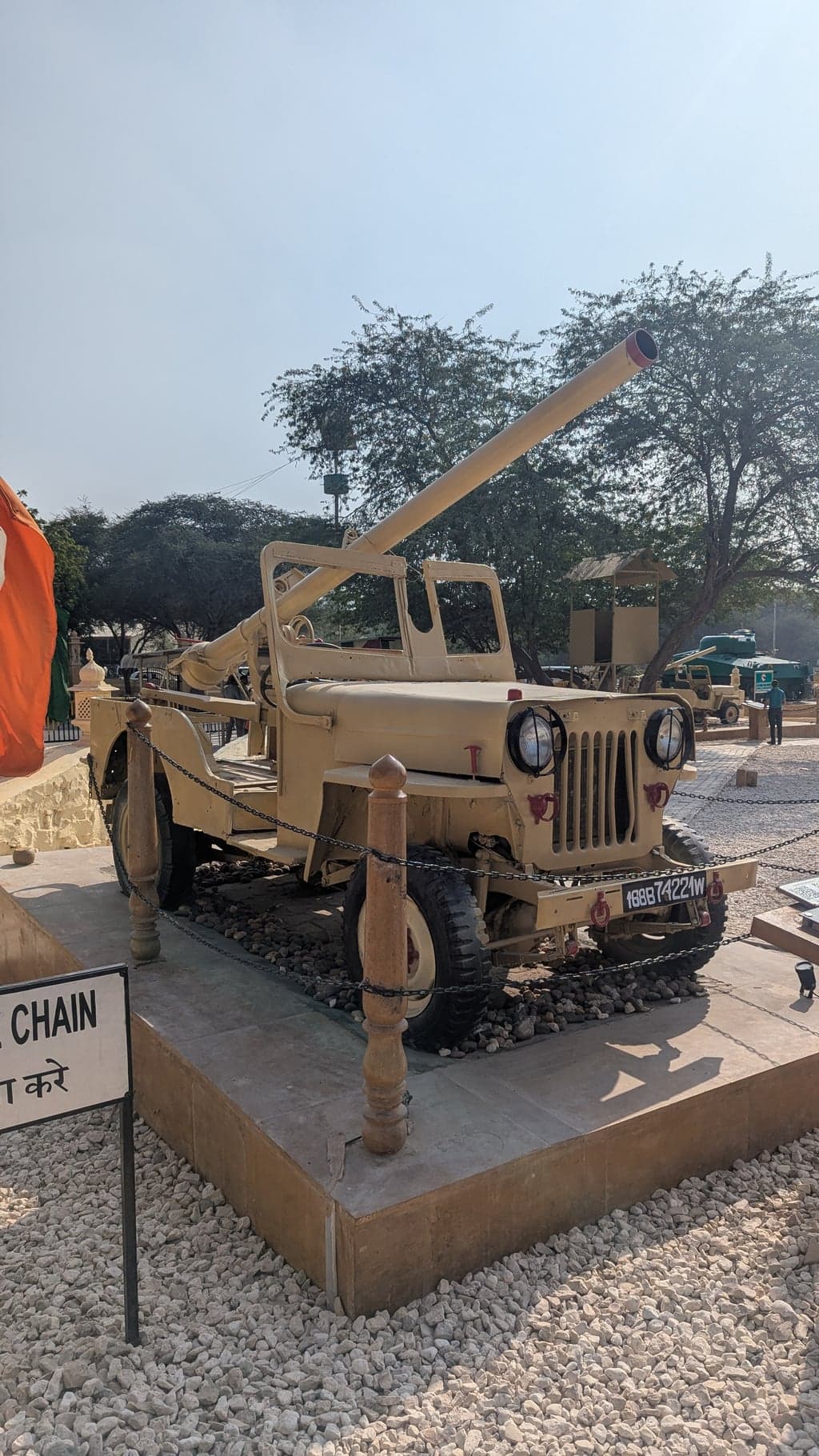
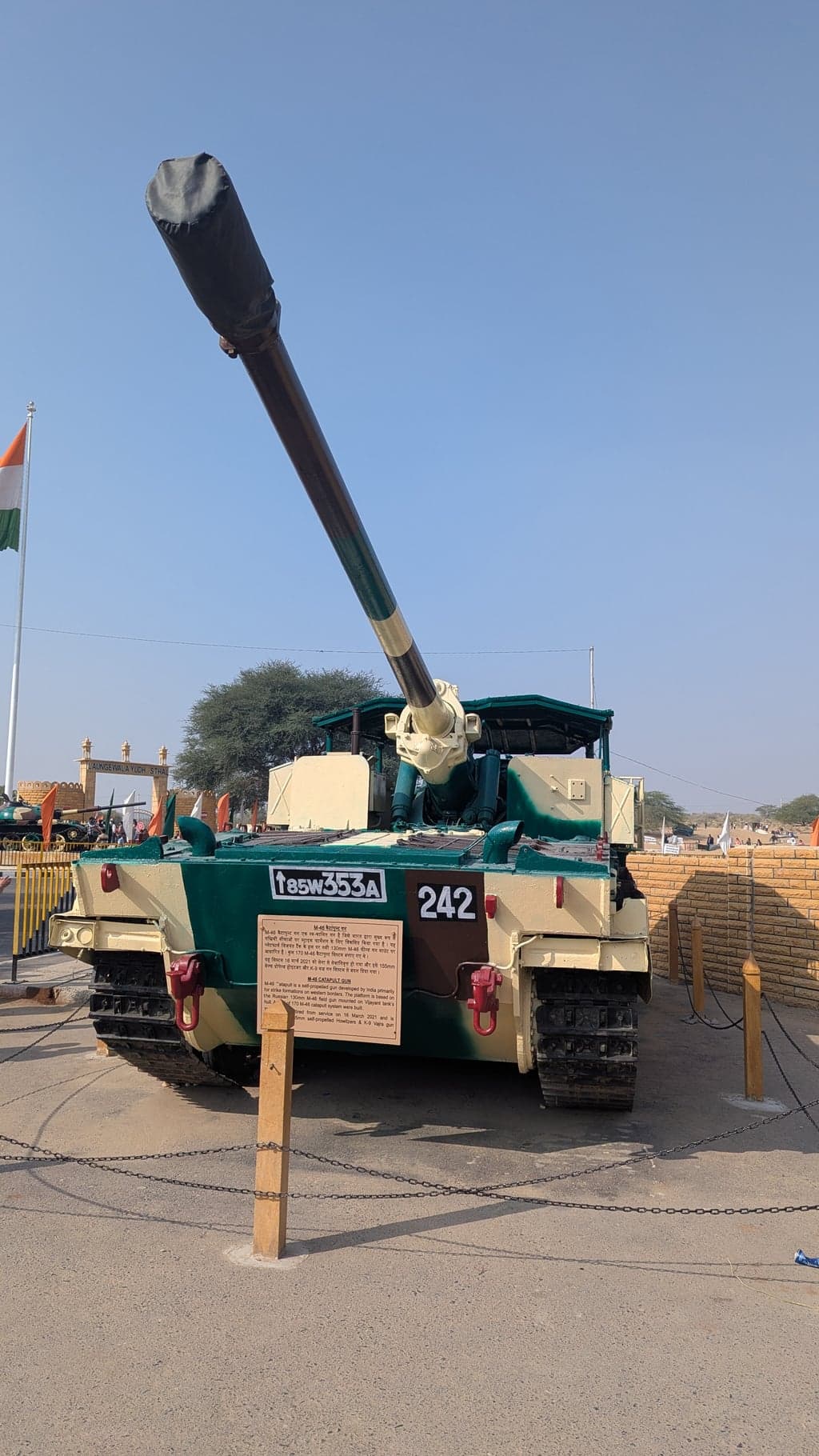
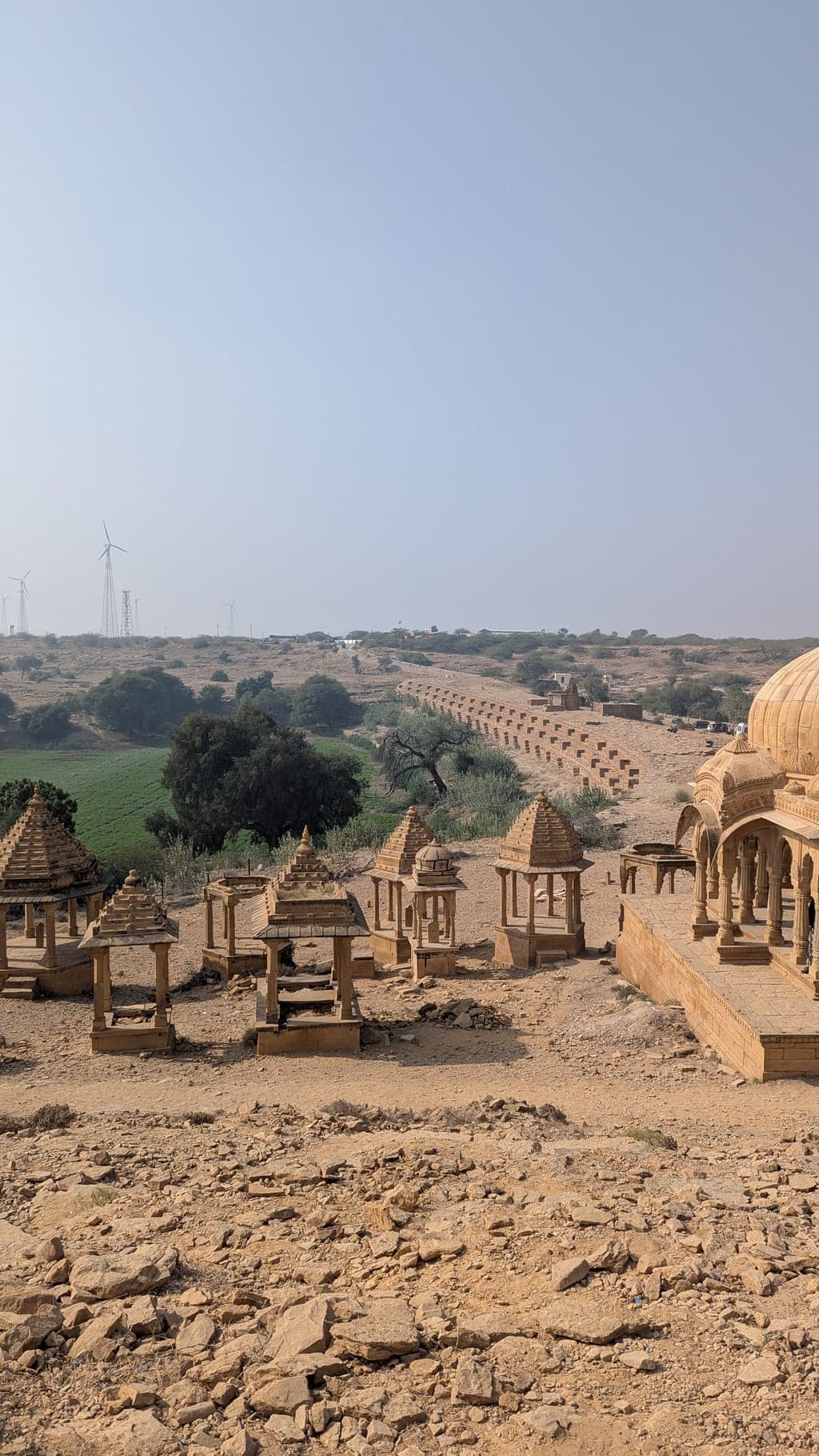
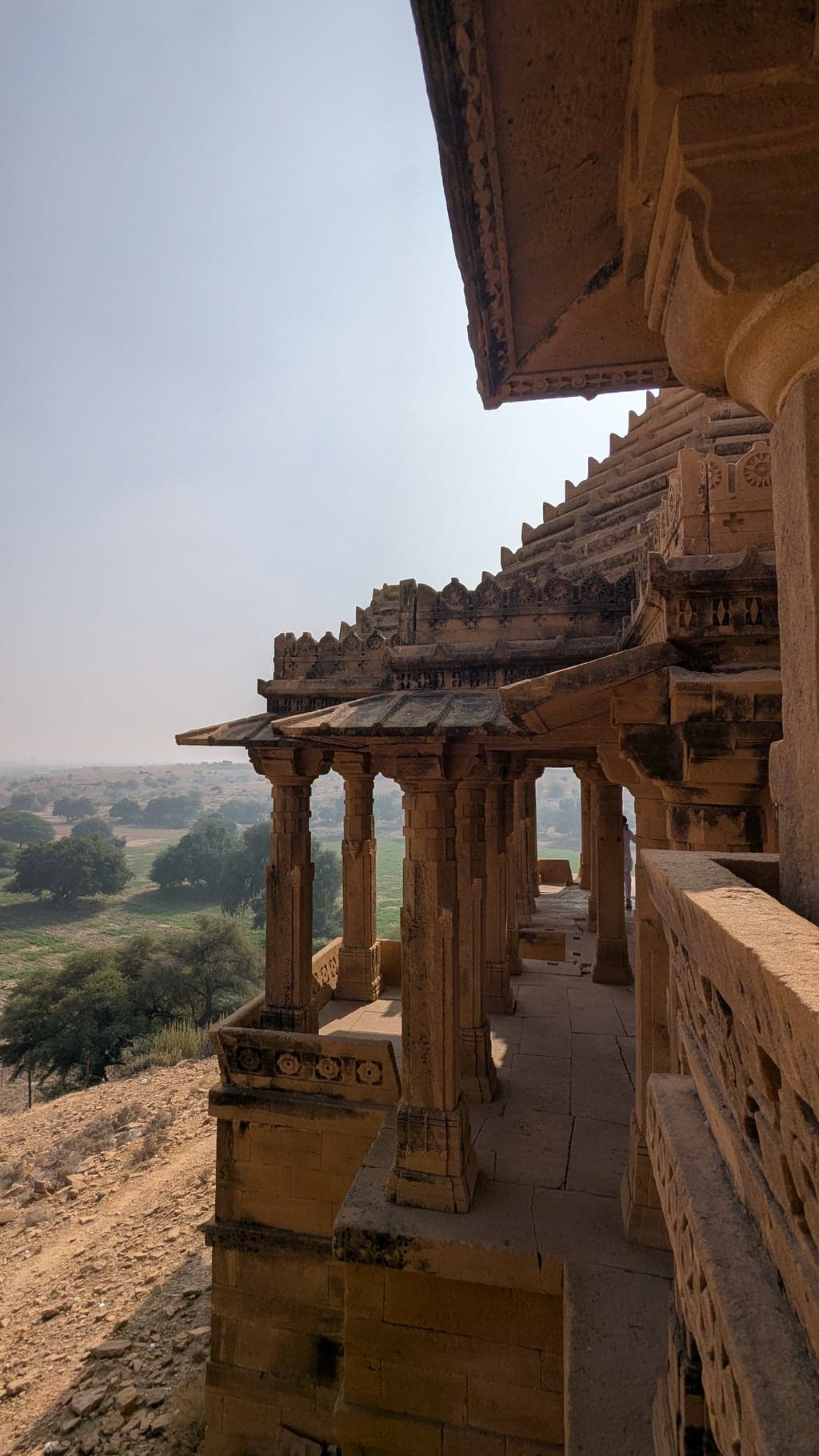
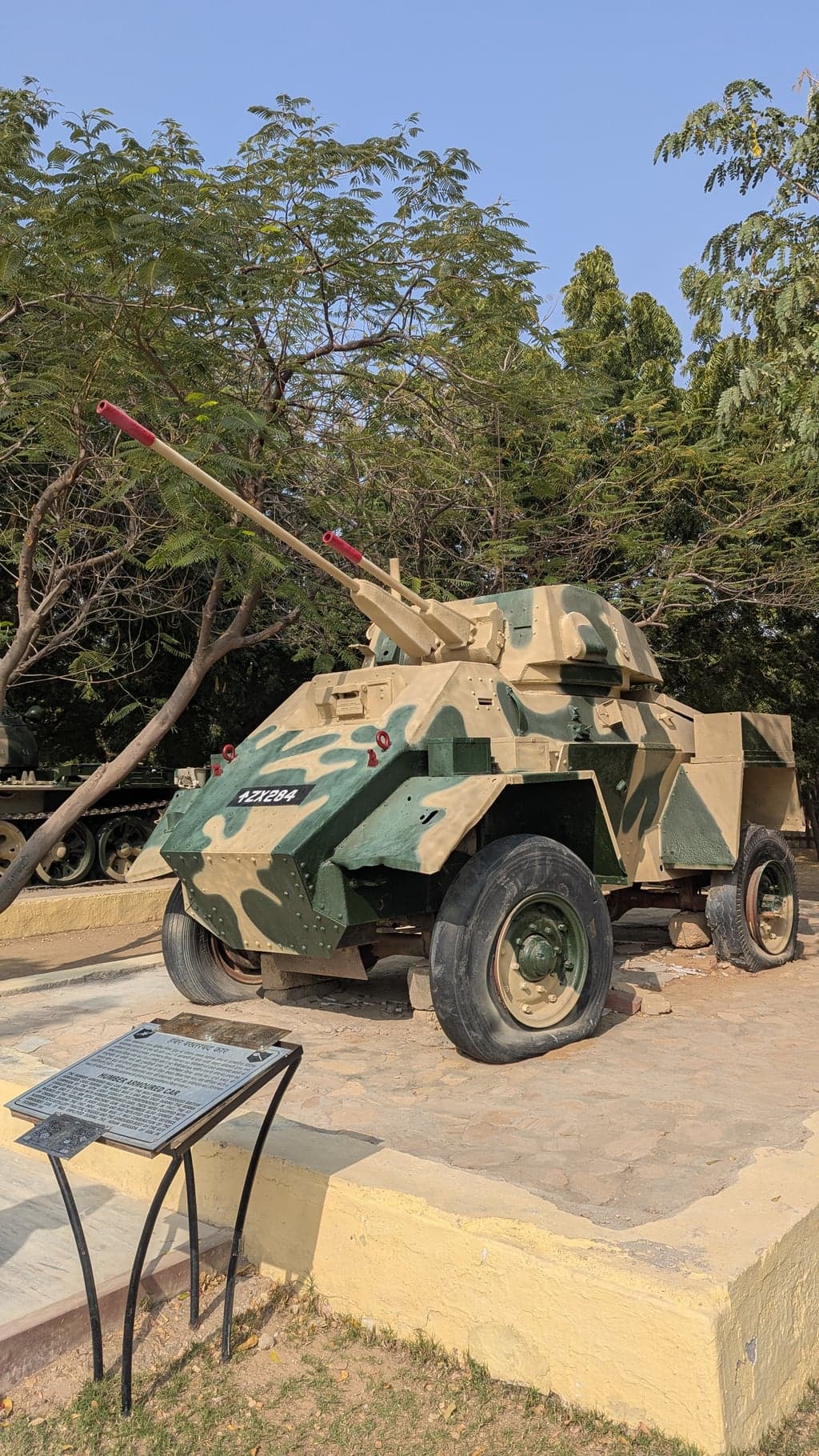
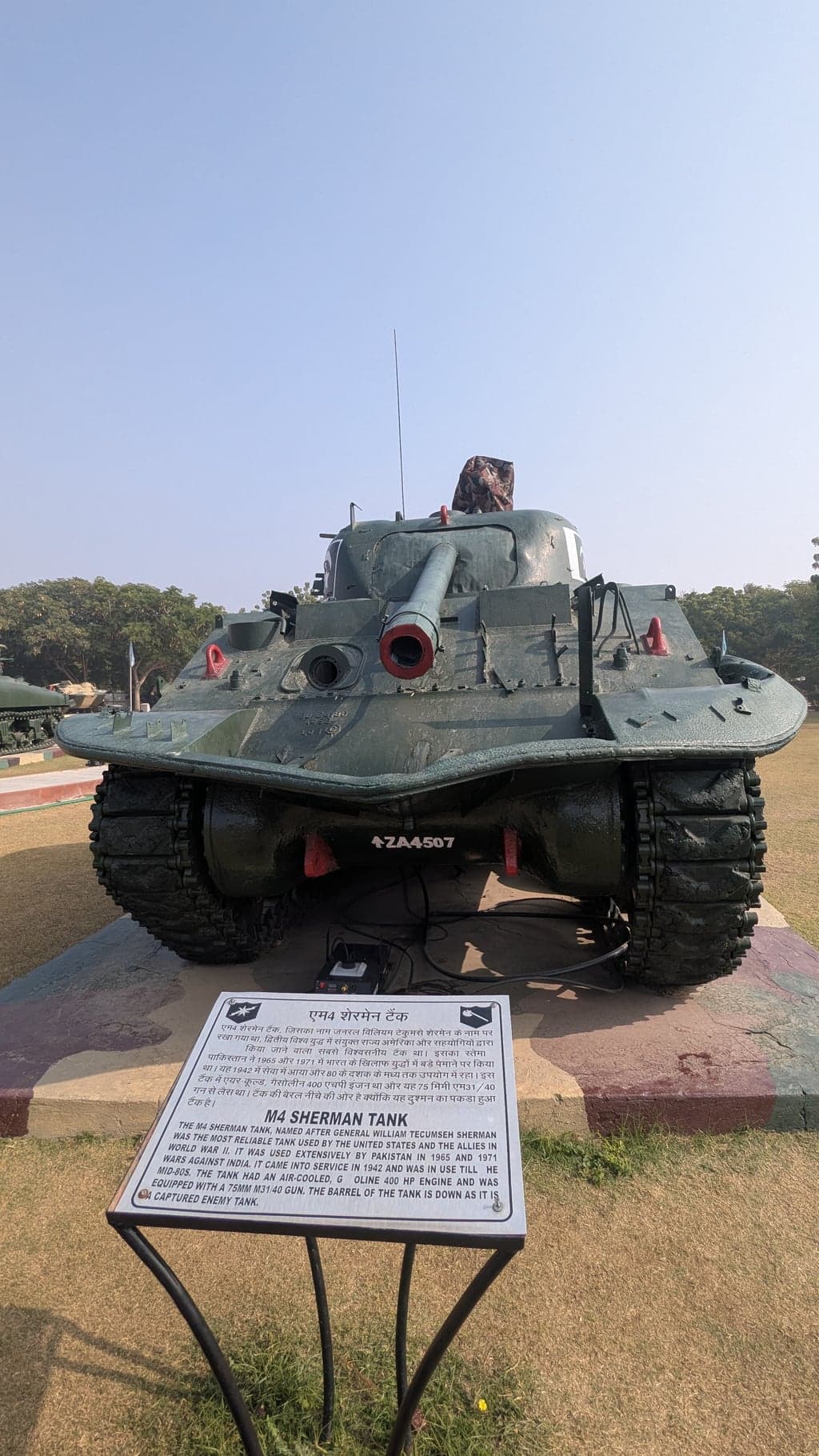
Then we left the fort for the desert. On the way out we stopped at the Jaisalmer War Museum — the Army-run yard of decommissioned tanks, artillery and aircraft on NH11 just outside the city, most of it tied to the 1971 war and the Battle of Longewala. Then Bada Bagh, where the royal chhatris sit in rows against flat desert sky — honey-coloured stone, quieter than the fort, memorial rather than fortress. And Kuldhara, the abandoned village every driver in Jaisalmer will tell you is haunted. The ghost story does a lot of marketing work, but the village doesn't need it: rows of ruined sandstone houses, a whole settlement emptied out overnight two centuries ago, and a silence that sticks with you longer than the visit does.
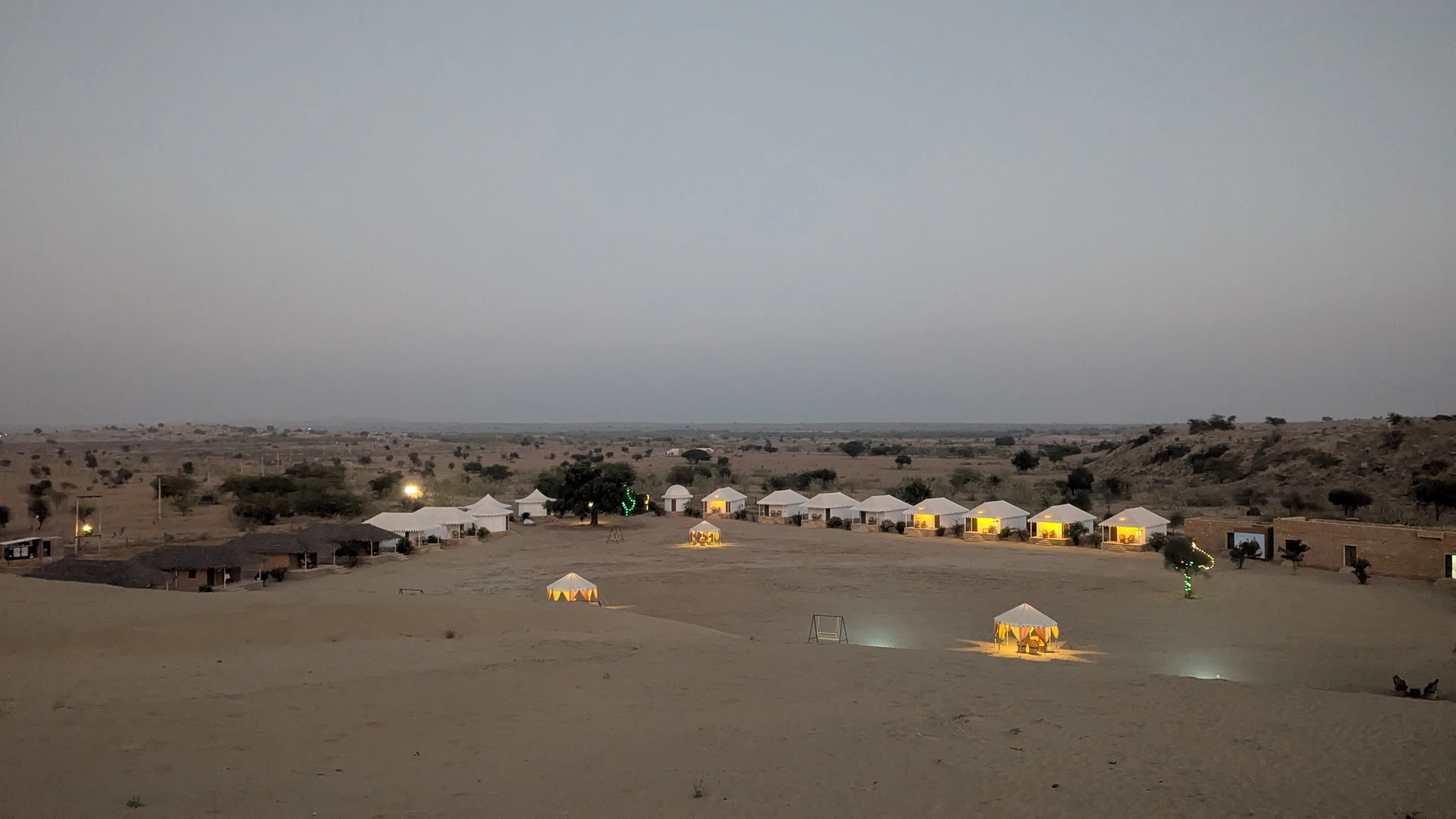
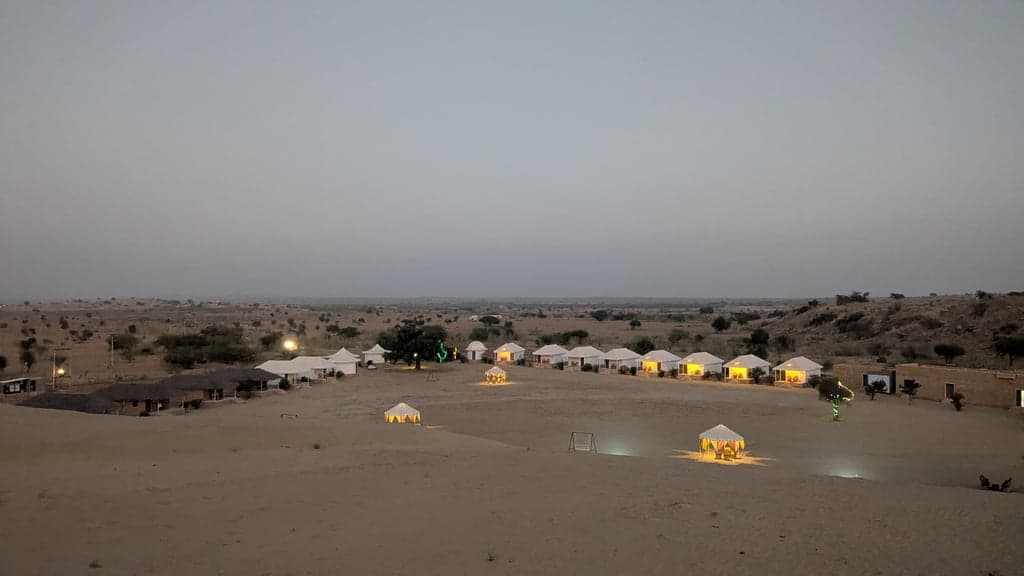
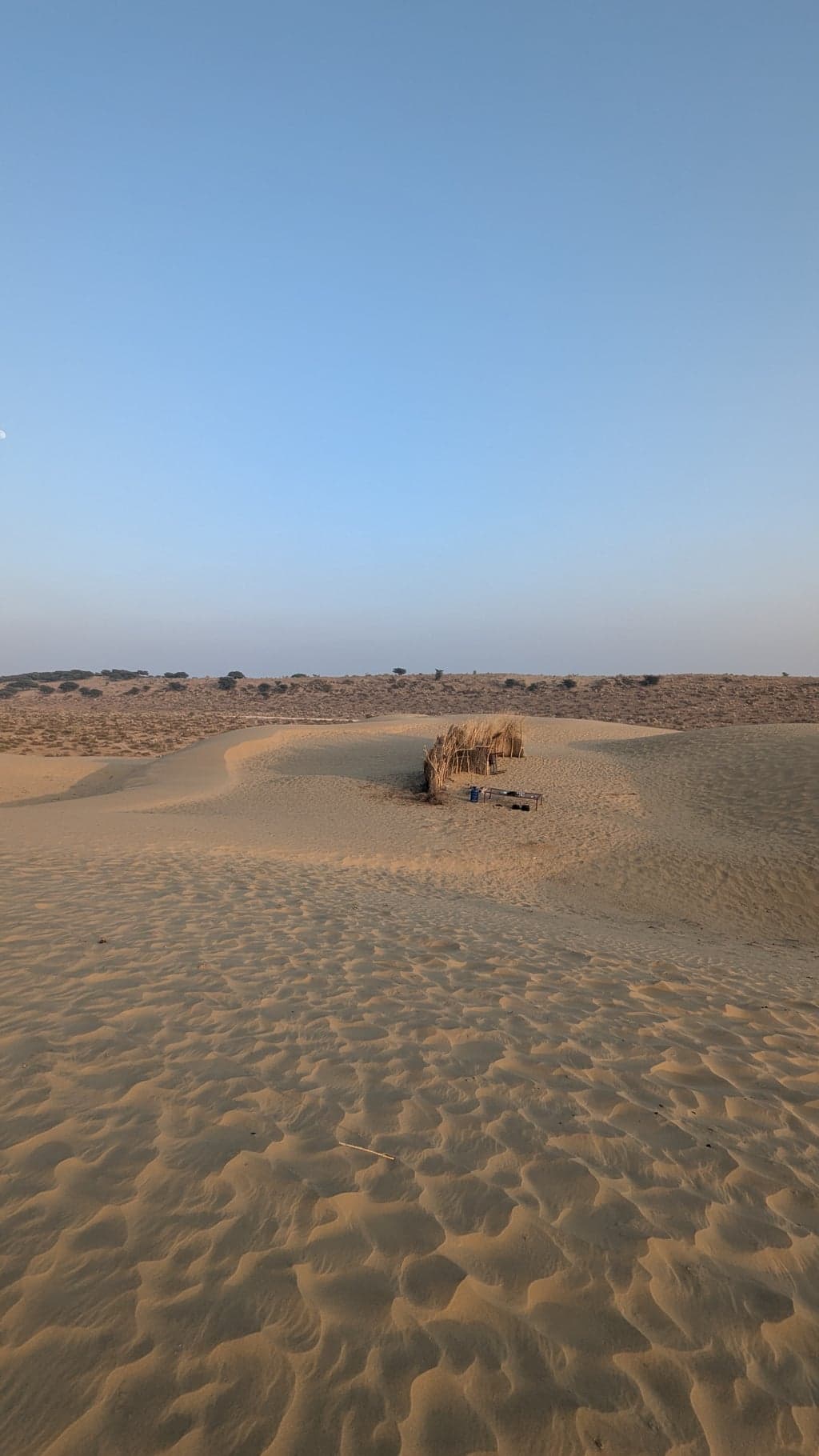
By late afternoon we reached the dunes — not the well-trodden Sam sand dunes most tour jeeps head for, but the quieter camp area out near Baran and Tejsi, roughly 45km southwest of the city. The camel ride out was timed for sunset, and it delivered the version you hope for: colour draining out of the sky in stages while the sand went from gold to grey, the camels entirely indifferent to all of it. Back at camp there was a culture show, a bonfire, the easy chitchat that comes with it. The camp itself was good — comfortable tents, proper amenities, fair rates.
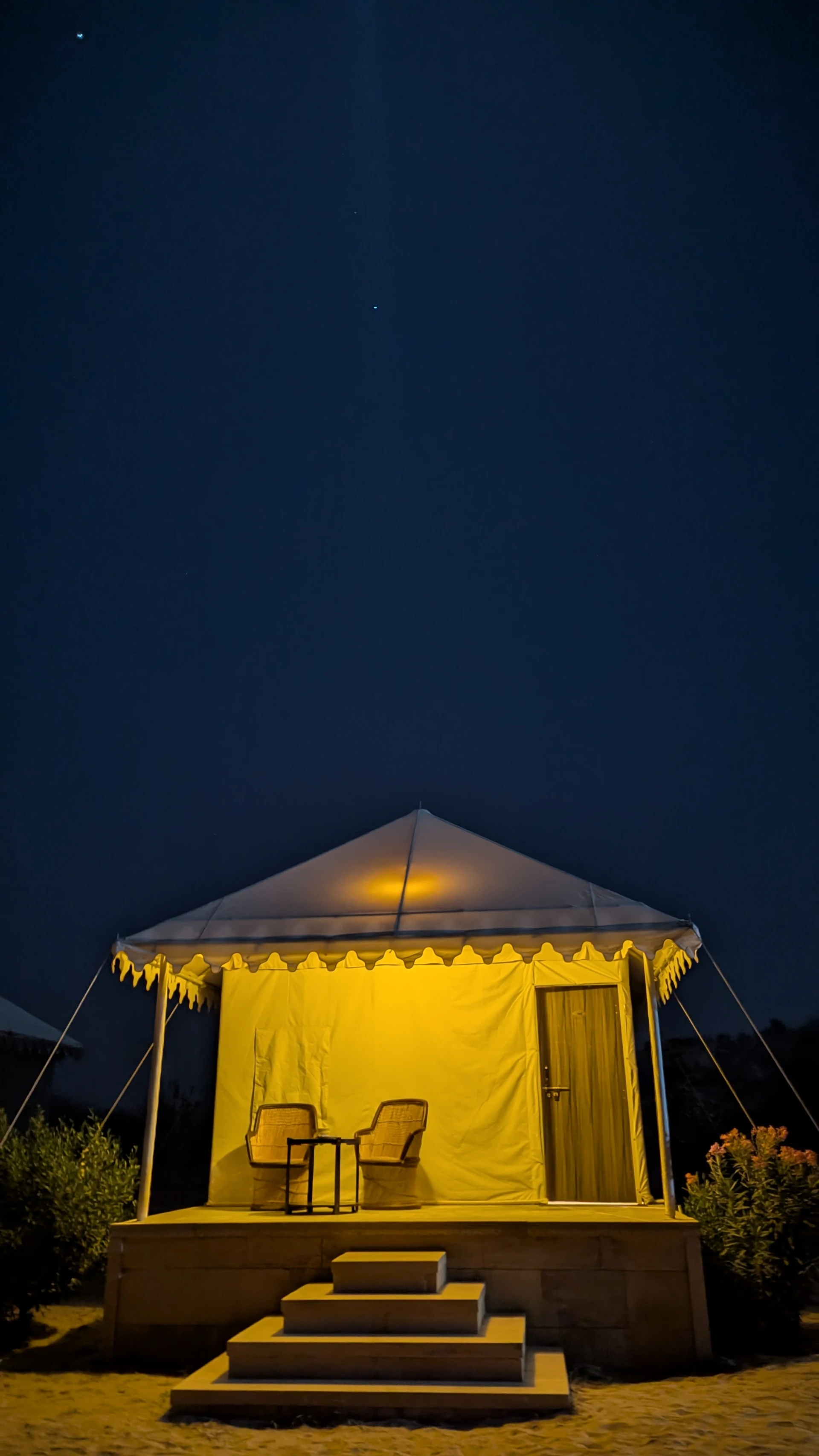
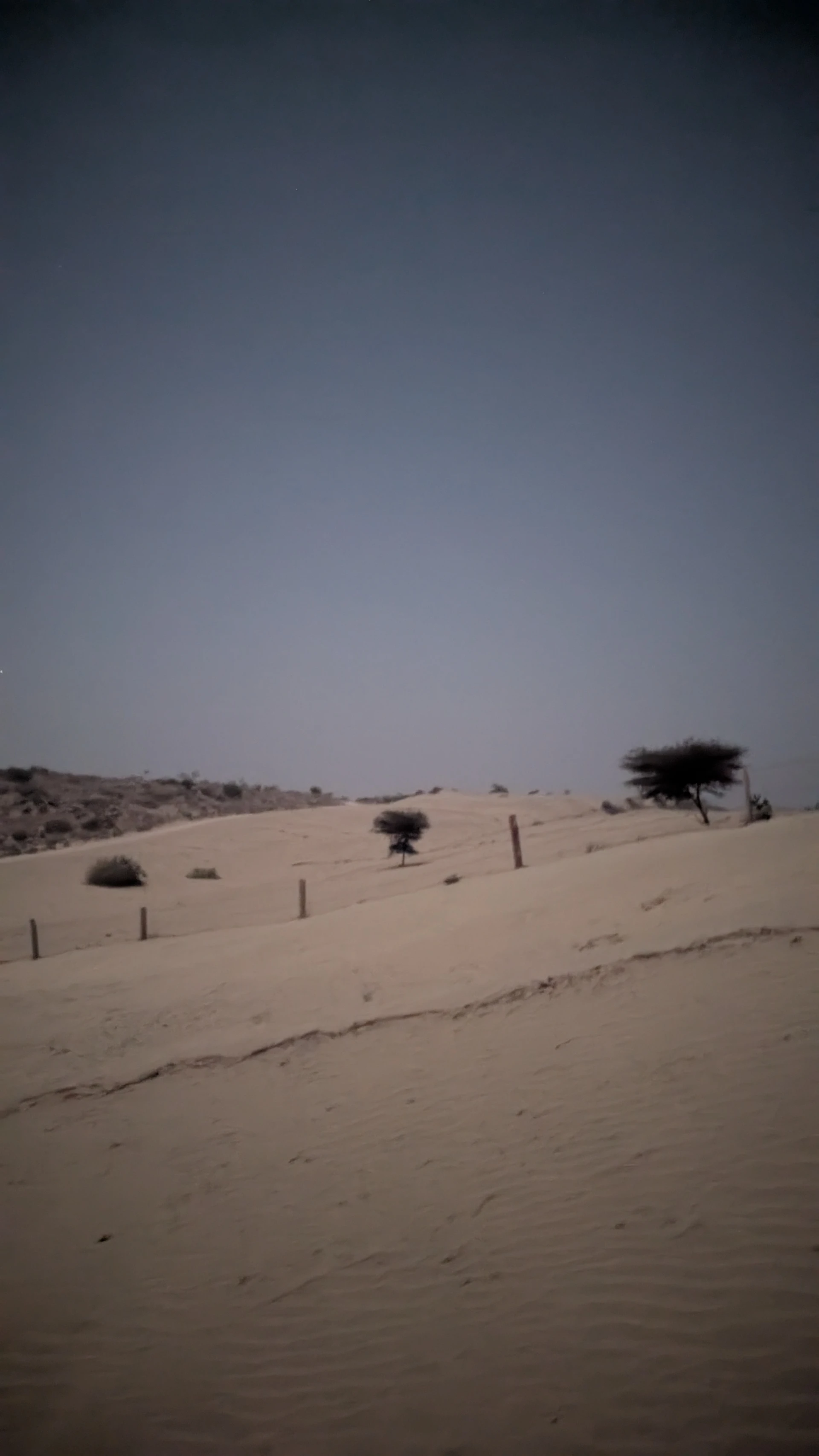
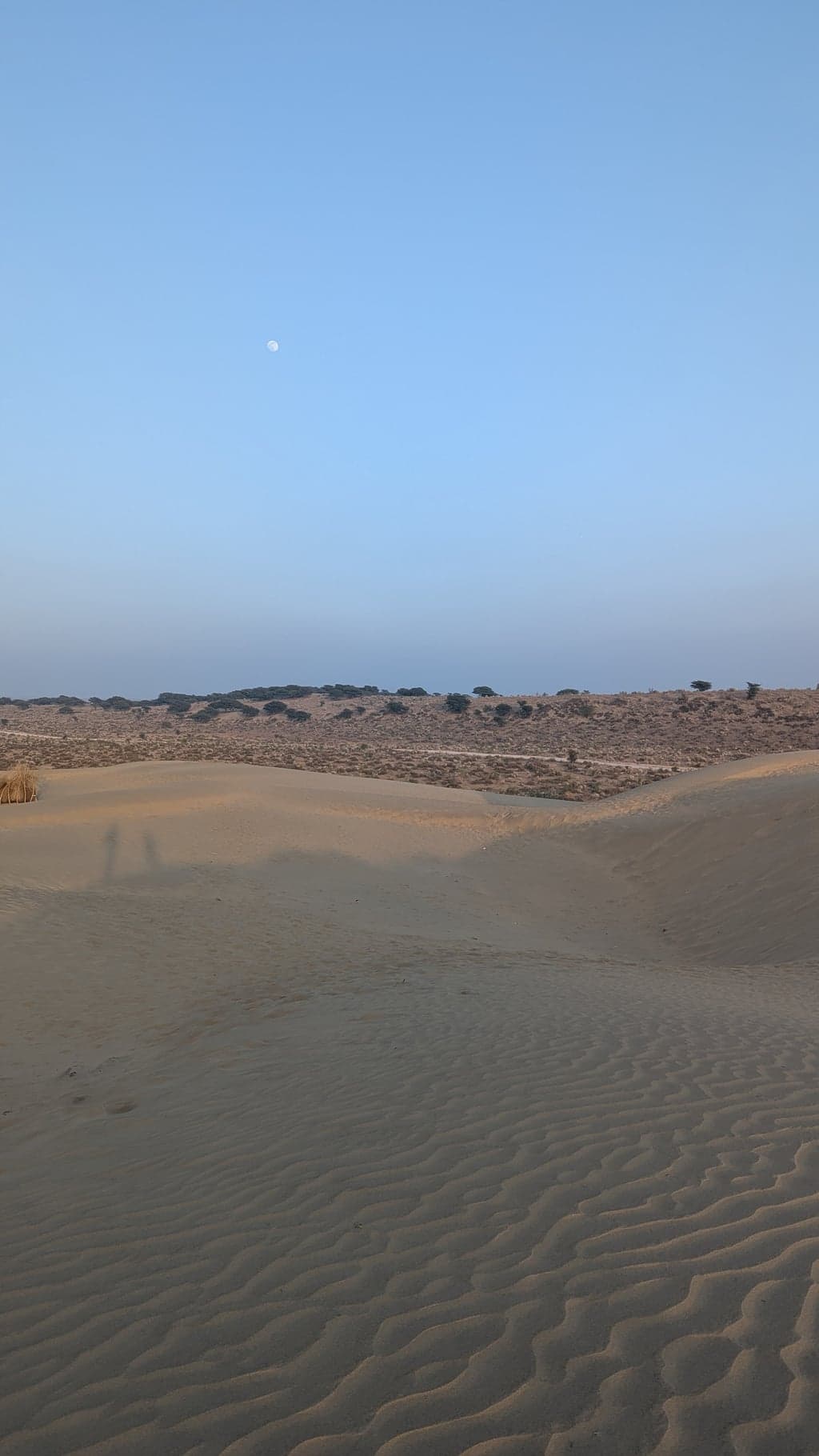
The part nobody sells you is what came after. Late in the night, properly cold, we walked back up the dunes and just sat there under the moon — no music, no bonfire, no other people. The desert at night is a different organism than the desert at sunset. That hour on the cold sand was worth the whole detour, and it's the reason I'd say stay the night rather than doing a sunset-and-return run.
Day Three: The Long Drive to the Border
From the camp the next morning, we didn't loop straight back to the city. We ran north to the border.
The road out toward Tanot is NH70, and it strips the landscape down to nothing: no villages, no traffic, just flat scrub desert under an enormous sky. Somewhere past Kharo Kot the Thar stops being scenic and starts feeling genuinely remote — the kind of empty that only exists near a hard border. This isn't a tourist drive so much as a military supply route that tourists are allowed on; the highway serves the BSF posts strung out toward Pakistan, another hour or so west of where the tarmac starts feeling lonely.
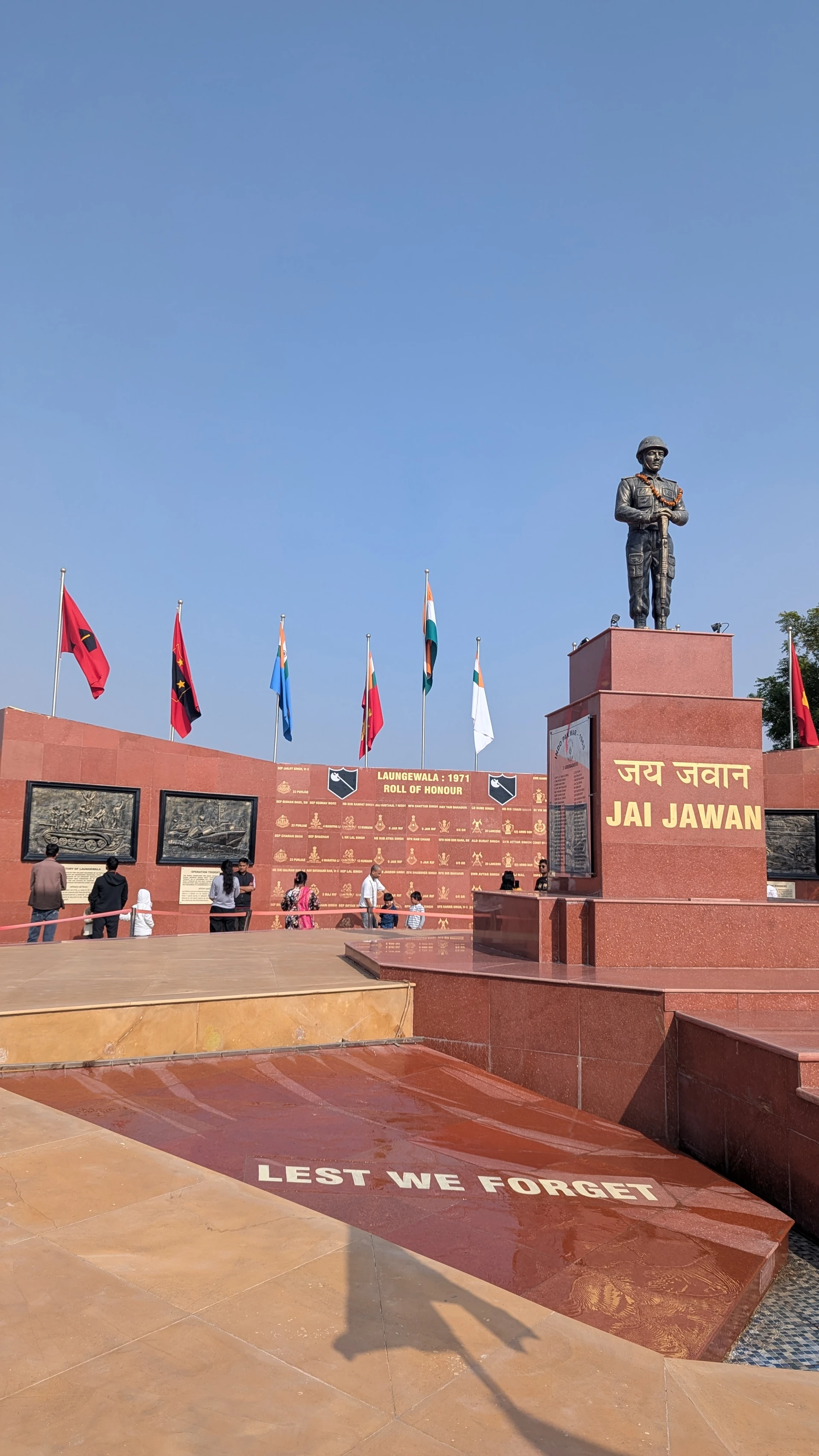
First Longewala. I'd grown up on the border movies that make it a household name in India, and reading the actual history at the site — the numbers, the timeline, how close it actually was in December 1971 — turned out to be one of the better moments of the whole trip. There's something about standing at the place a story happened, after only ever knowing it from a screen, that recalibrates the story. It's the same pull that took us to the Kargil War Memorial on the Srinagar–Leh road years earlier: some places you visit for the landscape, and some you visit because of what happened on the ground.
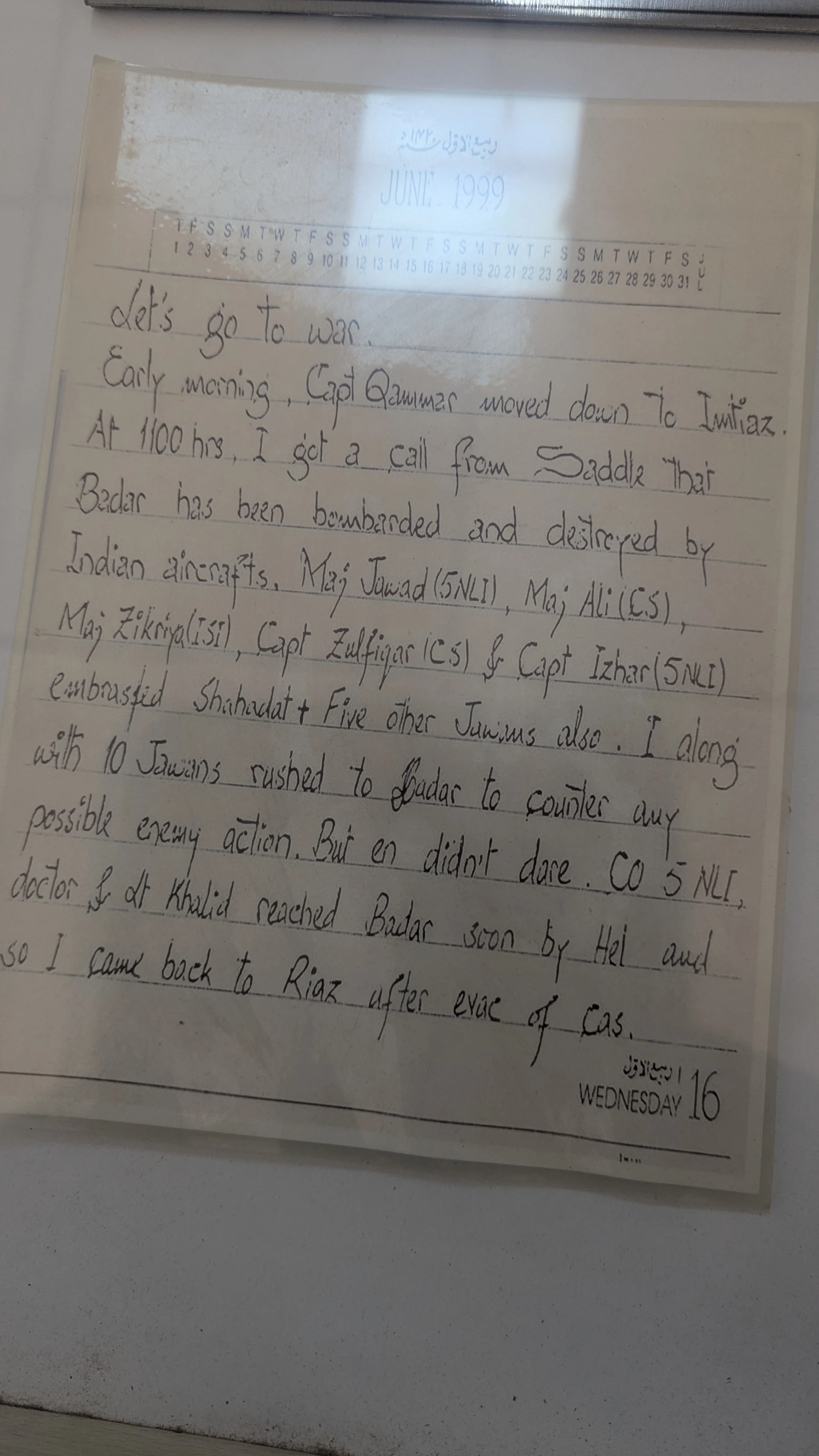
Then Tanot Mata Temple, further north still, close enough to the border that it's sacred to the Border Security Force. The story that draws people is the war record — the temple came through the 1965 and 1971 shelling untouched, with unexploded shells on display at the adjoining museum to prove the point. Whether or not you buy the divine-protection framing, standing at a temple that far into the desert, that close to the line, does something to the way you think about all of it.
By late afternoon, the border behind us, we were back in Jaisalmer — this time at Hotel Garh Jaisal Haveli for our final night. If KD Palace is the premium central stay, Garh Jaisal is the one for the view. It sits at a corner of the fort, overlooking the old city and the lake, and the room came with a window sit-out I could have stayed in all evening. Beautiful property, great rooms, warm and genuinely welcoming staff, good food. Book this one for at least a night — between them, the two hotels gave us completely different angles on the same fort.
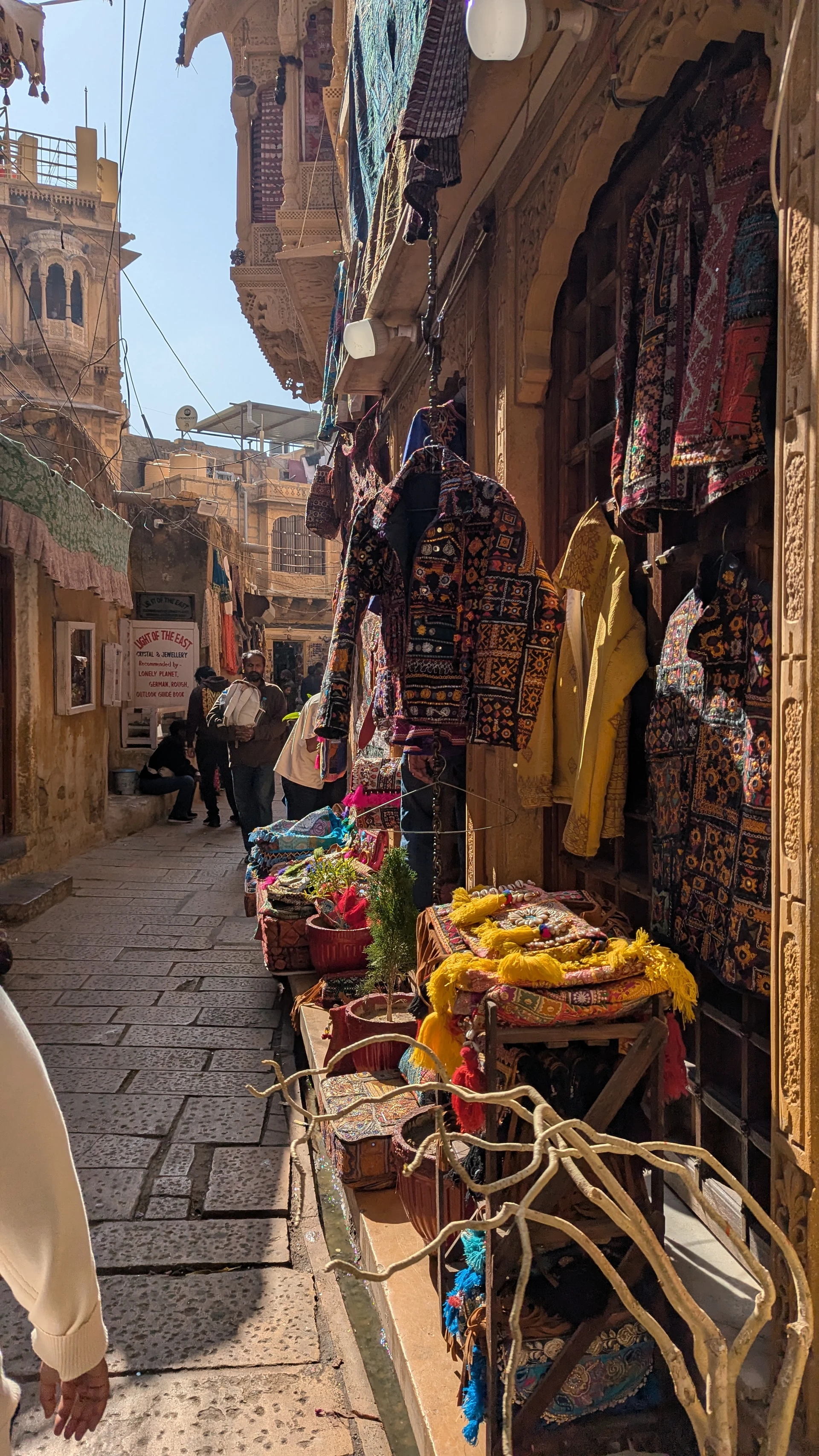
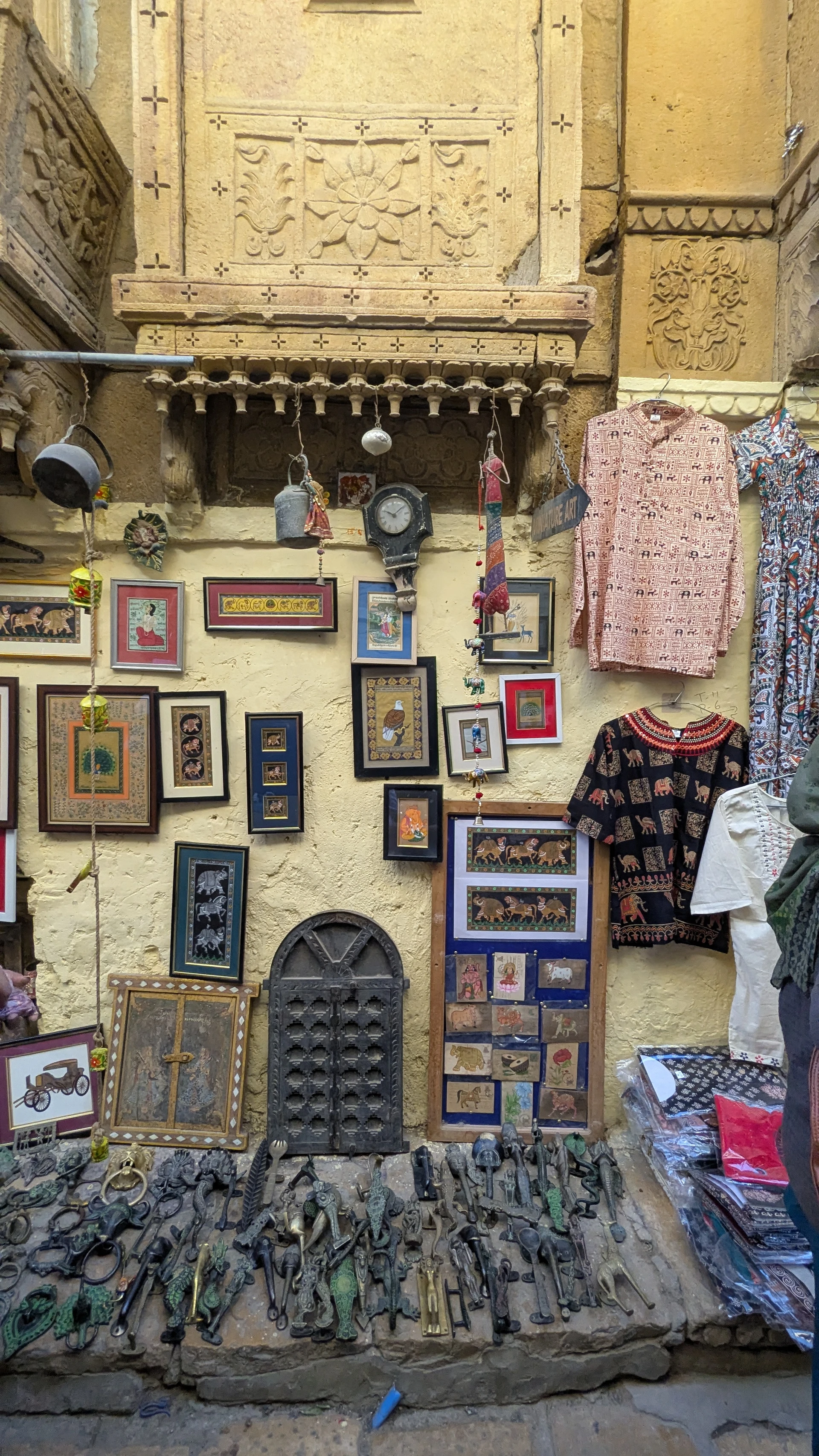
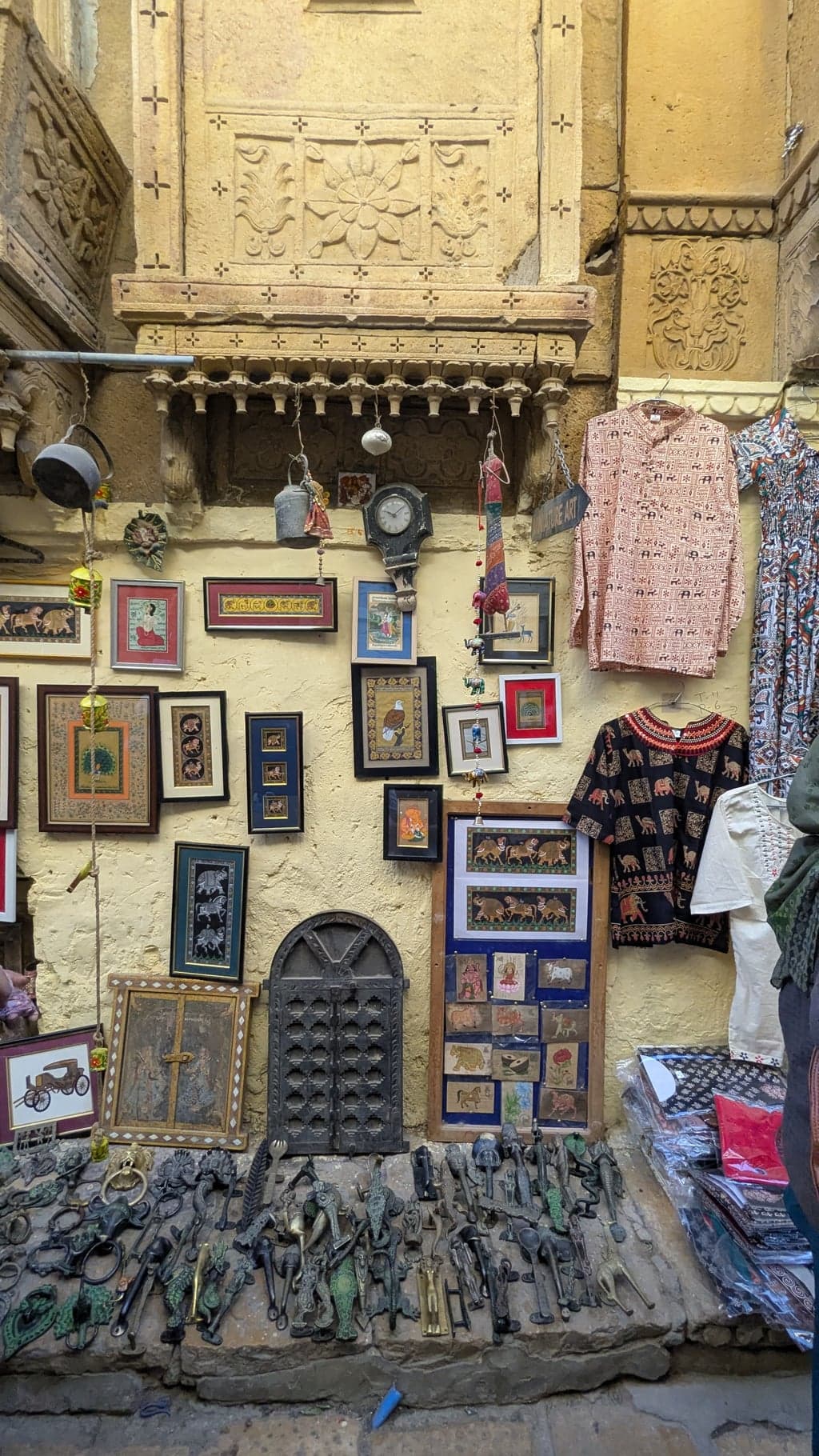
We spent that last evening just walking — no itinerary, no must-see list, just soaking in a fort that had emptied out of day-trippers again. We ducked into a bookstore and ended up in a long, unplanned conversation with the owner about how he'd started the shop, what had changed in the fort over the years he'd run it. A few doors down, a shopkeeper selling fridge magnets told us about running multi-night camel safaris deep into the desert — the kind of thing we'd just gotten a taste of — and made a genuine case for us to come back and do it properly.
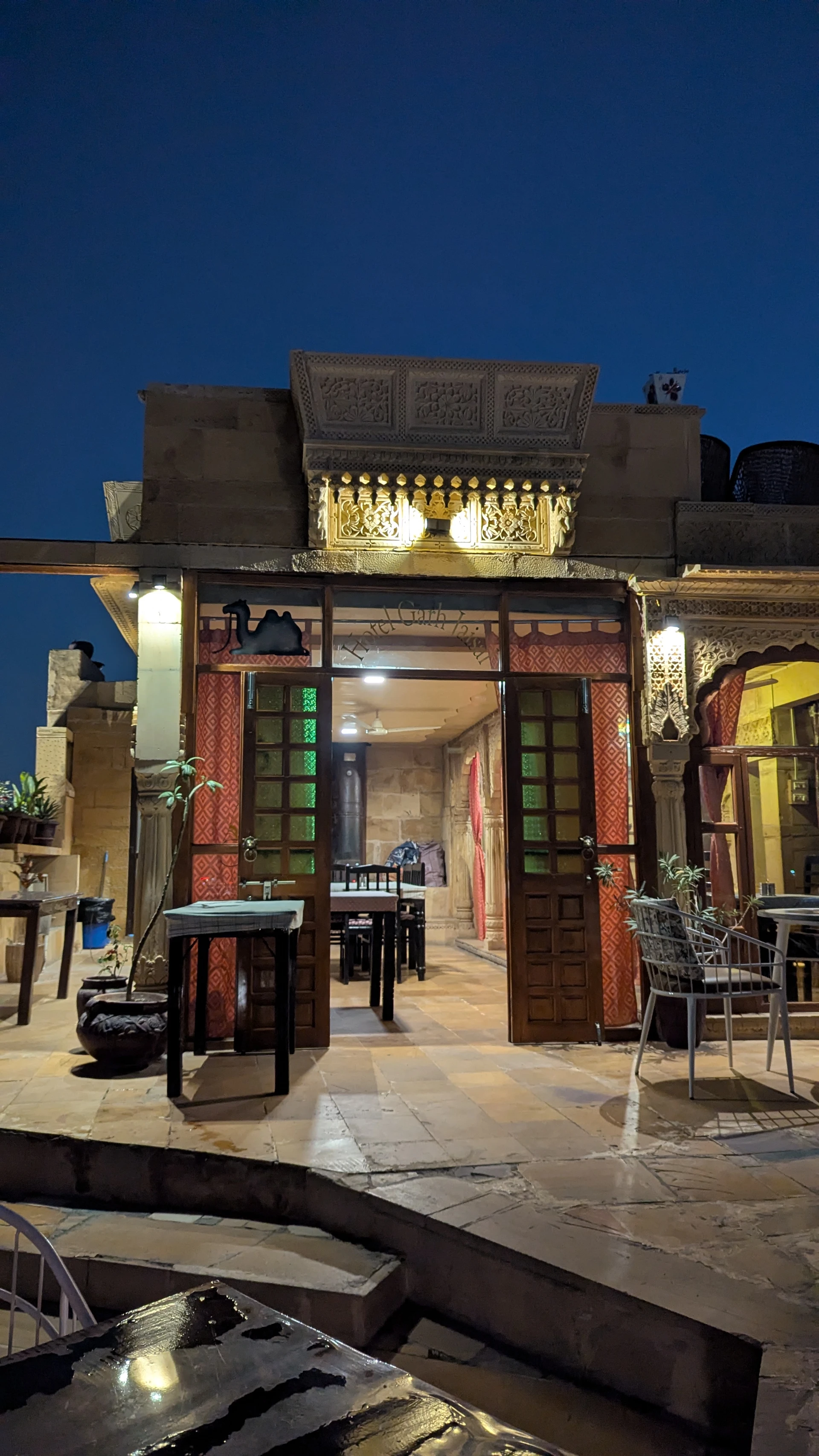
If you want the fuller picture on where to stay — including a few other genuinely fort-interior properties worth knowing about if KD Palace or Garh Jaisal are booked out — we've put together a dedicated guide to hotels inside Jaisalmer Fort.
What We Ate
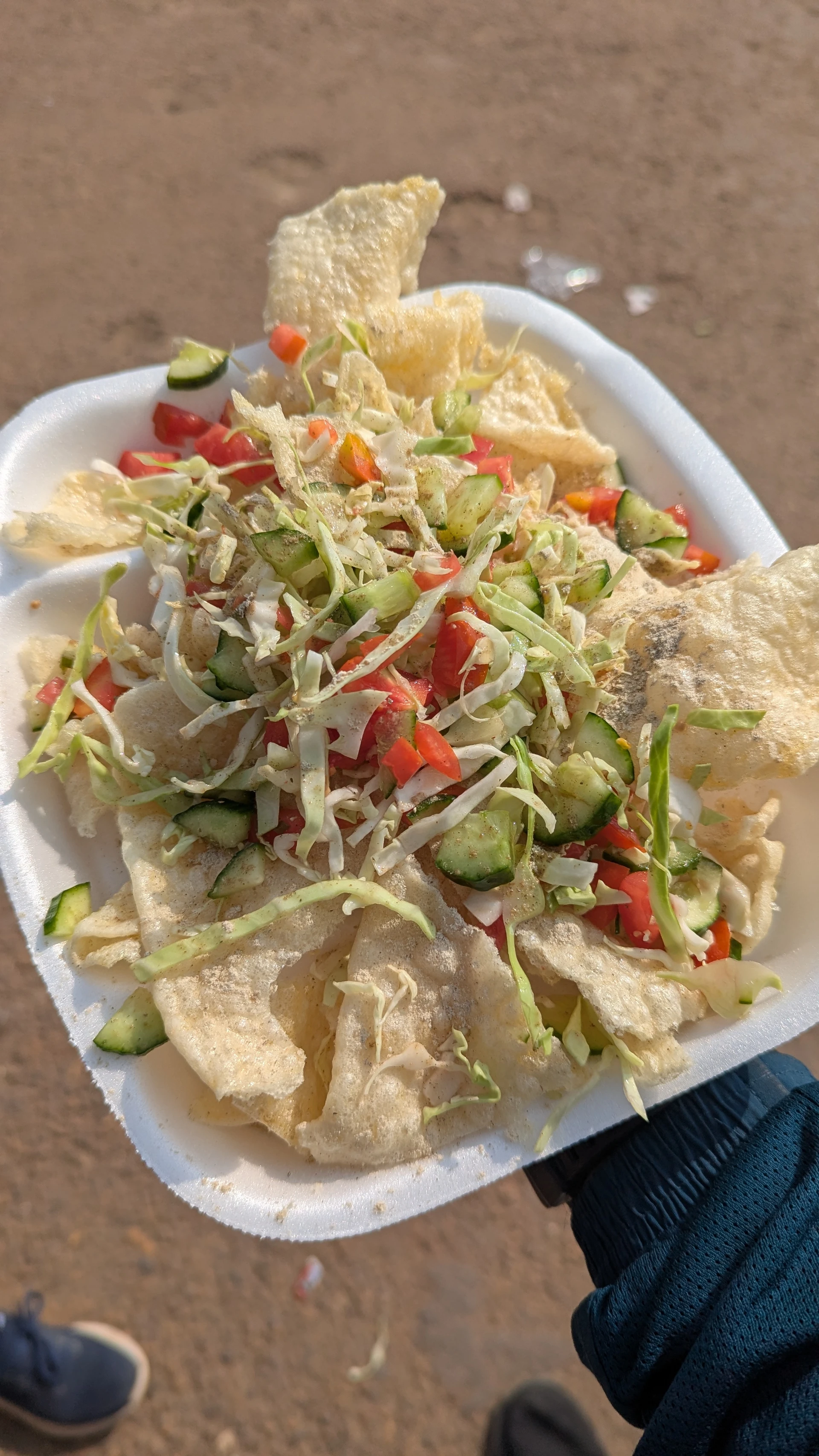
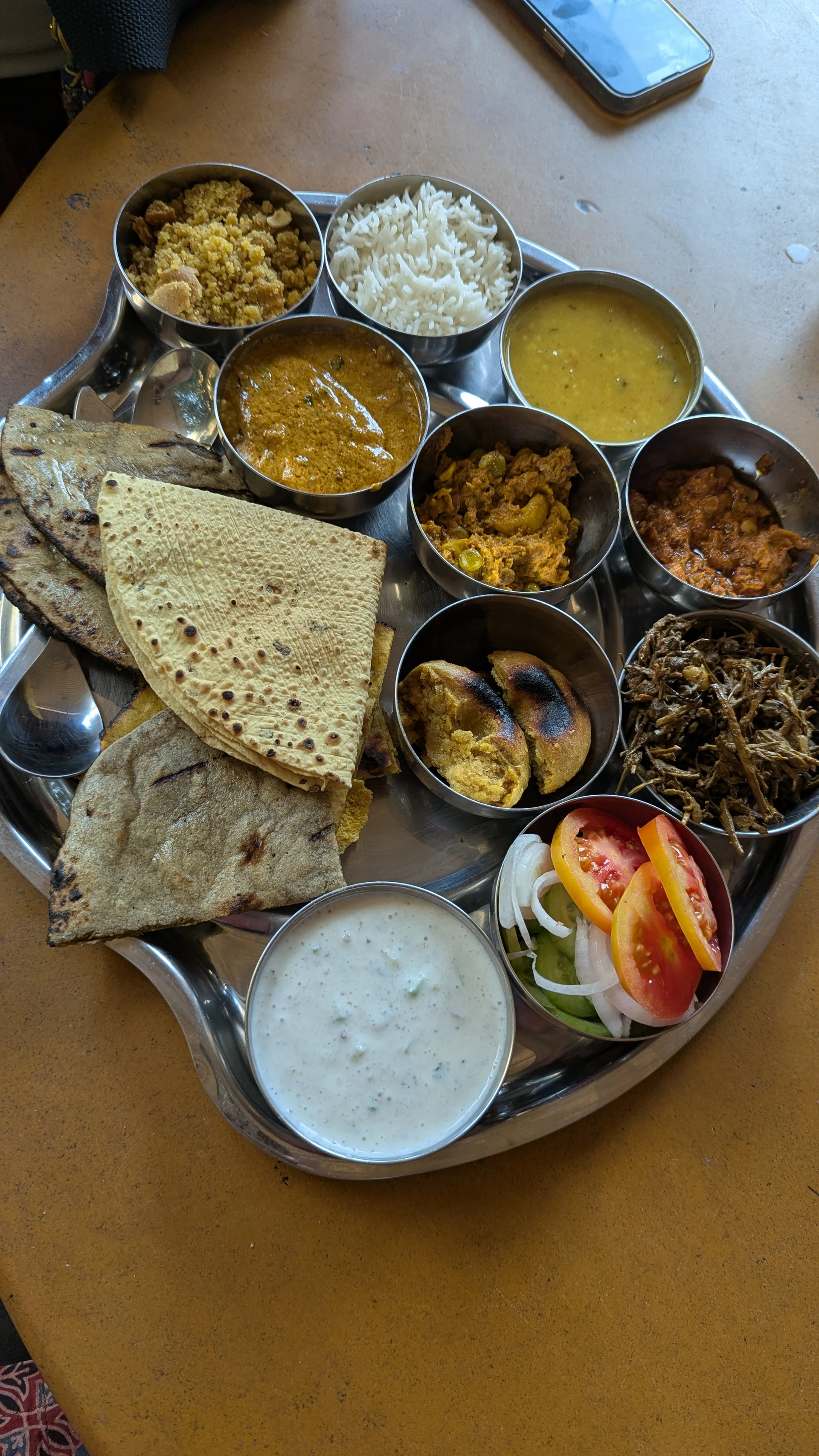
Most of our meals happened at the small restaurants inside the fort itself — nothing fancy, mostly rooftop-and-courtyard places in the lanes, plus good food at both hotels. Ker sangri showed up more than once: the desert beans-and-berries combination that tastes like nothing else and doesn't translate until you've had it. And ghotua ladoo, the local besan sweet that's rich enough that one is genuinely enough. Neither is hard to find in Jaisalmer; both are worth ordering deliberately rather than defaulting to the paneer section of the menu.
If You're Planning This
- Stay inside the fort — both our hotels were excellent. KD Palace is the premium, newly renovated central option (book direct, it's cheaper); Garh Jaisal Haveli is the corner property with the old-city-and-lake view and the window sit-out. Splitting our nights between them gave us two different angles on the fort, and I'd recommend both.
- Do the fort early, or do it late — never midday. The crowded midday fort is a different building than the fort at sunrise or after dark. New Year's morning, with the lanes empty, was the single best hour we had.
- Skip Sam for Baran if you can. The dunes near Baran and Tejsi, southwest of the city, gave us the camel ride, the sunset and a genuinely quiet night — far fewer people than the main Sam dunes. Stay the night; the cold, empty dunes at midnight are what you'll actually remember.
- The Tanot–Longewala border drive is a half-day commitment — take it seriously. Roughly 120km each way north on NH70, deep into empty Thar toward the Pakistan border. Hire a car and driver for the day. The War Museum, Bada Bagh and Kuldhara pair naturally with the same stretch of road.
- We were there over New Year (December 2025–January 2026) — bigger crowds, higher prices, a city in party mode. We don't regret it, but the fort's calm hours become even more valuable when the rest of the city is loud.
Jaisalmer FAQs and Practical Notes
How many days do you need in Jaisalmer?
Three to four is ideal — enough for the fort, the desert and the Longewala–Tanot border run without rushing. Jaisalmer is almost always part of a bigger Rajasthan trip, so it slots naturally between Jodhpur, Jaipur or Udaipur.
How do you get to Jaisalmer?
All the usual options work — there's an airport and a railway station — but most people arrive overland as part of a Rajasthan circuit. We took a bus from Jodhpur, roughly four and a half hours across flattening desert. If you're already doing Jodhpur, Jaipur or Udaipur, folding Jaisalmer in by road or rail is the natural move.
Is it worth staying inside the fort?
Yes, emphatically — it's the single thing I'd insist on. Sleeping inside a living twelfth-century fort means you get the lanes at sunrise and after dark, once the day-trippers have gone. We split our nights between KD Palace (premium, newly renovated, central — book direct, it's cheaper) and Garh Jaisal Haveli (a corner property overlooking the old city and lake, with a window sit-out worth the booking on its own).
Sam or Baran for the desert camp?
Baran and Tejsi, southwest of the city, over the better-known Sam dunes. Same landscape — camel rides, high ridgelines, big skies — with a fraction of the crowd. Stay overnight rather than doing a sunset-and-return; the cold, silent dunes at midnight are the part you'll remember.
Is the Longewala and Tanot drive worth it?
If military history means anything to you, it's the best day of the trip. It's a serious half-day commitment — roughly 120km each way north on NH70 toward the Pakistan border — so hire a car and driver for the day rather than attempting it piecemeal. Pair it with the War Museum, Bada Bagh and Kuldhara.
When is the best time to visit?
October to February, when desert days are warm and the nights are cold but bearable. We went over New Year — the fort was crowded and prices climbed, but a lantern-lit New Year's Eve inside Sonar Kella is hard to argue with. Avoid summer entirely; the Thar is brutal.
We flew out on the 3rd, back to Bengaluru, carrying that specific tiredness that comes from a week of forts and desert cold. Jaisalmer had given us Sonar Kella — not the fortress from the book or the film, but a real one you can live inside for a night, walk before the crowds wake, and leave with a shopkeeper's camel-safari pitch still working on you as a reason to come back.
Photos from Jaisalmer Itinerary: Staying Inside Sonar Kella & the Longewala Drive
Google Pixel 7 — 7mm • ƒ/1.9 • 1/4348 • ISO 46
Google Pixel 7 — 7mm • ƒ/1.9 • 1/4049 • ISO 49
Google Pixel 7 — 7mm • ƒ/1.9 • 1/2262 • ISO 45
Google Pixel 7 — 2mm • ƒ/2.2 • 1/411 • ISO 289
Google Pixel 7 — 7mm • ƒ/1.9 • 1/1664 • ISO 54
Google Pixel 7 — 7mm • ƒ/1.9 • 1/186 • ISO 73
Google Pixel 7 — 7mm • ƒ/1.9 • 1/7092 • ISO 45
Google Pixel 7 — 2mm • ƒ/2.2 • 1/352 • ISO 205
Google Pixel 7 — 7mm • ƒ/1.9 • 1/2899 • ISO 42
Google Pixel 7 — 7mm • ƒ/1.9 • 1/33 • ISO 3674
Google Pixel 7 — 7mm • ƒ/1.9 • 1/552 • ISO 37
Google Pixel 7 — 2mm • ƒ/2.2 • 1/497 • ISO 43
Google Pixel 7 — 7mm • ƒ/1.9 • 1/2217 • ISO 39
Google Pixel 7 — 2mm • ƒ/2.2 • 1/5155 • ISO 49
Google Pixel 7 — 7mm • ƒ/1.9 • 1/2513 • ISO 48
Google Pixel 7 — 7mm • ƒ/1.9 • 1/285 • ISO 72
Google Pixel 7 — 2mm • ƒ/2.2 • 1/1222 • ISO 50
Google Pixel 7 — 2mm • ƒ/2.2 • 1/273 • ISO 48
Google Pixel 7 — 2mm • ƒ/2.2 • 1/120 • ISO 48
Google Pixel 7 — 7mm • ƒ/1.9 • 1/25 • ISO 314
Google Pixel 7 — 2mm • ƒ/2.2 • 1/210 • ISO 48
Google Pixel 7 — 7mm • ƒ/1.9 • 1/1855 • ISO 42
Related Galleries
Destination Guide
Rajasthan
Jaipur, Jodhpur, Jaisalmer, Udaipur — a destination guide to Rajasthan's desert circuits. Where to base yourself, how long to go, and what the forts actually feel like.