Photo essay
The Monsoon Diaries: Walking the Cloud-Line at Hampta Pass
Monsoon on Hampta Pass — bistort meadows, bleeding mountains, mist on the pass, and Lahaul on the other side.
Hampta Pass in monsoon is pink bistort meadows, wet boots pulled off inside a tent, mules grazing while you hold coffee, and hundreds of temporary waterfalls on rock faces that look like they are bleeding colour. This diary follows a five-day crossover — green Kullu valley in, mist on the pass at roughly 14,000 feet, then the bare drop into Lahaul and yellow tents on the far side. The cloud line is not a metaphor here; it is where you walk for days.
Scroll to read each moment.Each moment is image and caption side by side.
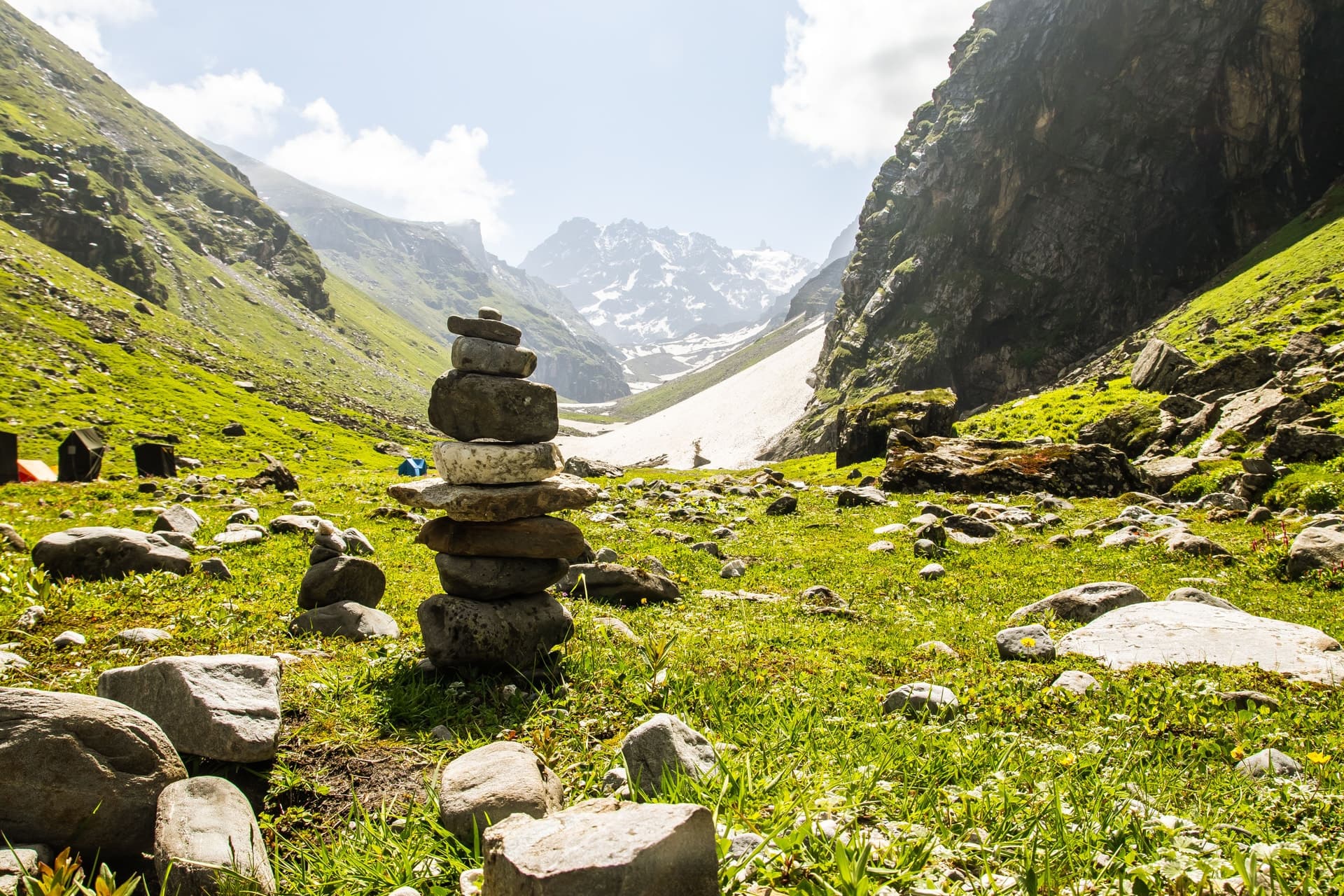
The Stone Sentinel
Every great journey needs a sign. We started the trek with the sun fighting a losing battle against the clouds. In the middle of the vast, green bowl, we found this cairn—a silent, stacked prayer left by trekkers before us. It stood like a sentinel, marking the threshold between the known world and the wild altitude awaiting us.
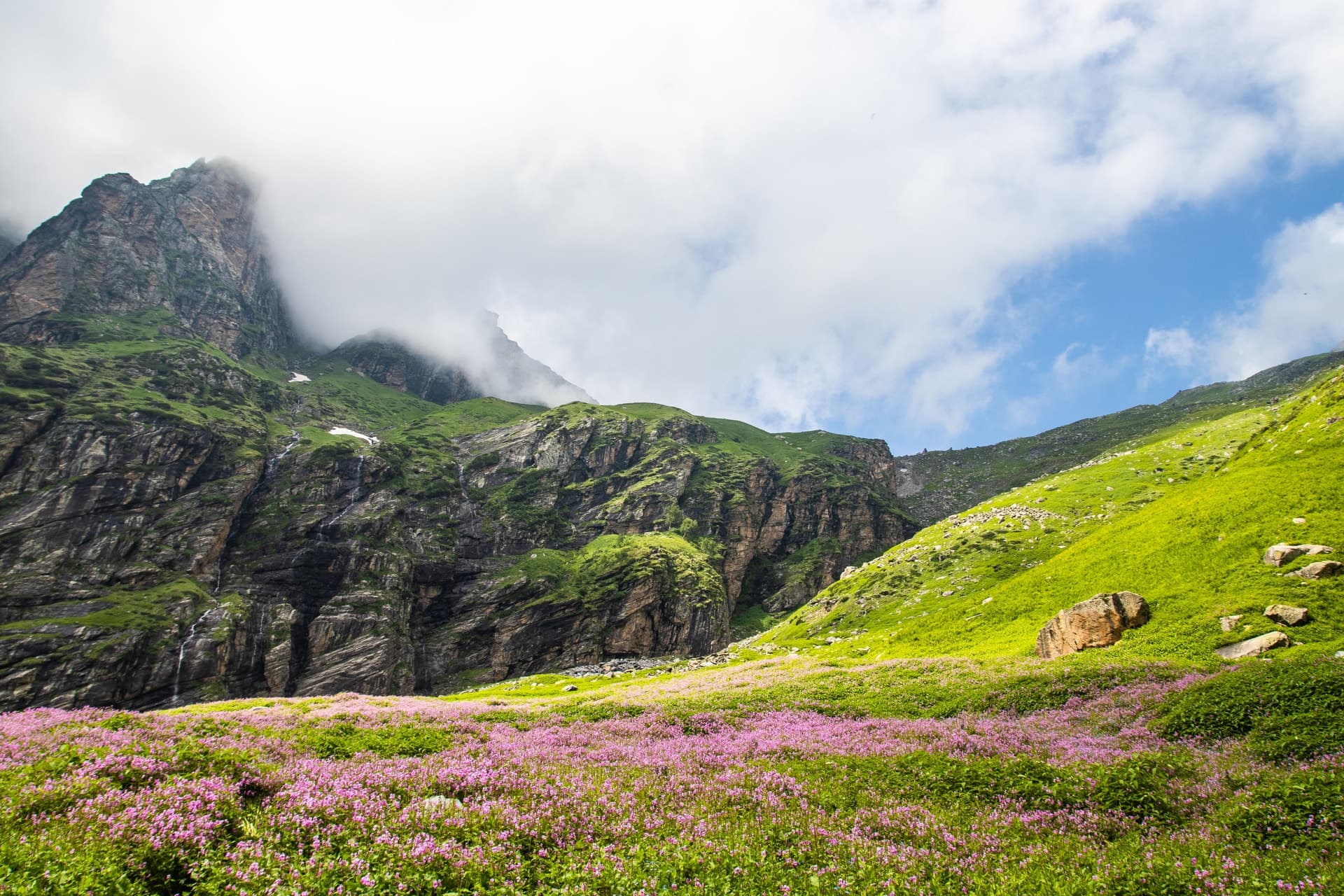
A Sudden Softness
Just as the rock faces became intimidating—looming dark and sheer above us—the ground softened. We walked into a sudden explosion of pink bistort flowers. It was a stunning contradiction: the brutal, unforgiving cliffs in the background and this delicate, wind-swept carpet at our feet.
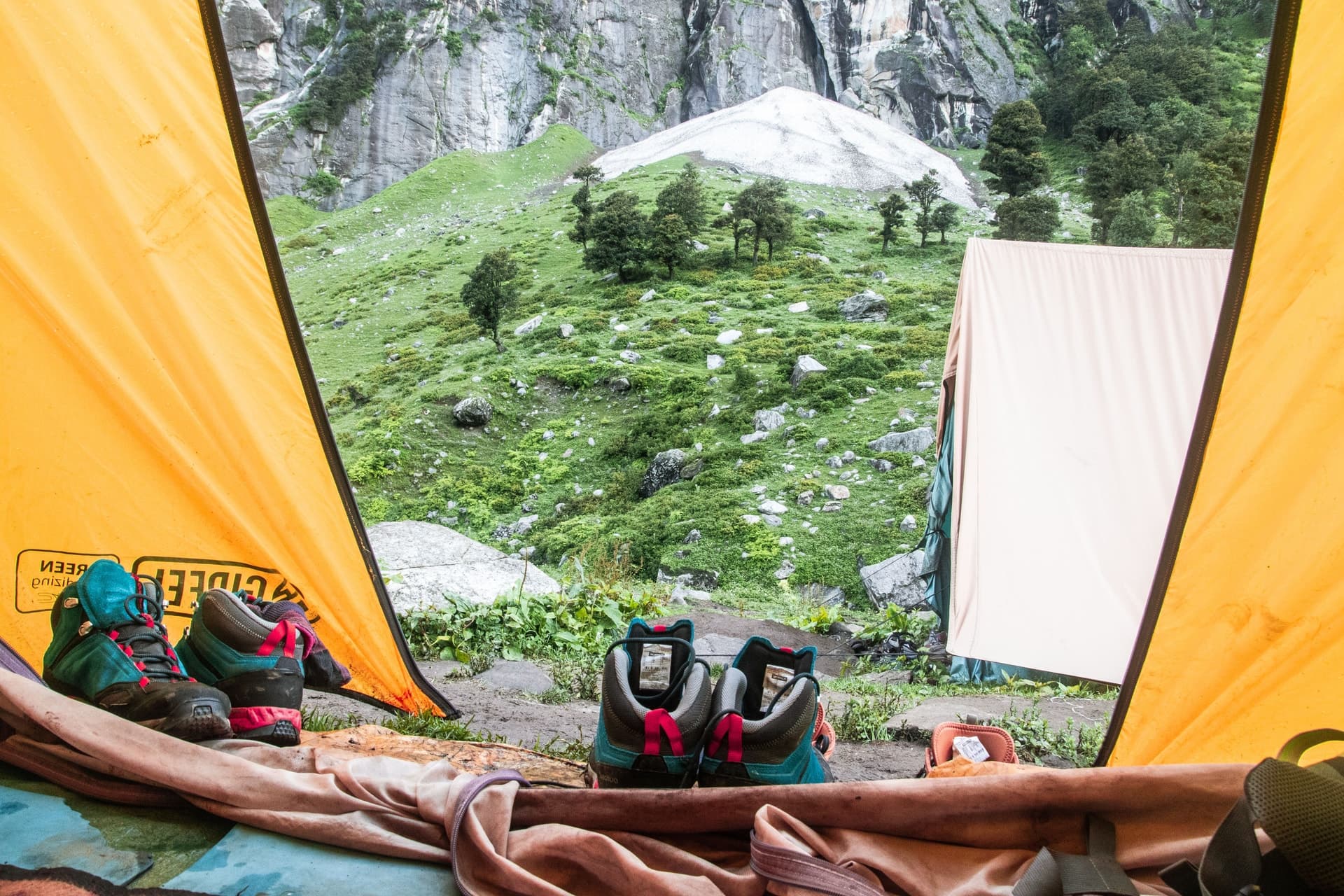
The Best Seat in the House
Then came the rain, and with it, the best part of the day. There is a specific kind of joy in unlacing wet hiking boots and diving into a dry sleeping bag while rain patters on the tent fly. Looking out at the mist rolling over the wet grass, I realized this view beat any five-star hotel window I’ve ever seen.
We Are Small
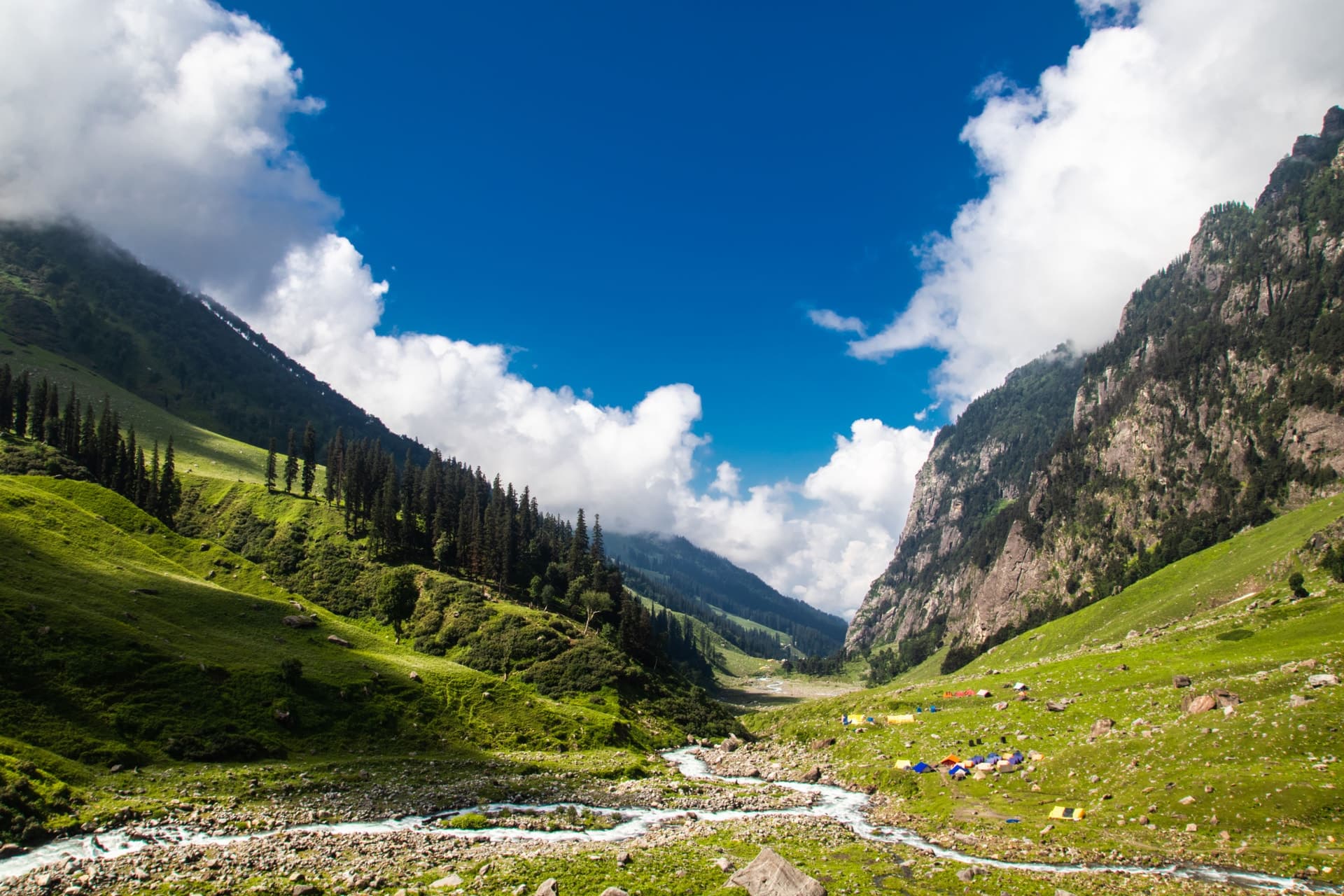
You never realize how small you are until you set up camp in the Himalayas. Our bright yellow and blue tents looked like scattered toys against the sheer, sweeping grandeur of the valley. Standing there, looking at our temporary home, the silence of the mountains finally overtook the noise in my head.
Into the Gorge
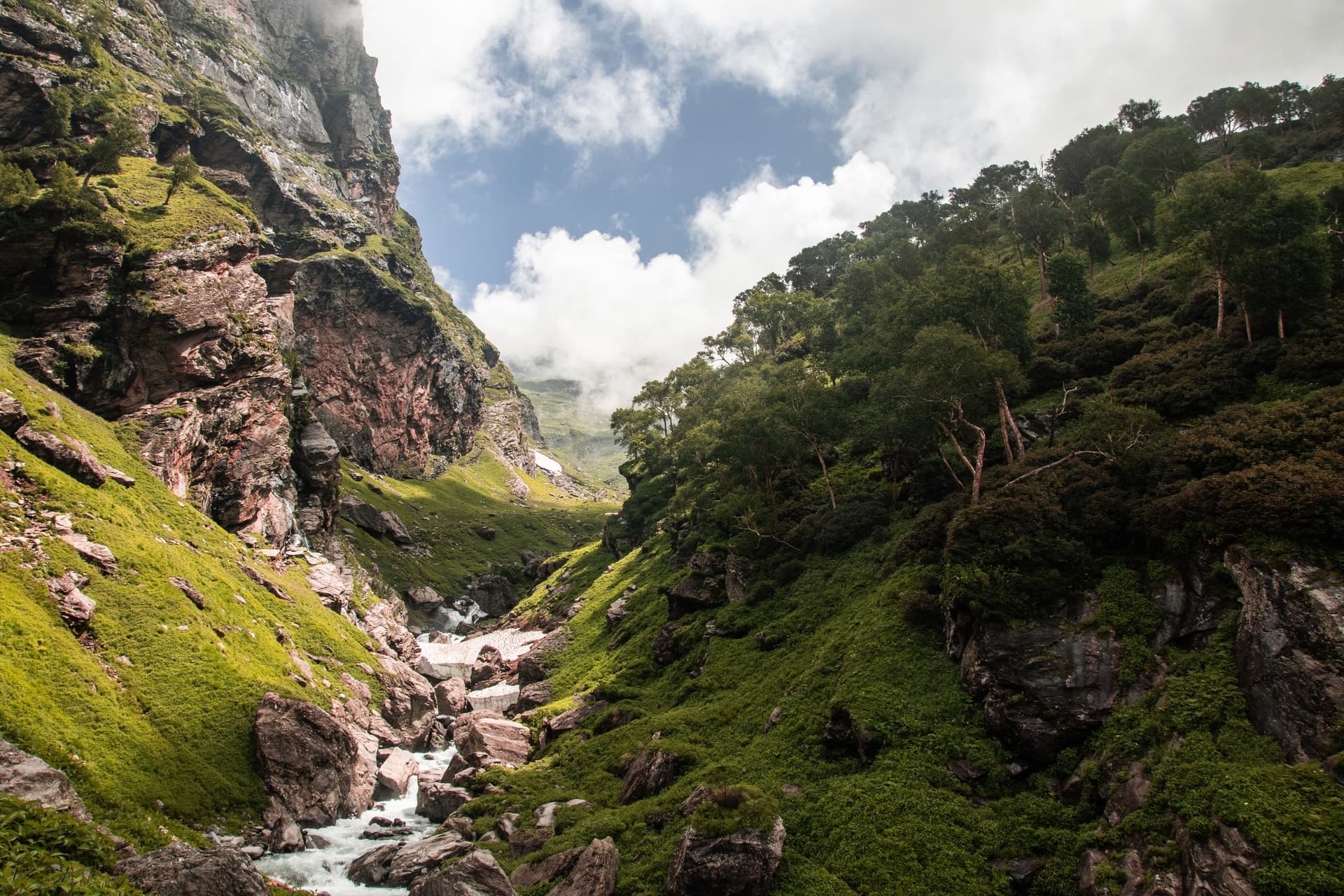
The valley began to tighten its grip. The wide meadows gave way to a narrower gorge where the air grew cooler and the pine scent sharper. The river grew wilder here, squeezed between the slopes, guiding us deeper into the heart of the mountains.
The Quiet Workers
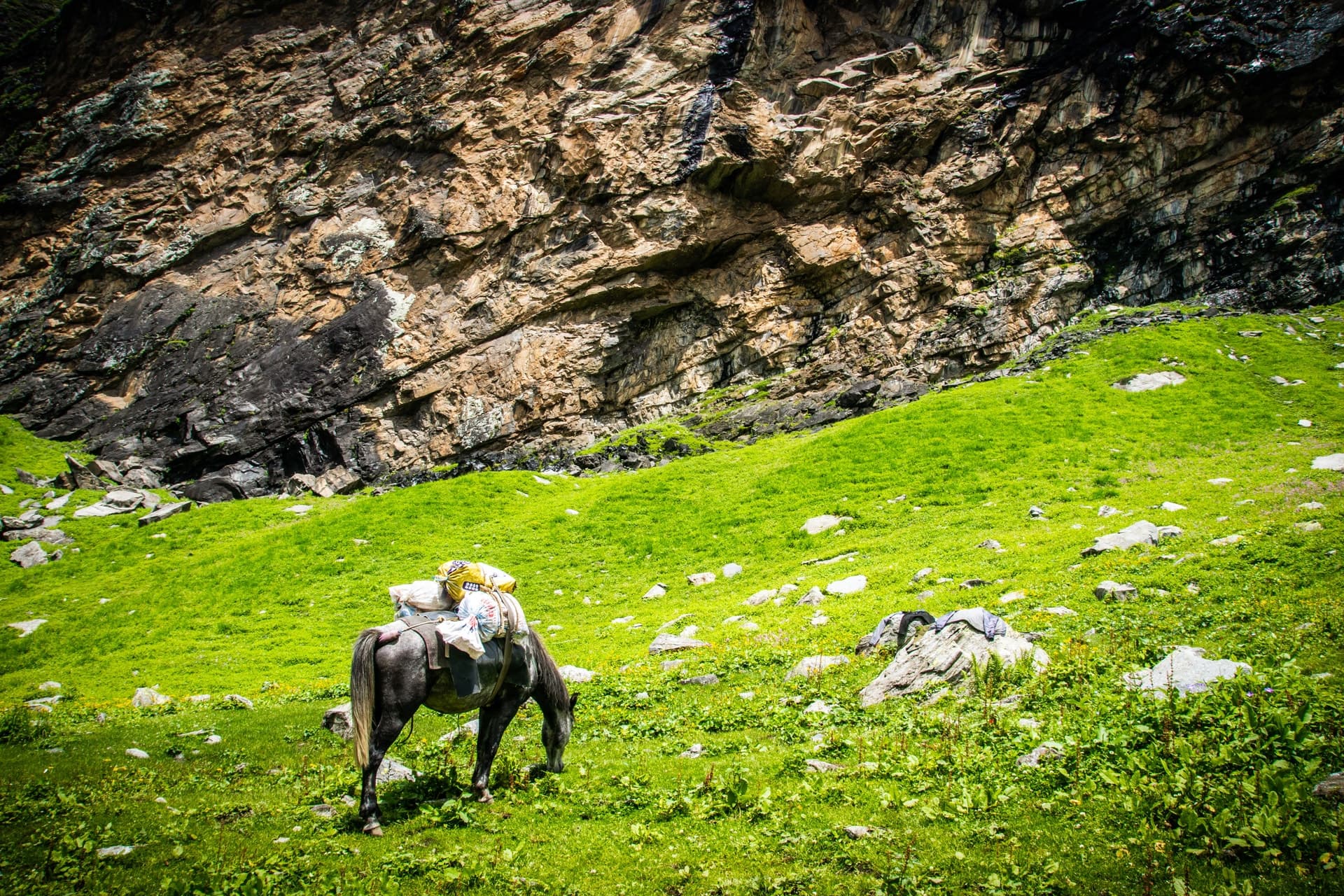
The morning brought a quiet peace. While we nursed our coffee, the mules and horses—the true engines of the trek—enjoyed the monsoon buffet. Watching this fellow graze against the backdrop of ancient sedimentary rock, I felt a deep appreciation for their strength. They carry our burdens so we can chase our views.
The Bleeding Mountains
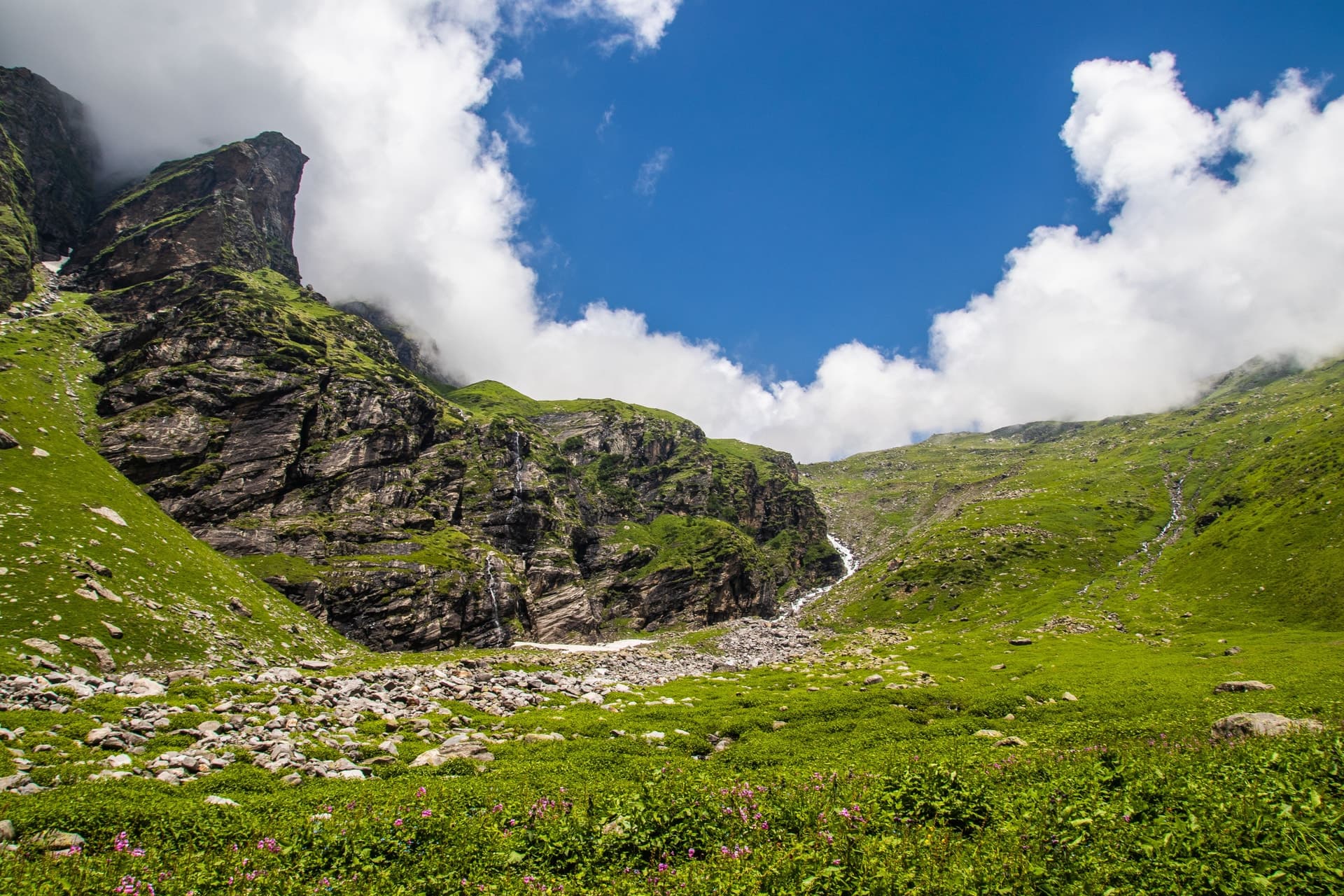
When it rains in the cities, it’s a nuisance. Here, it’s a performance. The mountains seemed to come alive, with hundreds of temporary waterfalls cascading down the mossy green walls like silver veins. The entire landscape was drinking, and we were just there to witness it.
When it rains here it is not nuisance weather — it is the whole performance. The "bleeding mountains" slide is literally hundreds of thin waterfalls appearing on faces that were dry an hour ago. That is the monsoon argument for Hampta: not clear views, but the valley turning itself on.
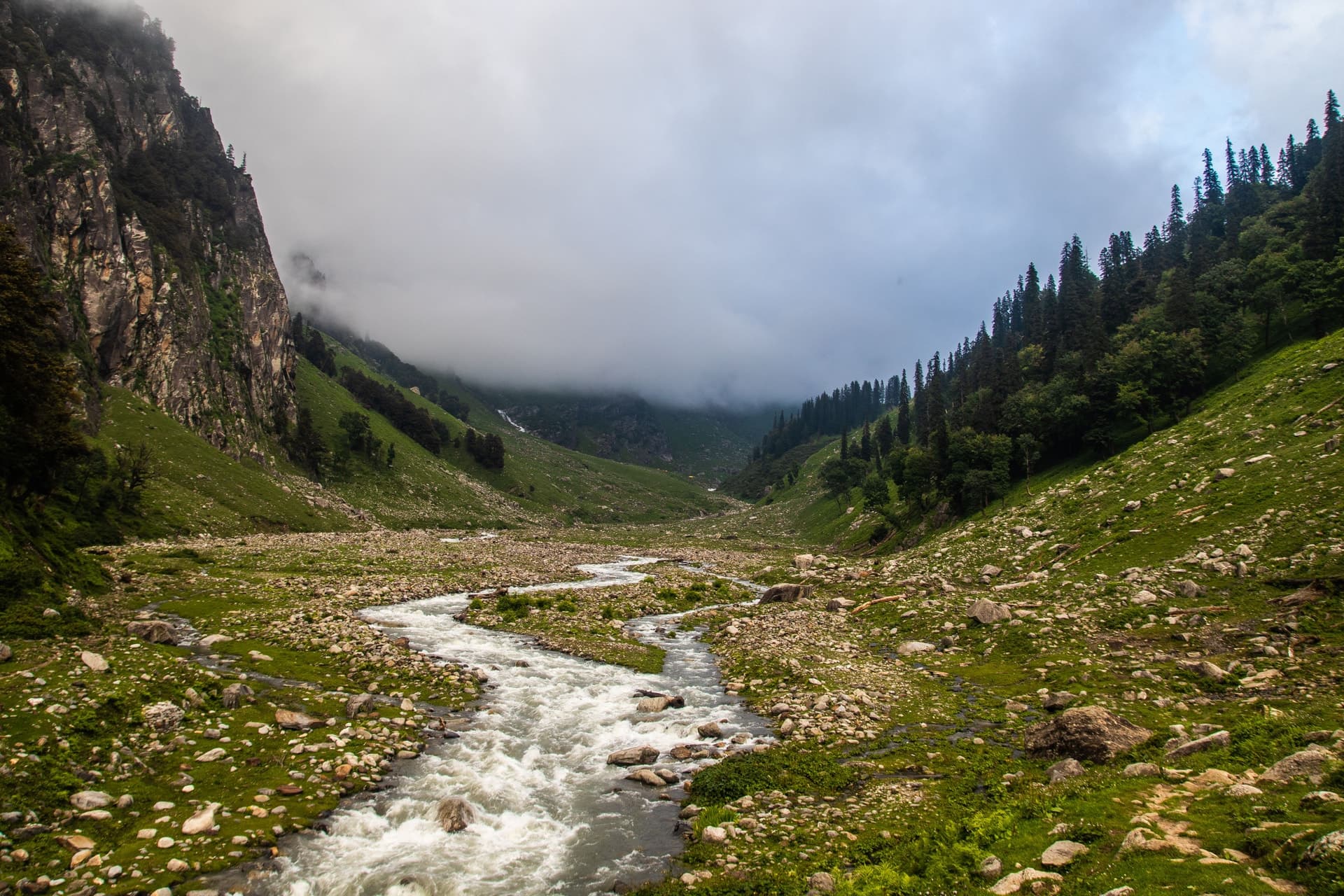
Into the Mystery
As we packed up to move on, the valley decided to keep its secrets. The mist rolled in thick and fast, swallowing the peaks and turning the path ahead into a mystery. We walked on, not towards a destination, but simply into the mood, following the river into the gray.
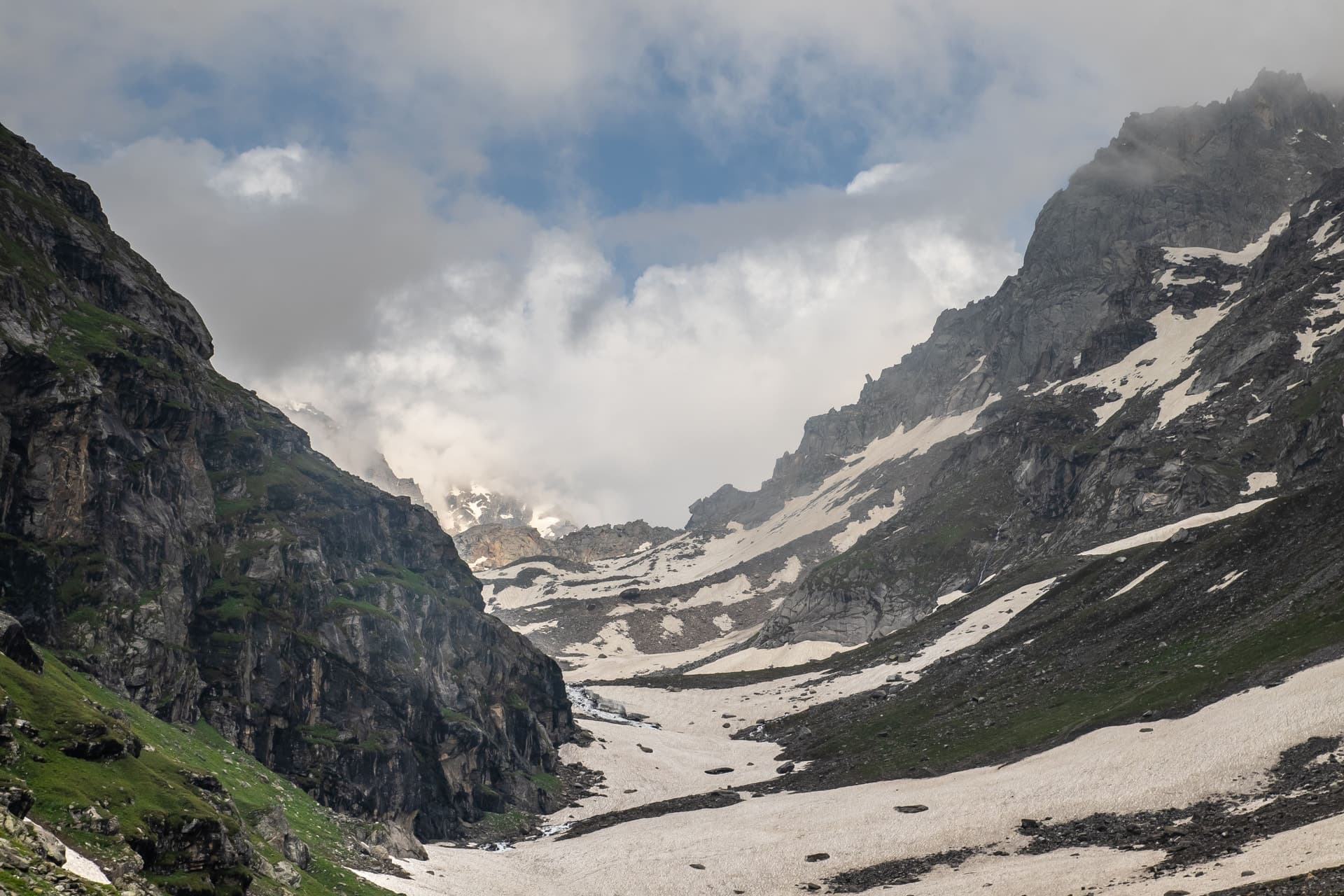
The Gateway to Winter
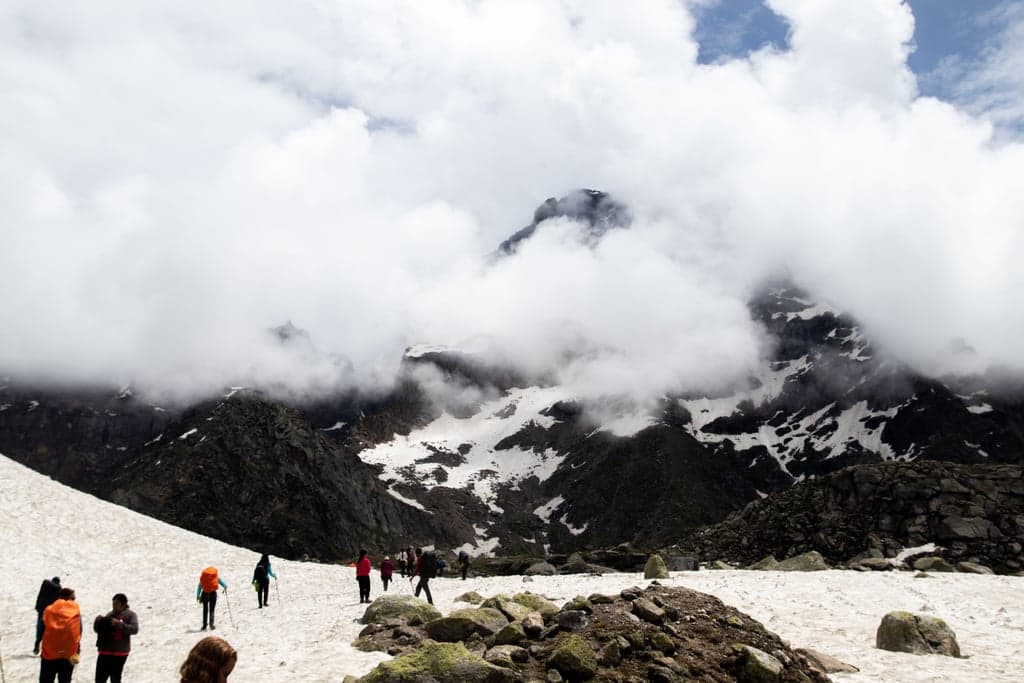
The transition was abrupt. One moment we were walking on grass, and the next, we were staring into the throat of the mountain. The valley opened up into a rugged amphitheater of snow and dark stone. The clouds here didn't just hang in the sky; they sat heavy on the peaks, watching us approach.
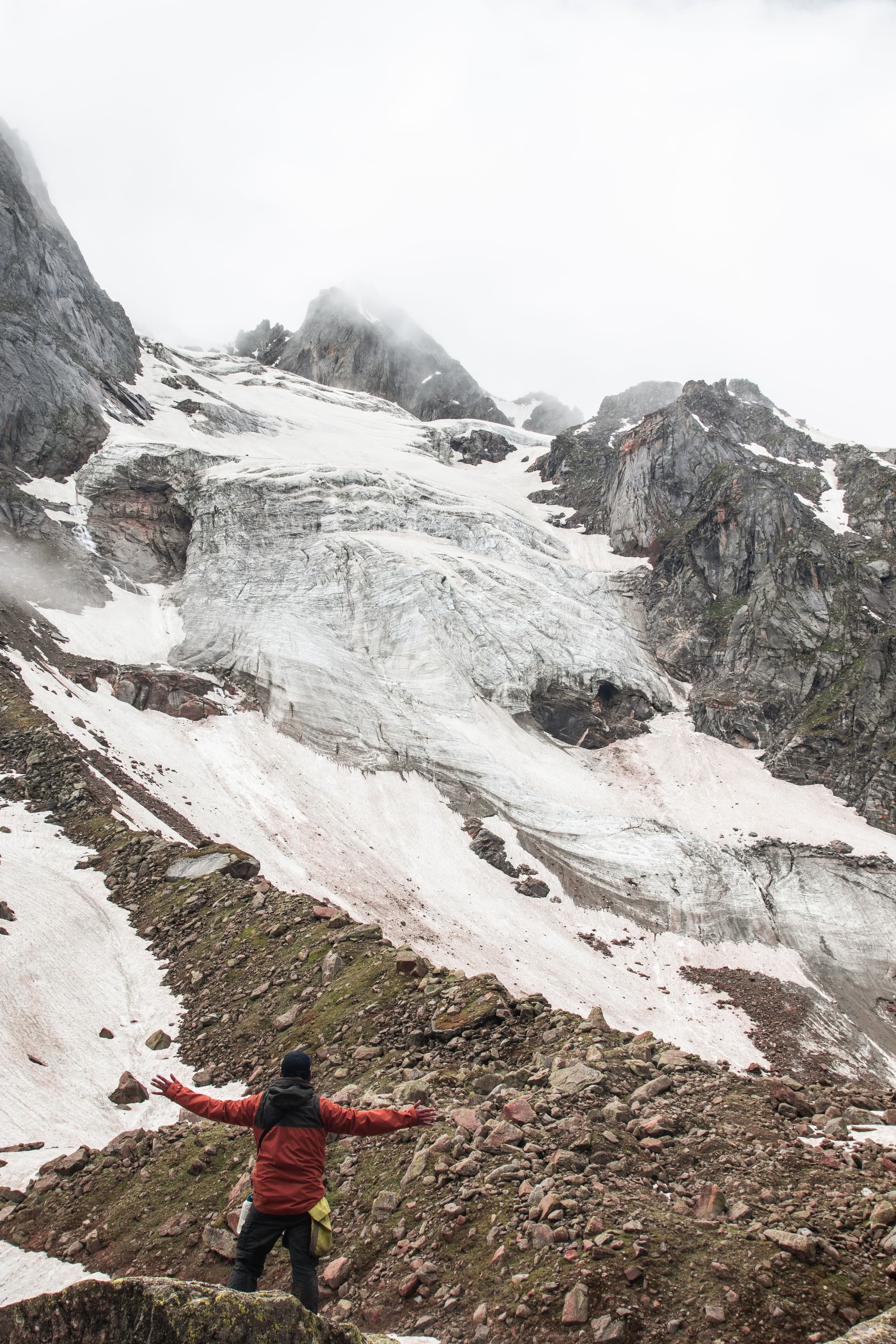
Embracing the Wall
There are moments when the landscape is so massive it demands a physical response. Standing before this wall of glacial ice and vertical rock, I couldn't help but throw my arms wide. It wasn’t about conquering the mountain; it was about surrendering to its scale. In the face of this vertical world, you feel infinite and insignificant all at once.
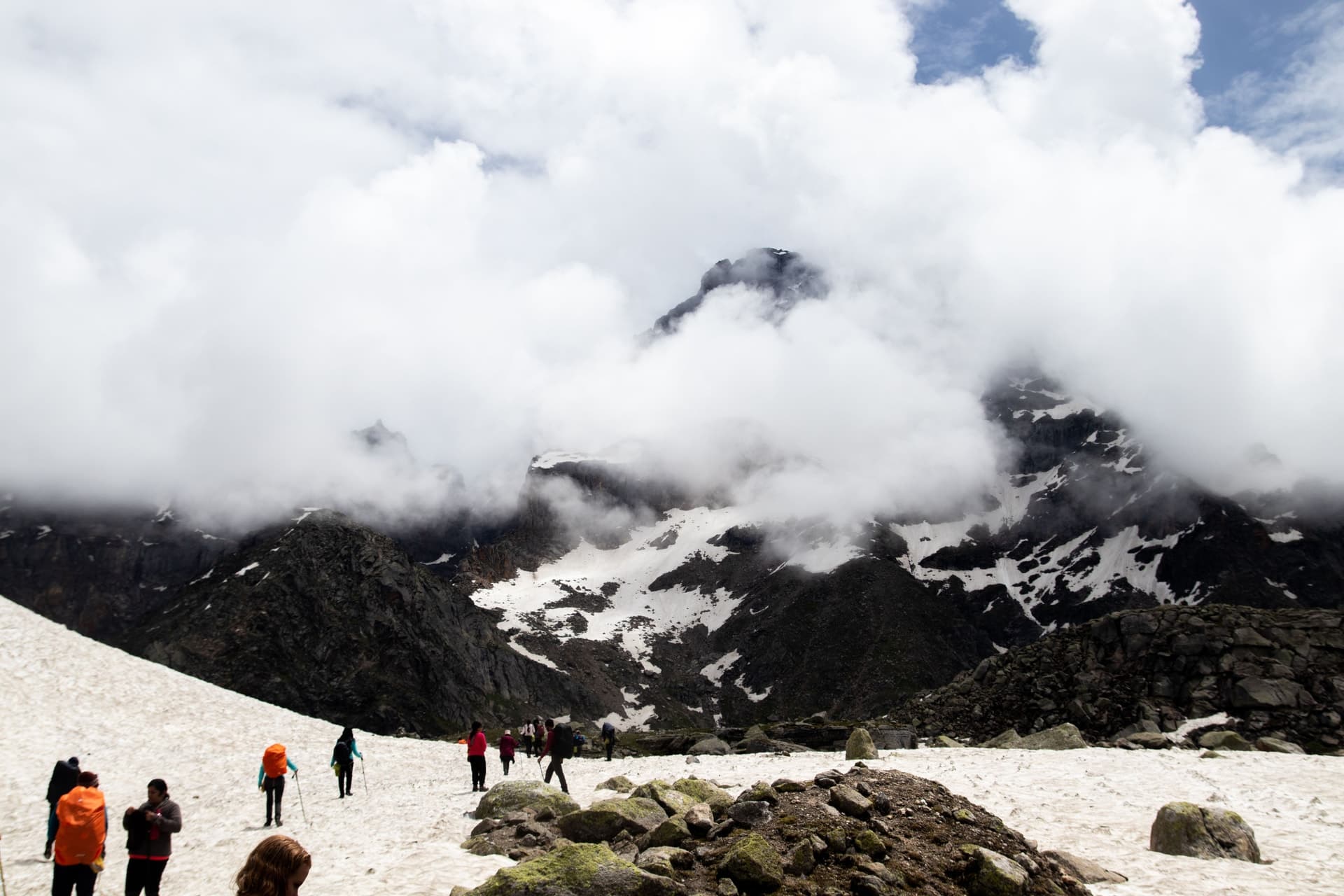
The White March
Crossing the snowfields felt like walking on the moon. Our group moved in a slow, rhythmic line, tiny figures against the overwhelming whiteness. Ahead of us, the main peak played hide-and-seek with the mist, a massive, brooding giant that made every step feel significant. The silence here was absolute, broken only by the crunch of boots on ice.
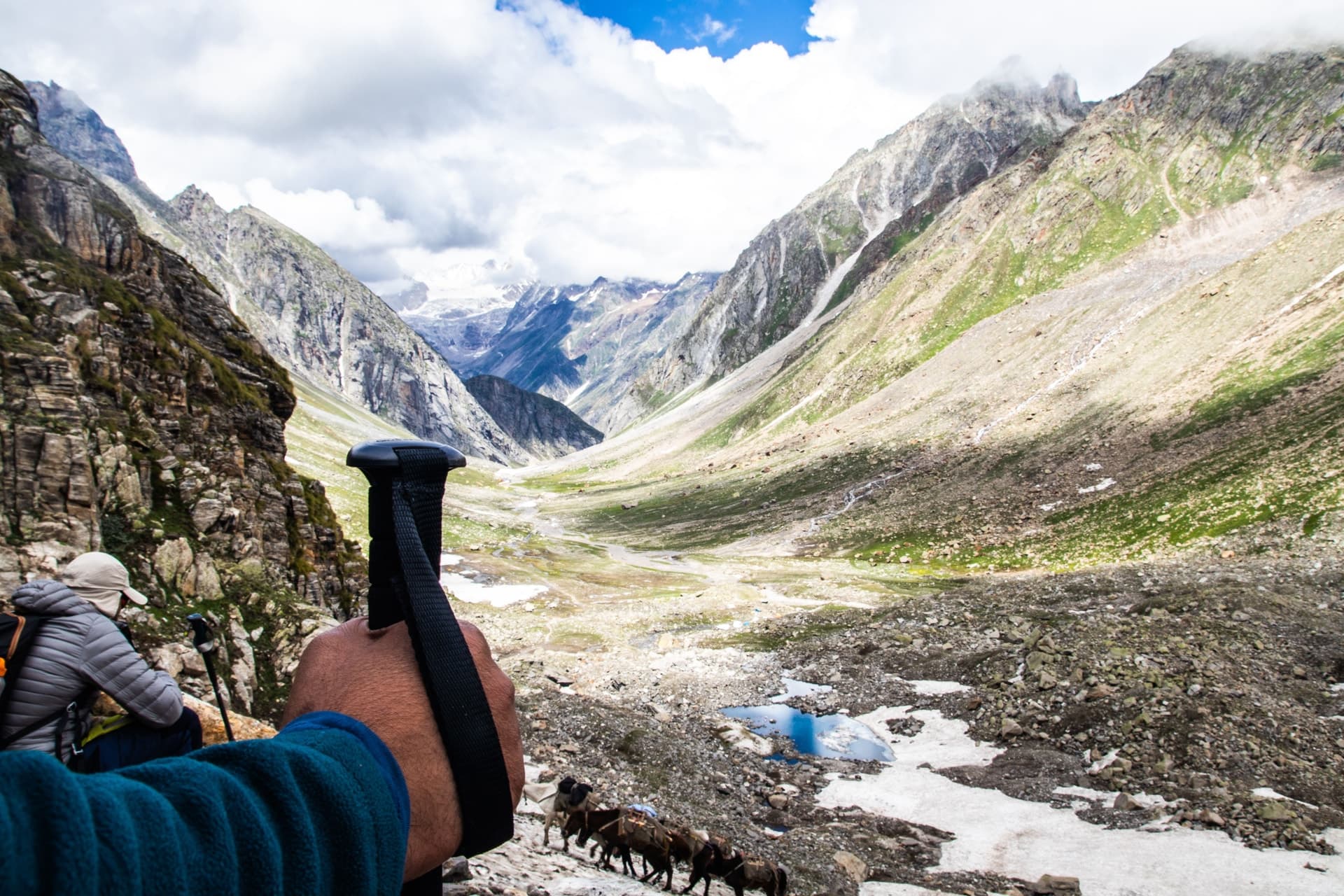
A View from the Edge
We paused to catch our breath and looked back—or perhaps forward—into the abyss we were traversing. From this height, the trail was just a scratch on the mountain's surface. Below, our mule train looked like a line of ants marching through the debris of boulders and melting snow. It’s the only time you truly understand how far you’ve climbed.
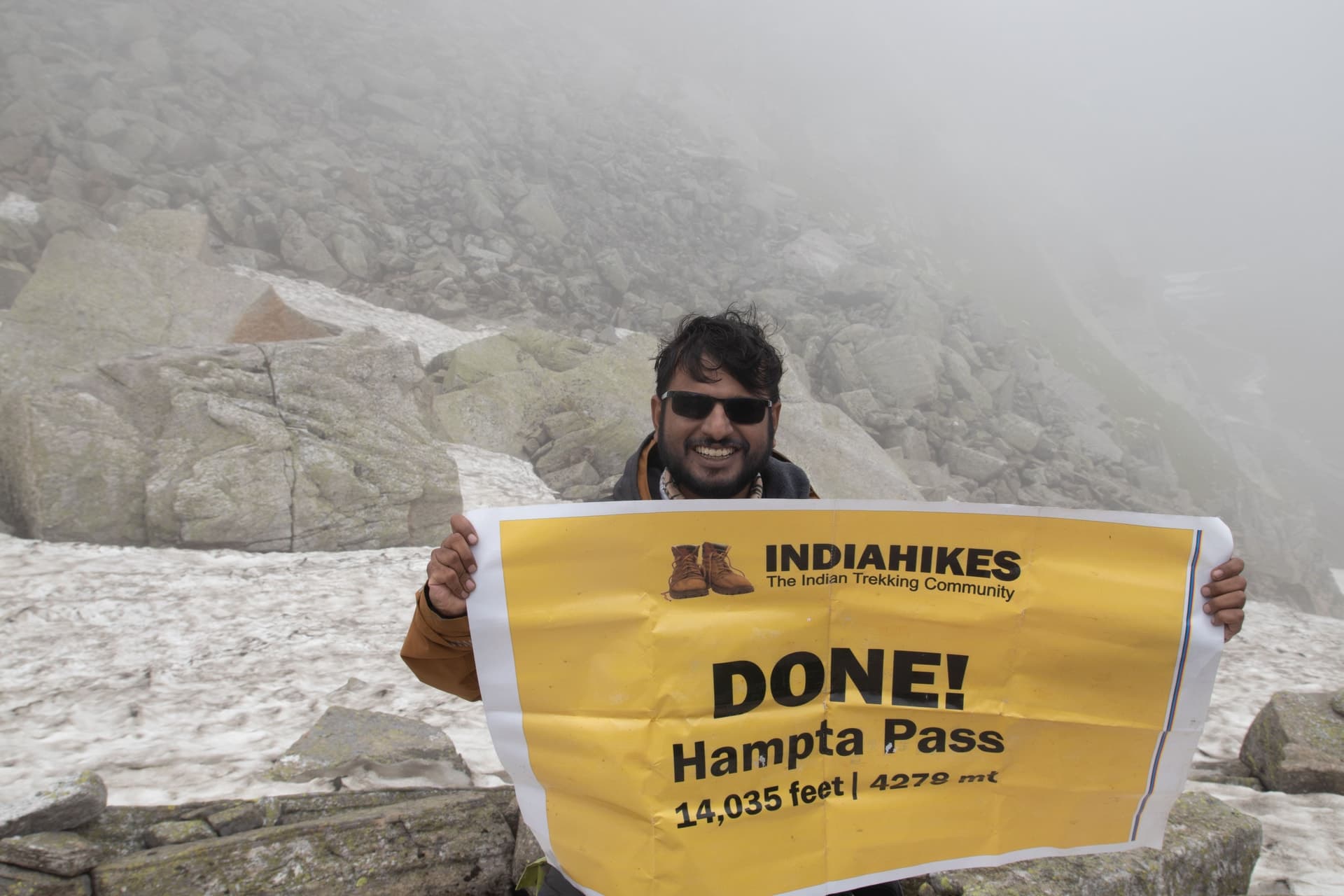
Victory at 14,000 Feet
And then, the top. The fatigue, the wet socks, the breathless climb—it all vanished the moment we hit the pass. At 14,000 feet, surrounded by mist and grey rock, the only thing you can feel is pure, unadulterated joy. The smile says it all: we walked the cloud line, and we made it.
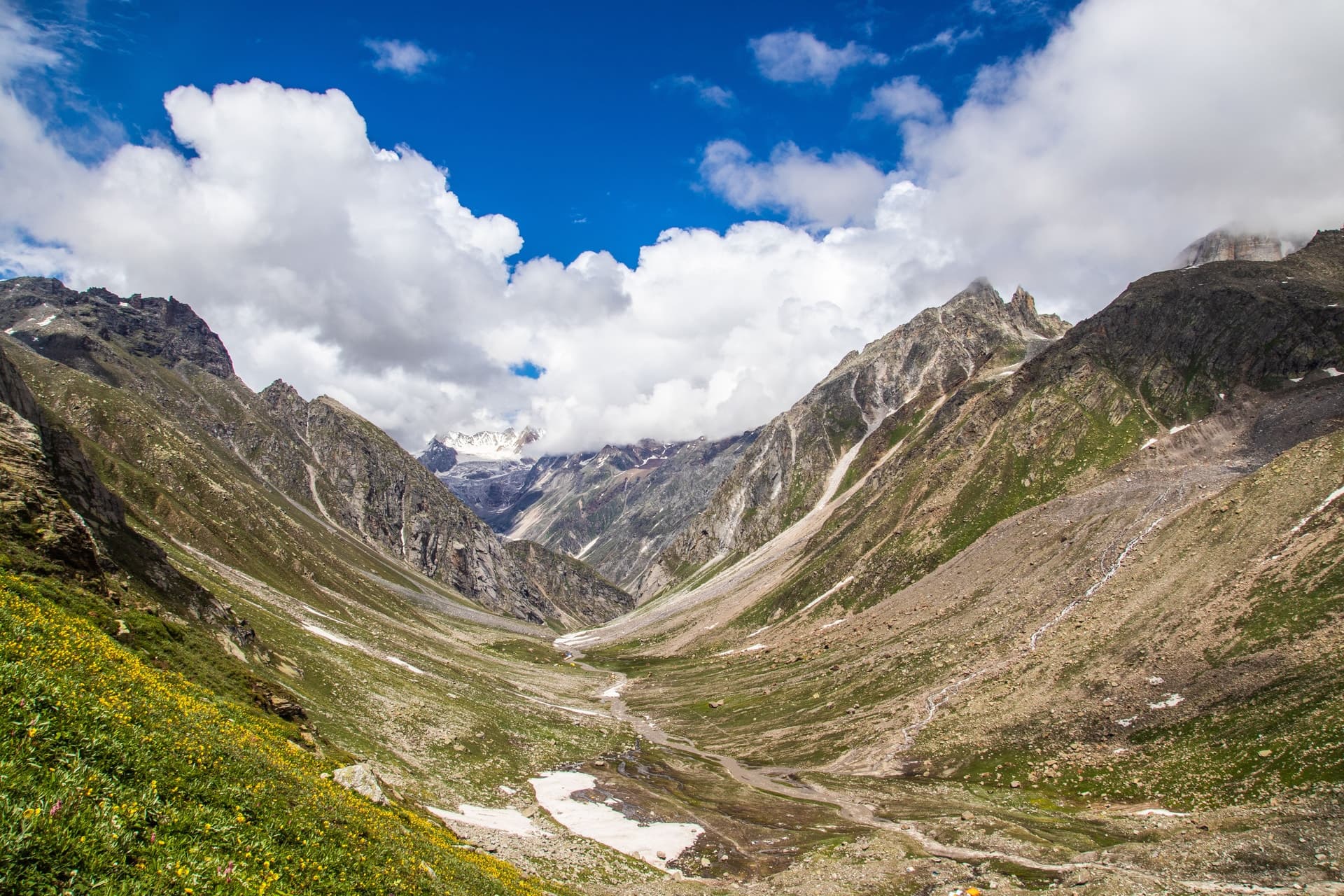
The Other Side of the Wall
Standing at the top is one thing; looking down the other side is another. The view into the Lahaul valley stretched out like a raw, geological wound. The lush greens of Kullu were gone, replaced by a vast, U-shaped valley of scree, rock, and silence. It felt like stepping onto a different planet—wilder, harsher, and incredibly beautiful.
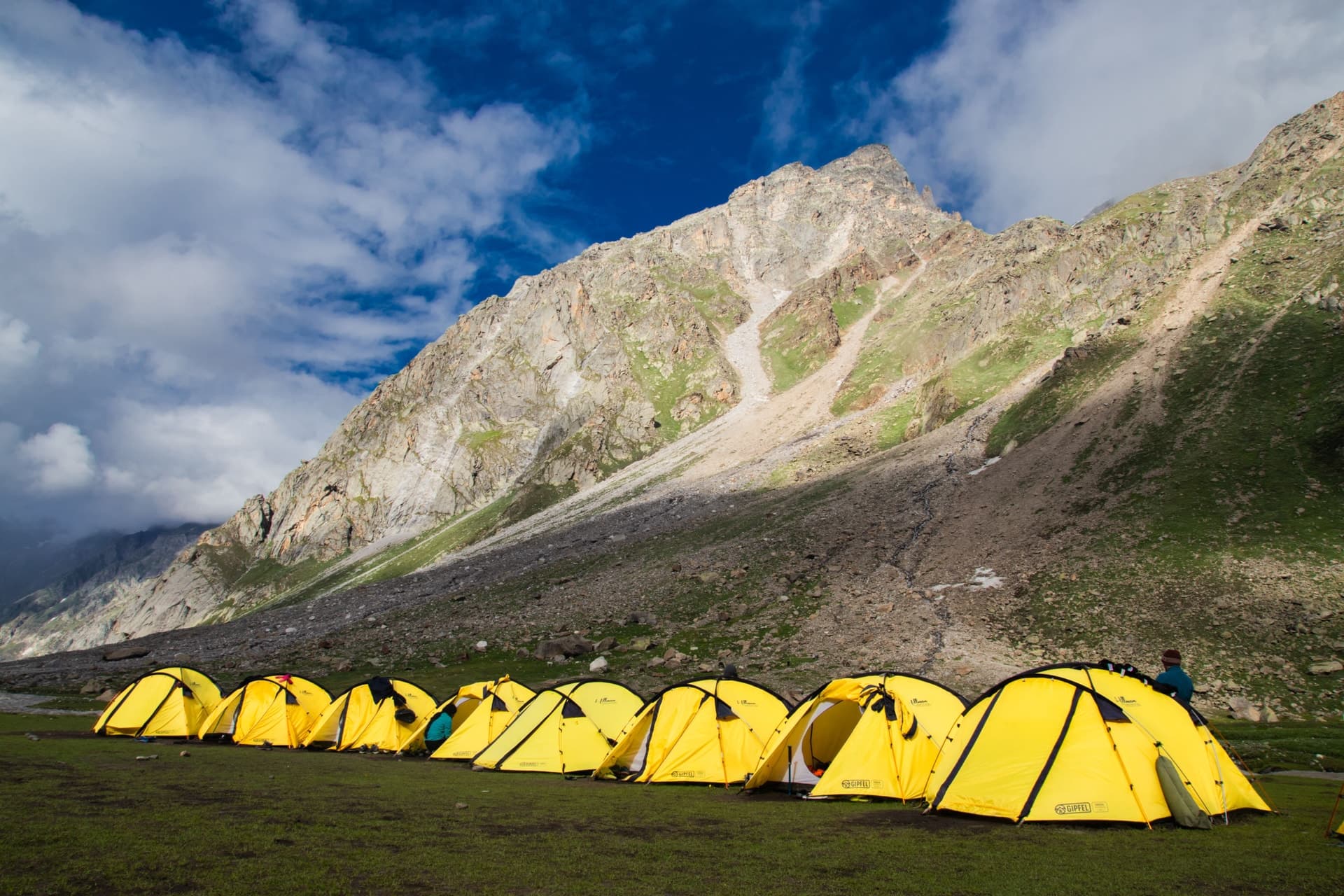
A Yellow City in the Wilderness
After hours of descending, our campsite appeared like a mirage. A row of bright yellow tents pitched on a rare patch of flat green, dwarfed by the massive, rocky spine of the mountain we had just skirted. It was the perfect welcome mat—a place to drop the bags, unlace the boots, and finally process the massive wall of rock we had just conquered.
Quick reference
| Duration | 5 trekking days (this story: meadows → gorge → pass → Lahaul descent) |
|---|---|
| Pass altitude | ~14,000 ft (4,270 m) — "Victory at 14,000 Feet" moment in the essay |
| Monsoon note | August: mist, wet socks, pink bistort, limited pass visibility — as photographed |
| Difficulty | Moderate; long days, snowfields near pass; go with a guided group |
| Highlights in story | Tent camp joy · Mule teams · Glacial wall · Snow crossing · Lahaul view |
| Start | Manali-side roadhead (Jobra common) — operator arranges transport and permits |
Common questions