Photo essay
Wings of the Tide: A Birdwatching Journey Through the Sundarbans
Wings of the tide — kingfishers, adjutant storks, and sea eagles on a Sundarbans boat, without the tiger narrative.
The Sundarbans is marketed as tiger country, but this boat trip was a birding drift — Brahminy kites on the canopy, green bee-eaters on bare branches, lesser adjutants with prehistoric heads, three kingfisher species (common, white-throated, black-capped in flight with its white wing mirror), shikra, redshank on mudflats, and sea eagles over the channels. Sixteen frames, each with a name attached, and no tiger in the roll.
Scroll to read each moment.Each moment is image and caption side by side.
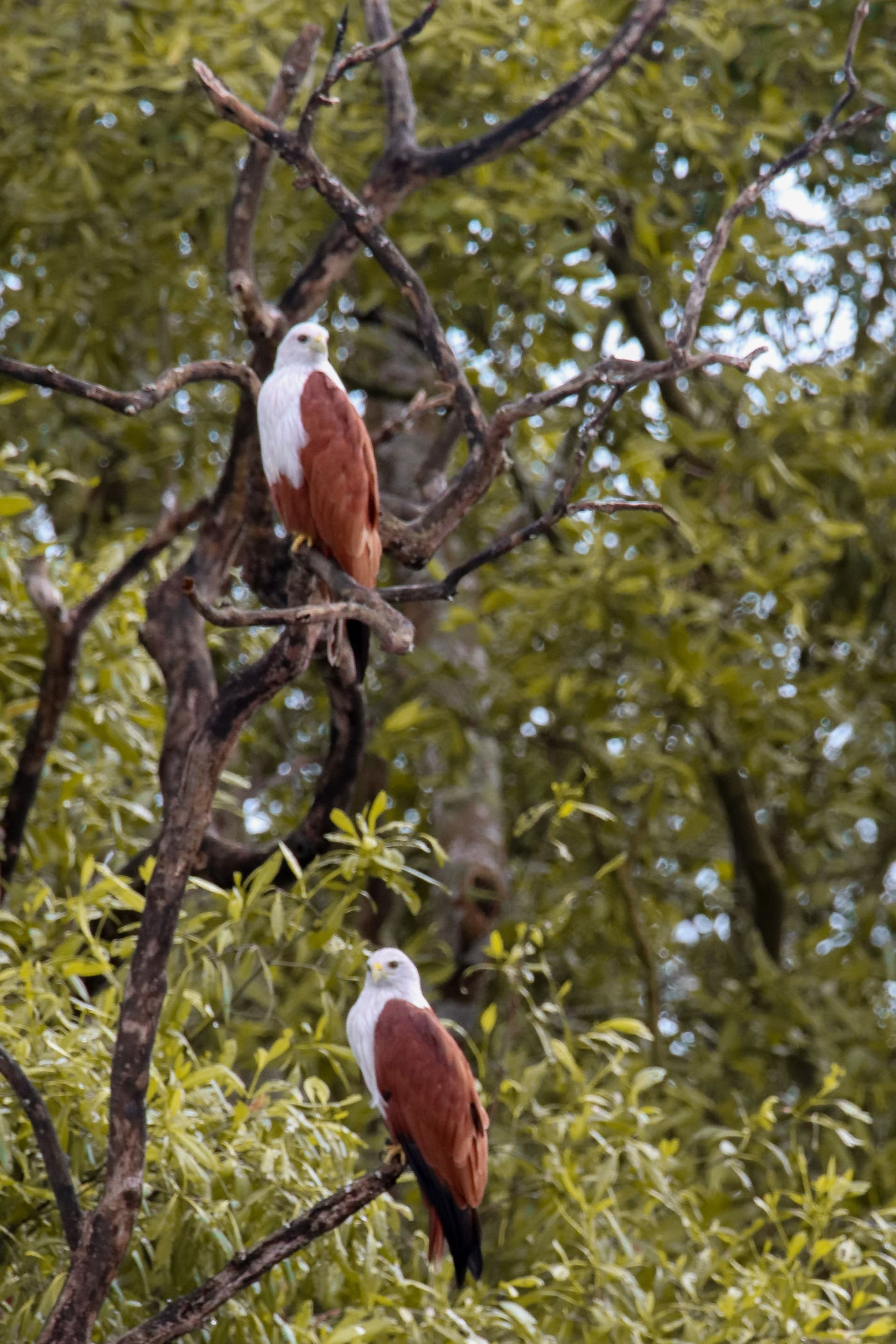
Brahminy Kite
The two raptors perched in the tree with distinct rich chestnut plumage and white heads/breasts are Brahminy Kites. They are one of the most iconic and common raptors found in the Sundarbans mangroves.
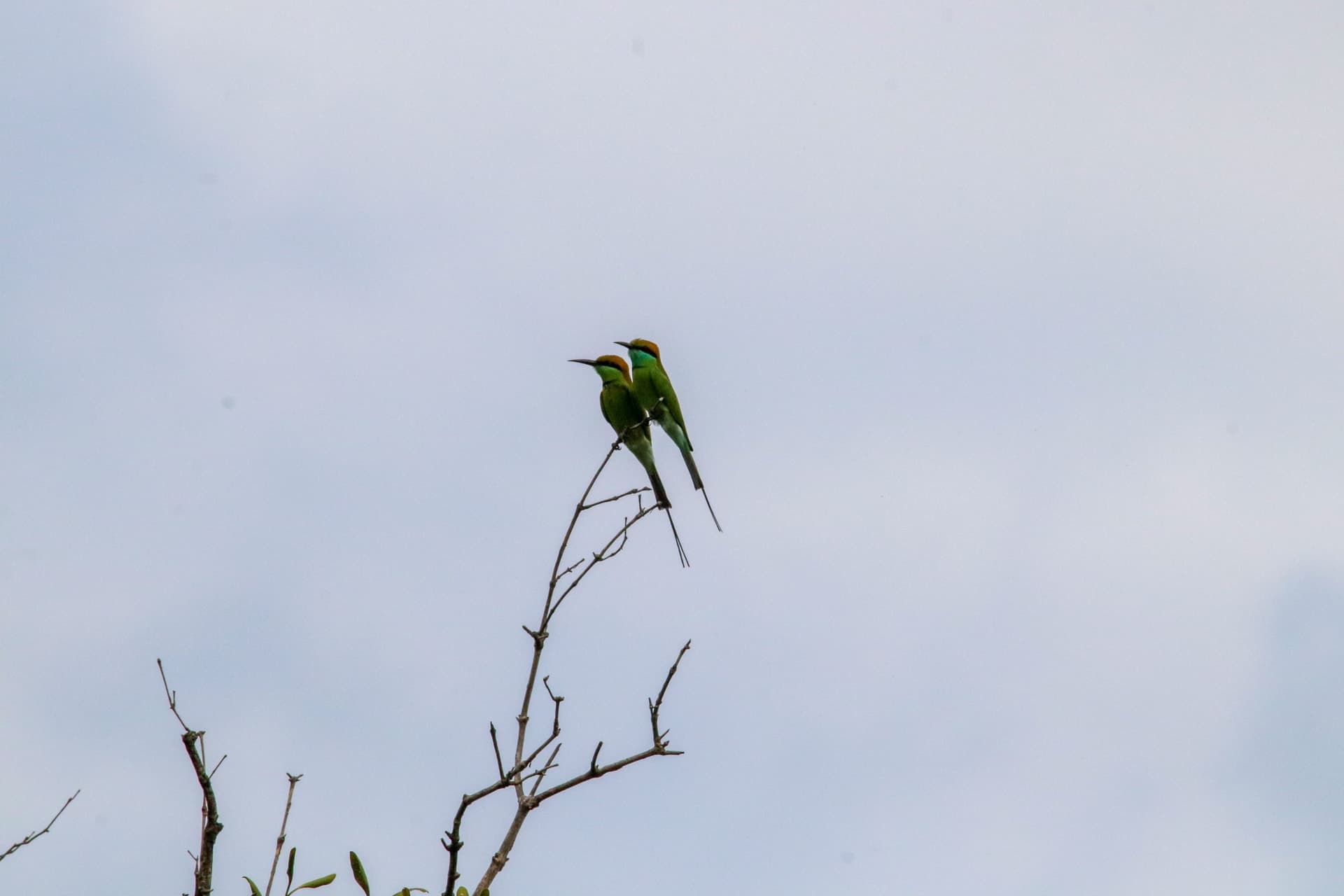
Green Bee-eater
The pair of small green birds with long tail streamers perched on a bare branch
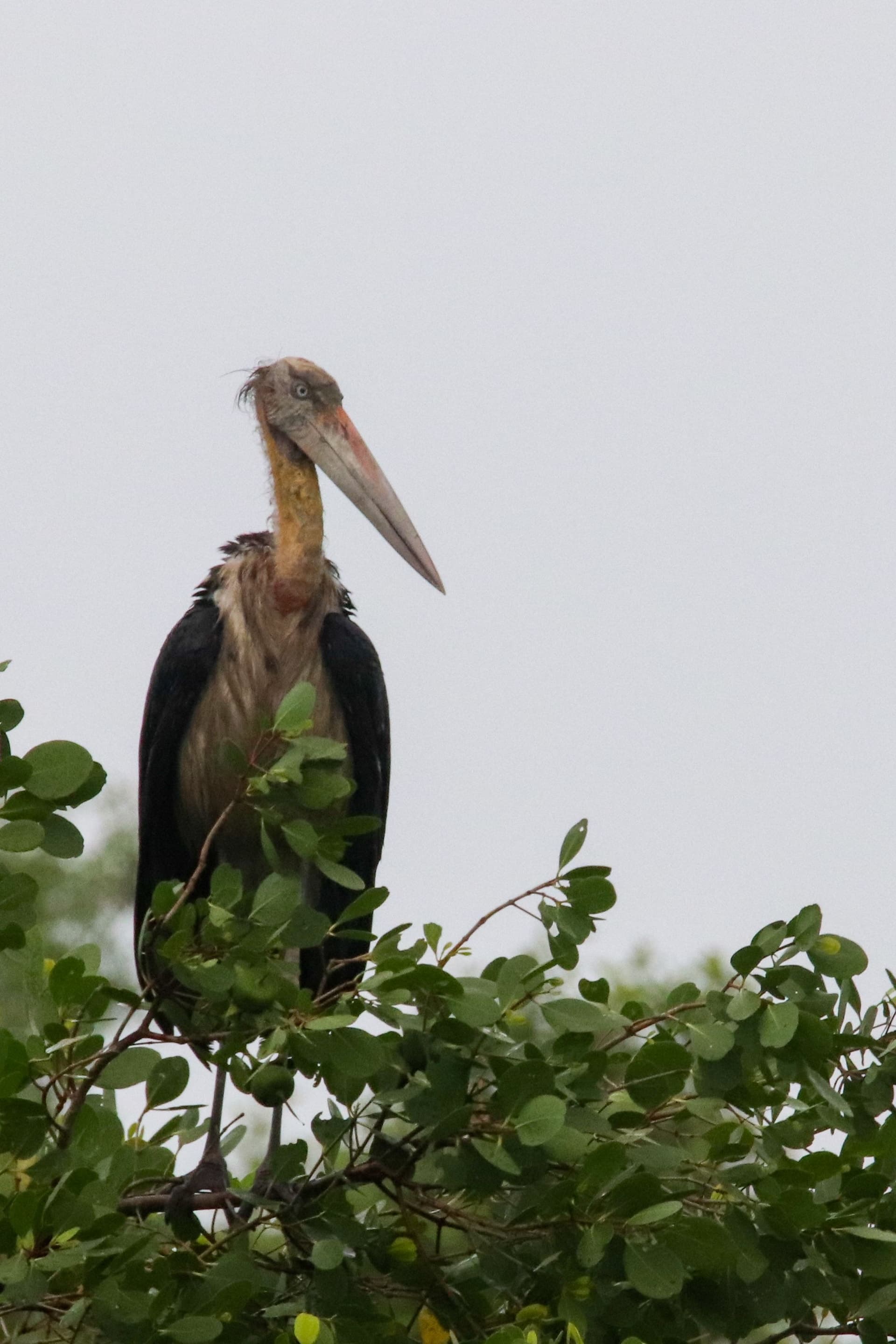
Lesser Adjutant Stork
This close-up portrait clearly shows the sparse, hair-like feathers on the head and the massive, wedge-shaped bill that gives this bird its prehistoric appearance.
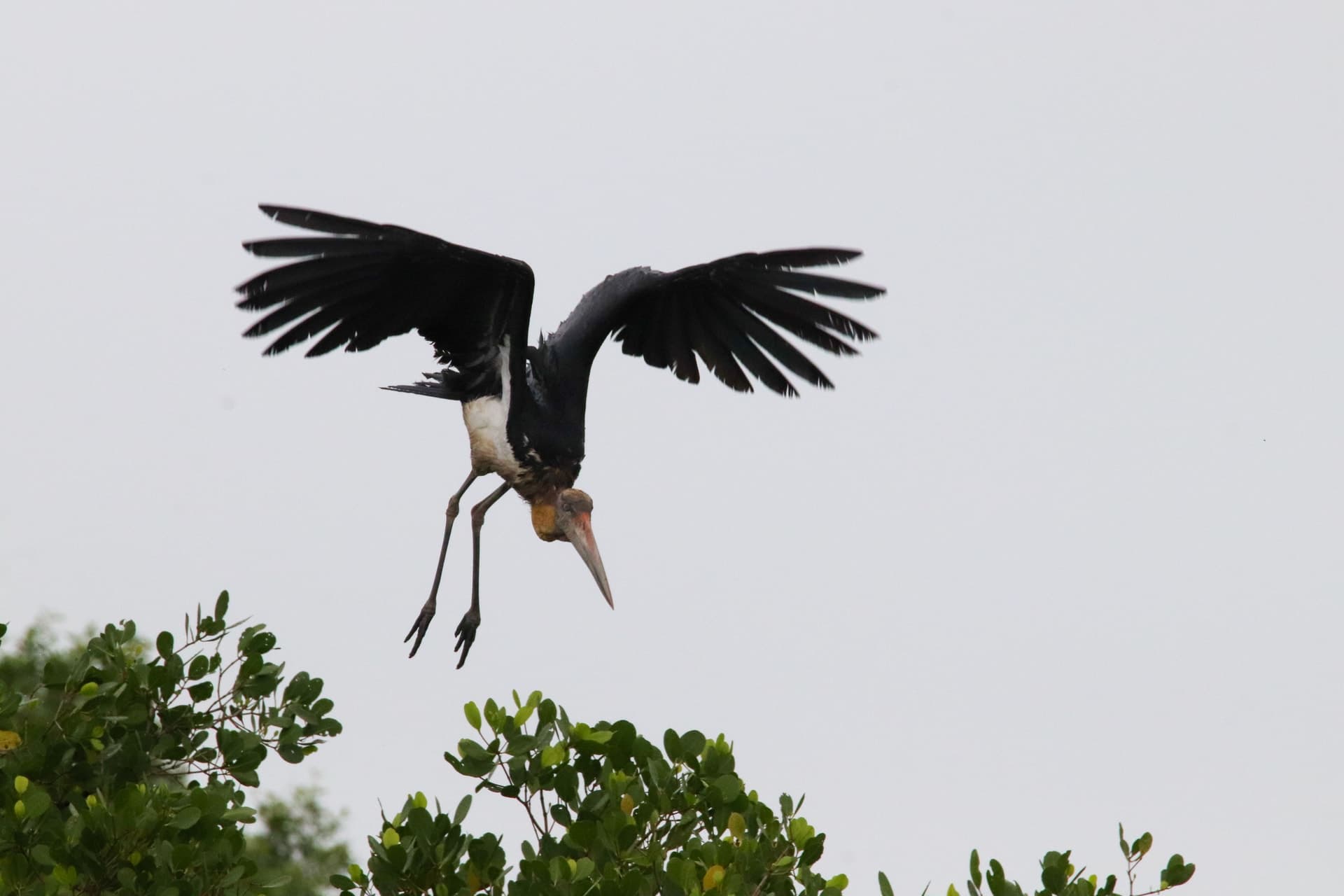
Lesser Adjutant Stork
The large bird landing with black wings, a white belly, and long trailing legs appears to be a Lesser Adjutant. These large storks are a vulnerable species but are frequently sighted in the Sundarbans mudflats and mangrove trees.
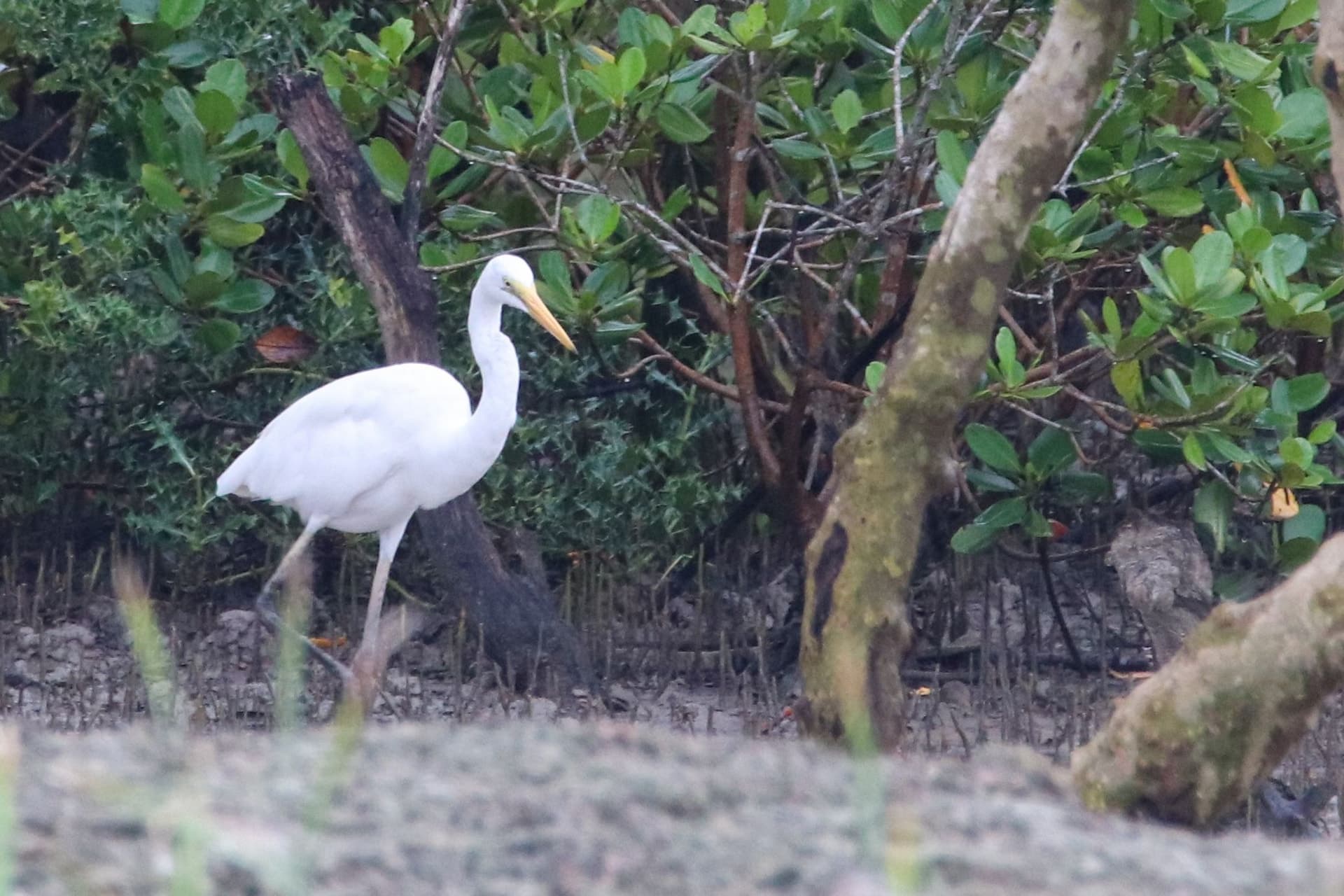
Great Egret
The large white bird with a long neck and yellow bill. It is significantly larger than the Little Egret.
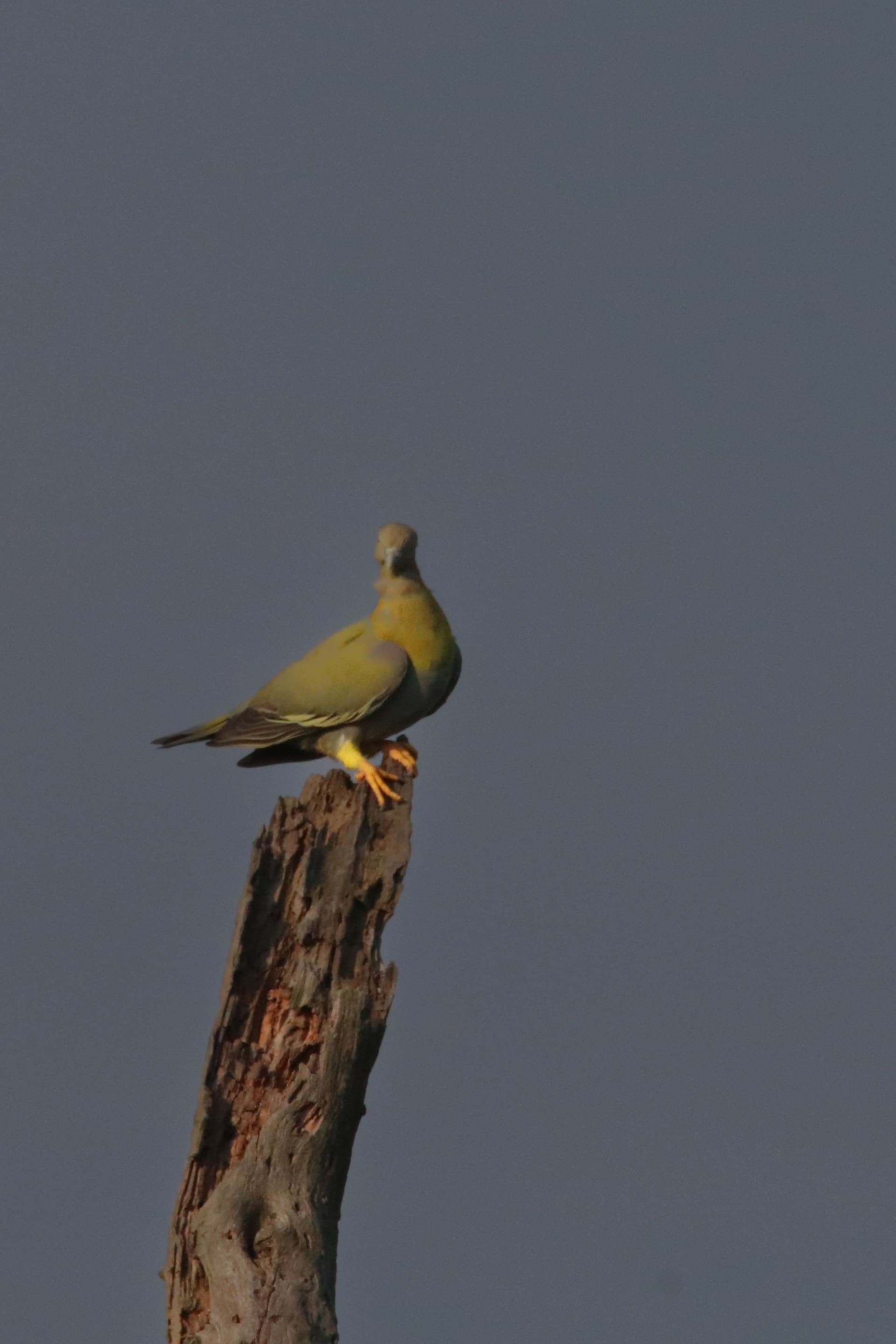
Orange-breasted Green Pigeon
The green bird perched on the dead tree stump with yellow feet and a greyish head.
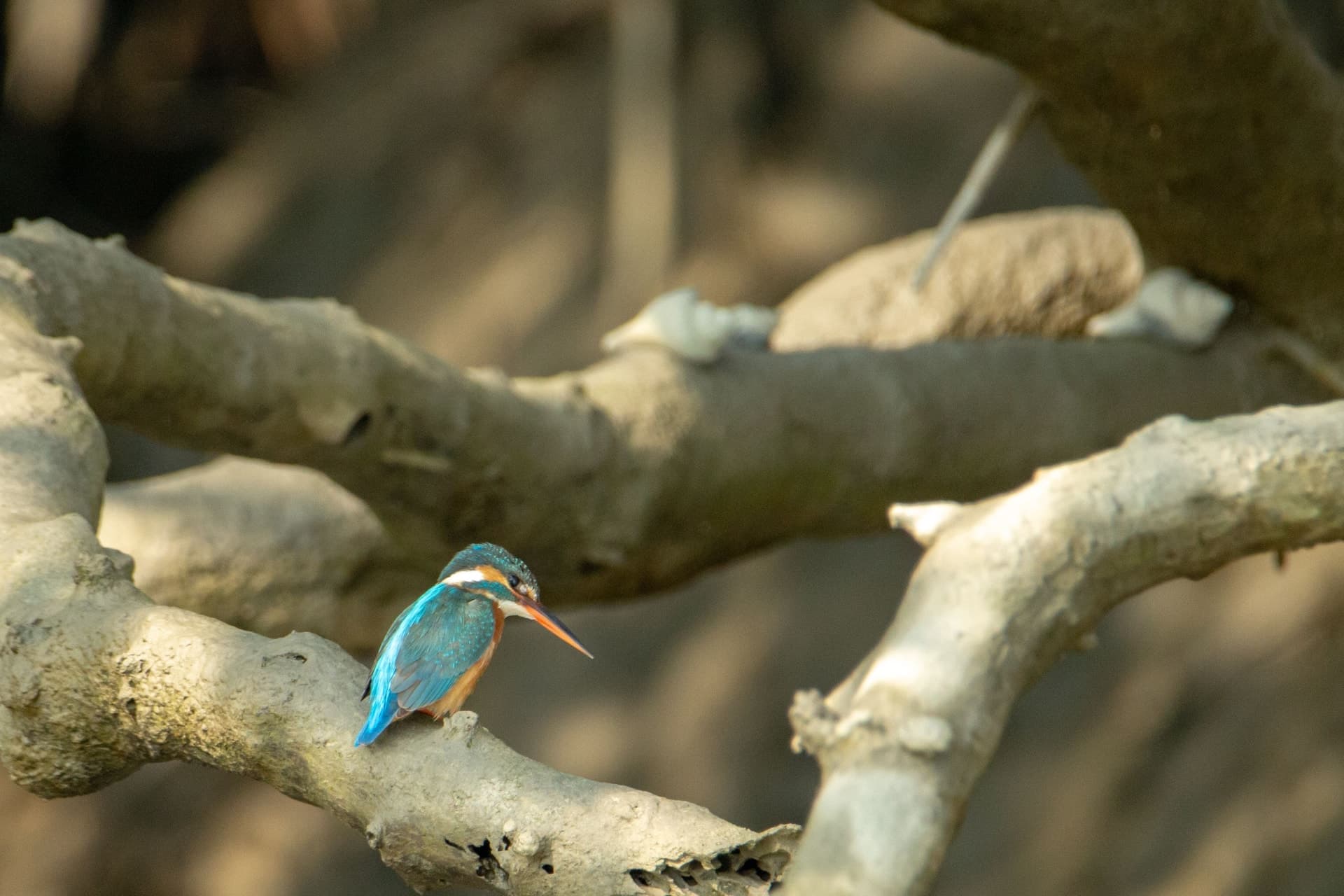
Common Kingfisher
The small bird perched on the branch with electric blue upperparts and orange underparts/ear coverts is a Common Kingfisher.
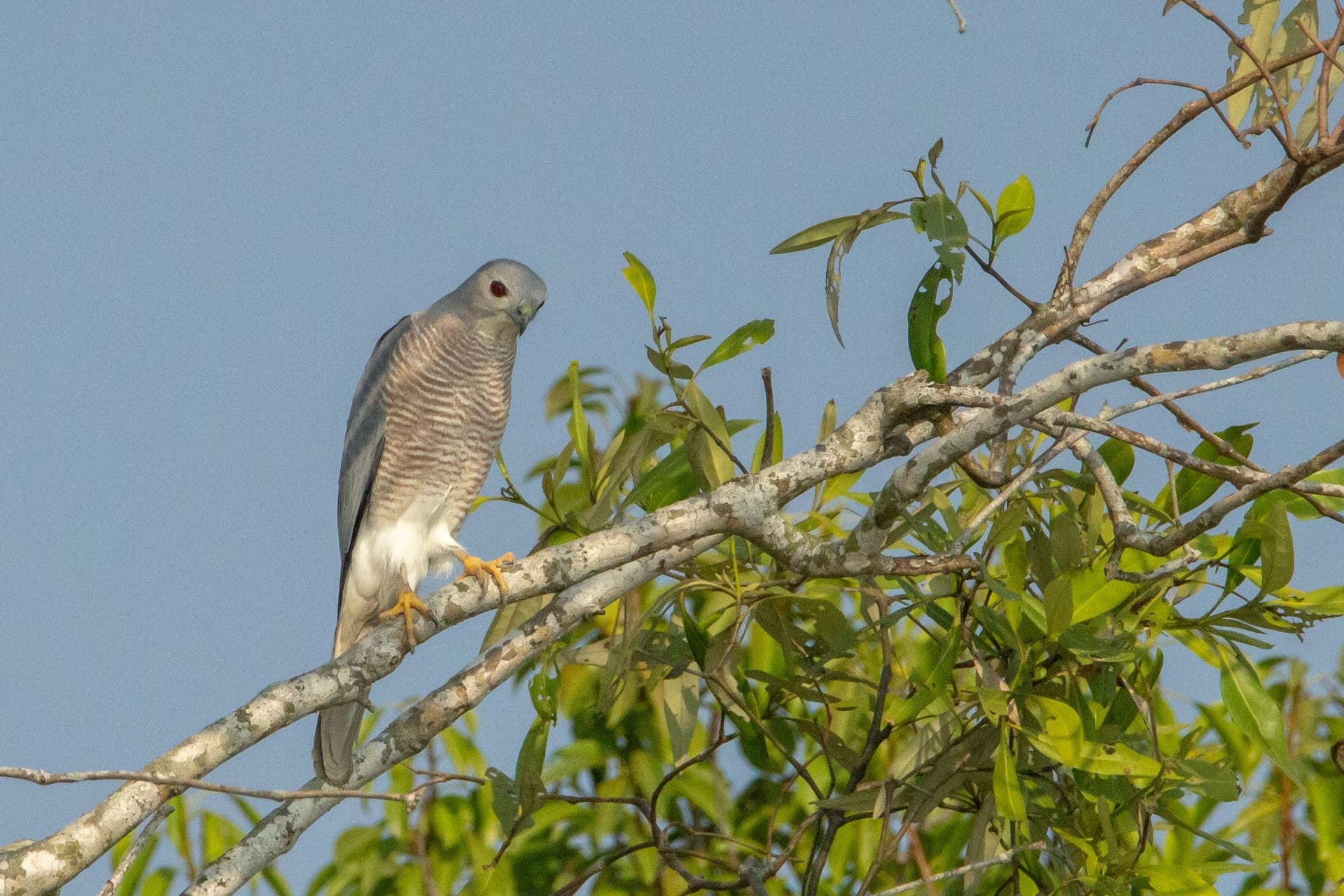
Shikra
The greyish raptor with reddish barring on the breast and yellow/orange eyes looks like a Shikra (a small hawk). A very adaptable hunter found in various habitats, including the edges of the mangrove forests.
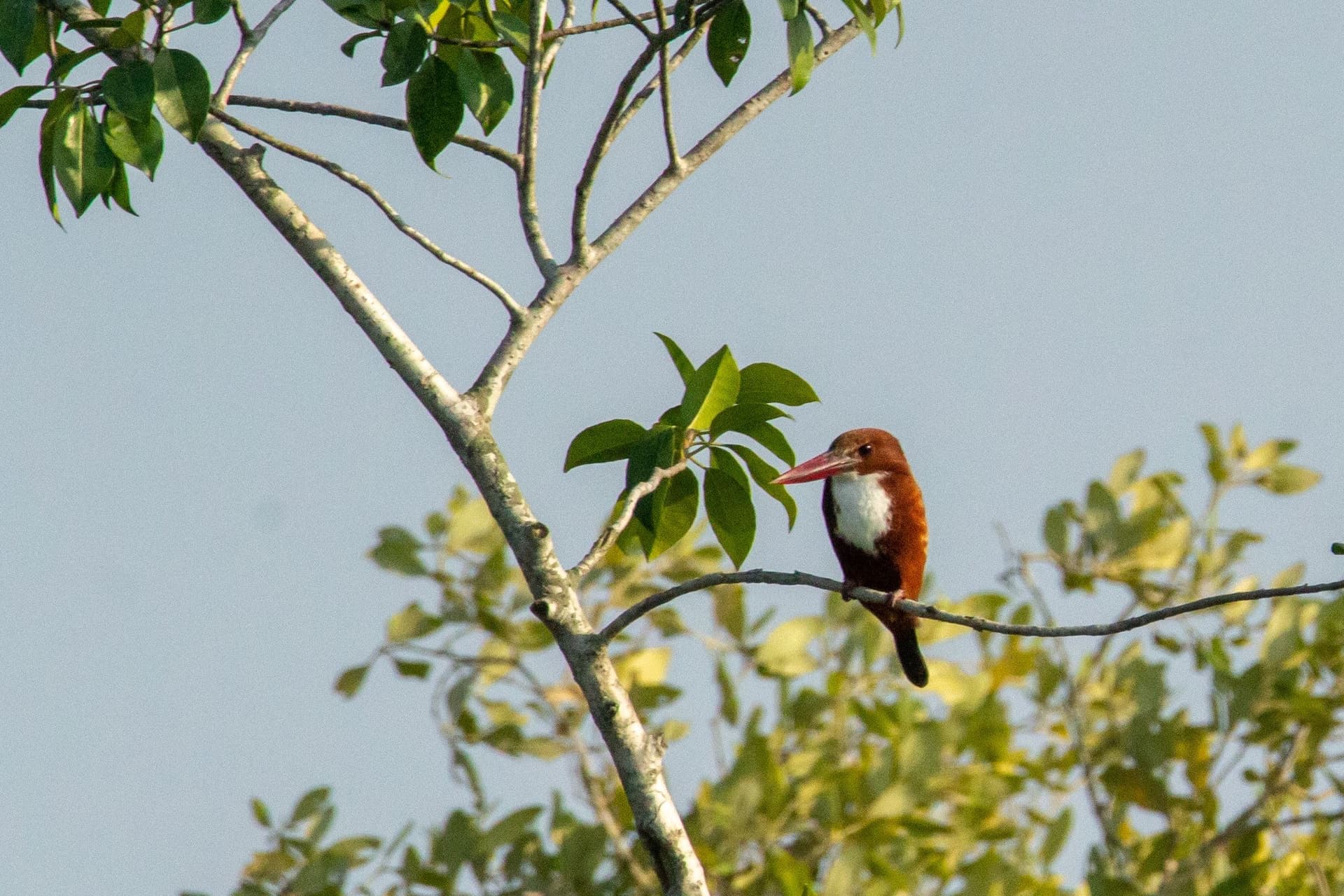
White-throated Kingfisher
It has a chocolate-brown head/belly, electric blue back, and a large red bill.
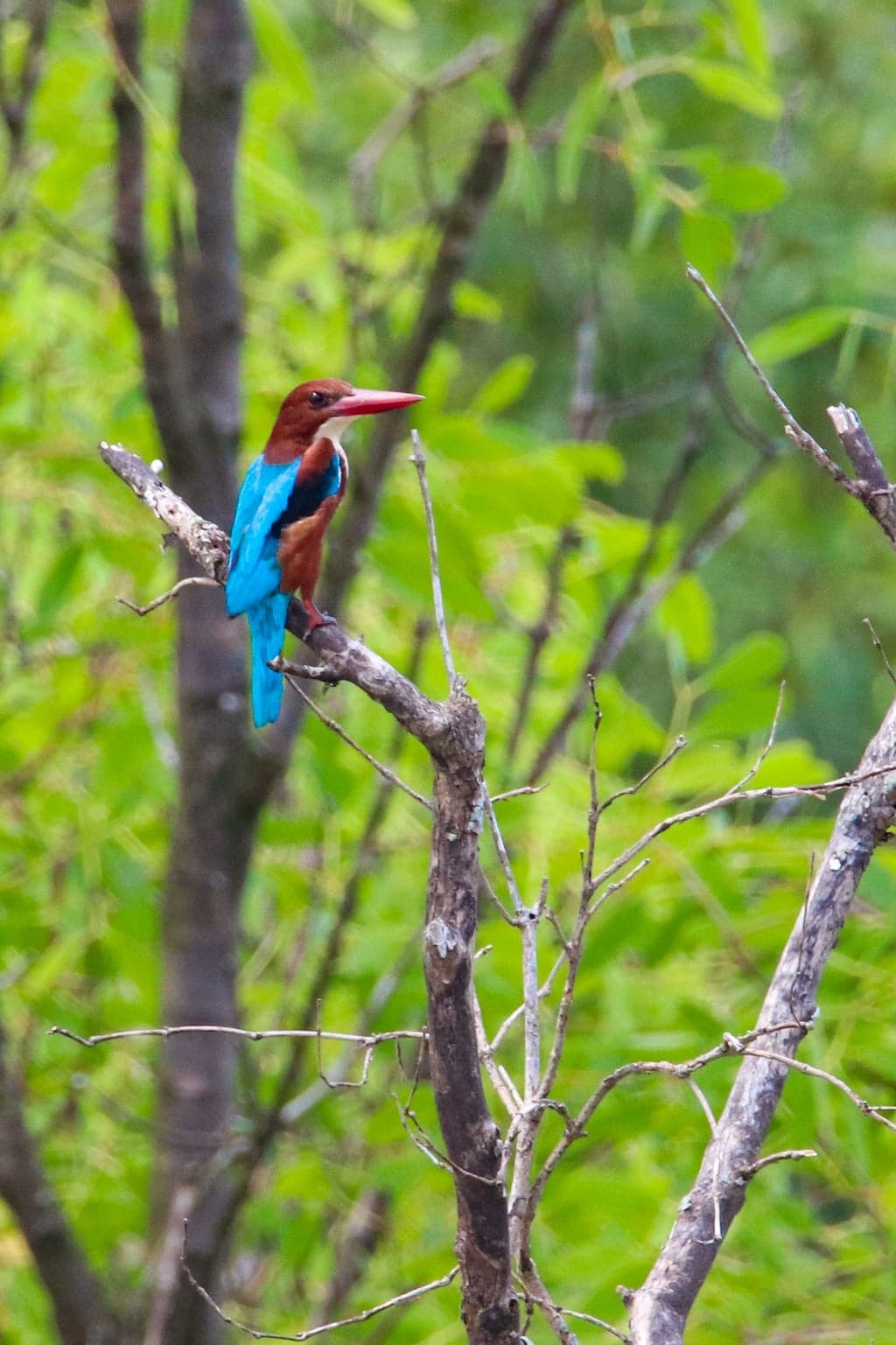
White-throated Kingfisher
A clear side profile showing the chocolate-brown head and belly, distinct from the other kingfishers in the region.
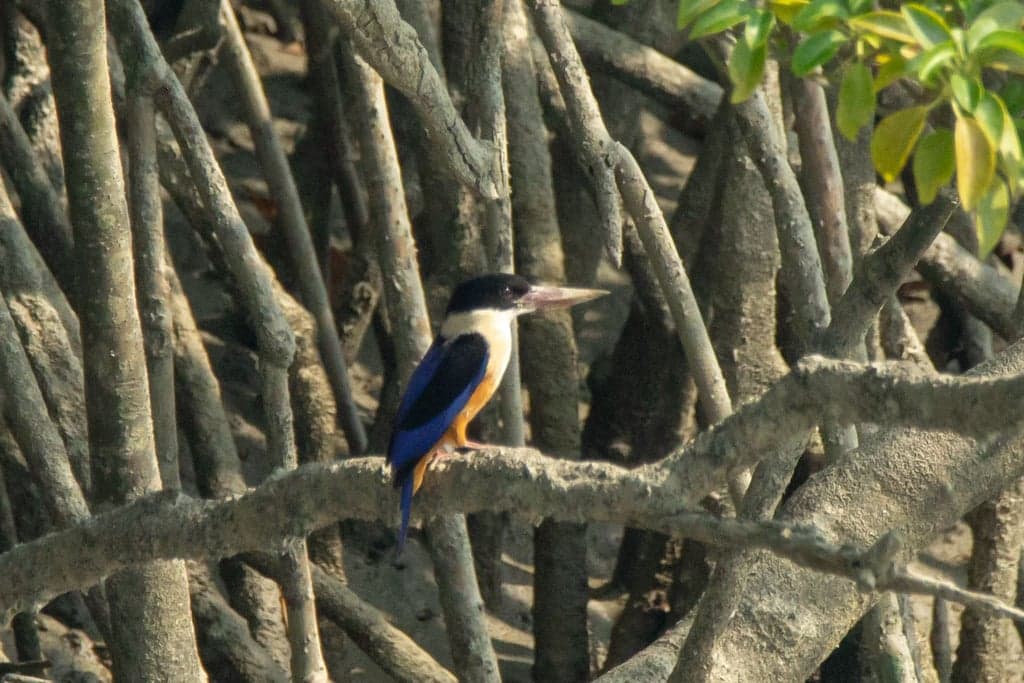
Black-capped Kingfisher
The bird in flight shows a black head, a white collar (neck), purple-blue upper parts, and a large bright red bill. The white patch on the wings visible during flight is a key identifier. This species is a winter visitor and resident in the Sundarbans, preferring coastal waters and mangroves.
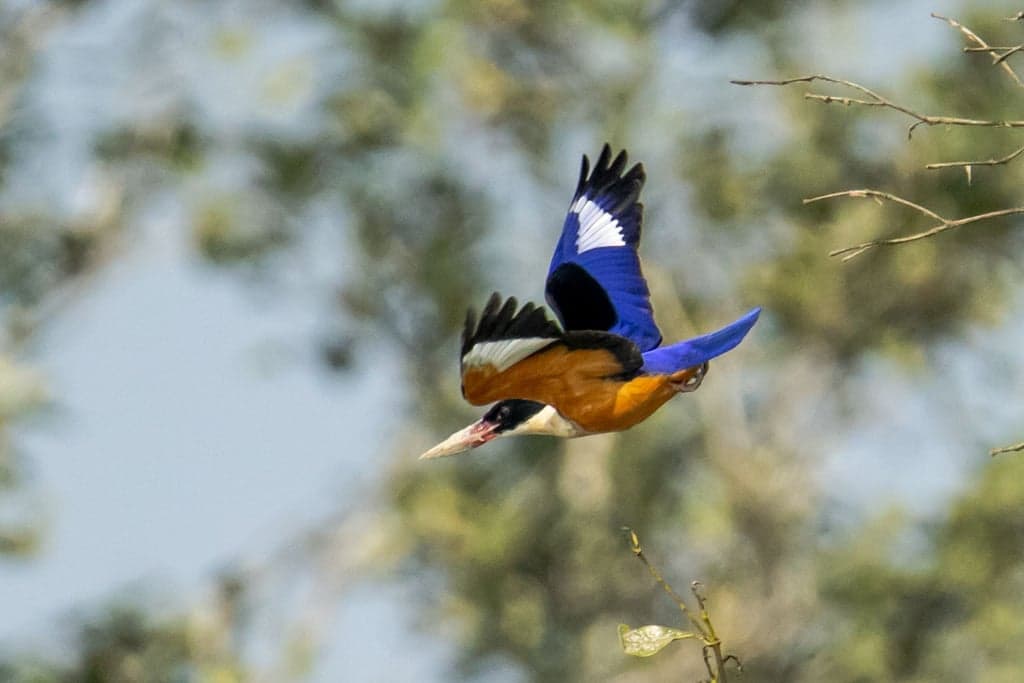
Black-capped Kingfisher (In Flight)
An incredible action shot. It perfectly displays the "white mirror" (wing patch) on the primary feathers, which is a key identification feature for this species in flight, along with the purple-blue upperparts.
The black-capped kingfisher in flight is the frame that justifies a telephoto on a tiger boat — white mirror on the wing, red bill, mangrove blur behind. After a dozen species, the pugmark conversation on deck starts to sound theoretical.
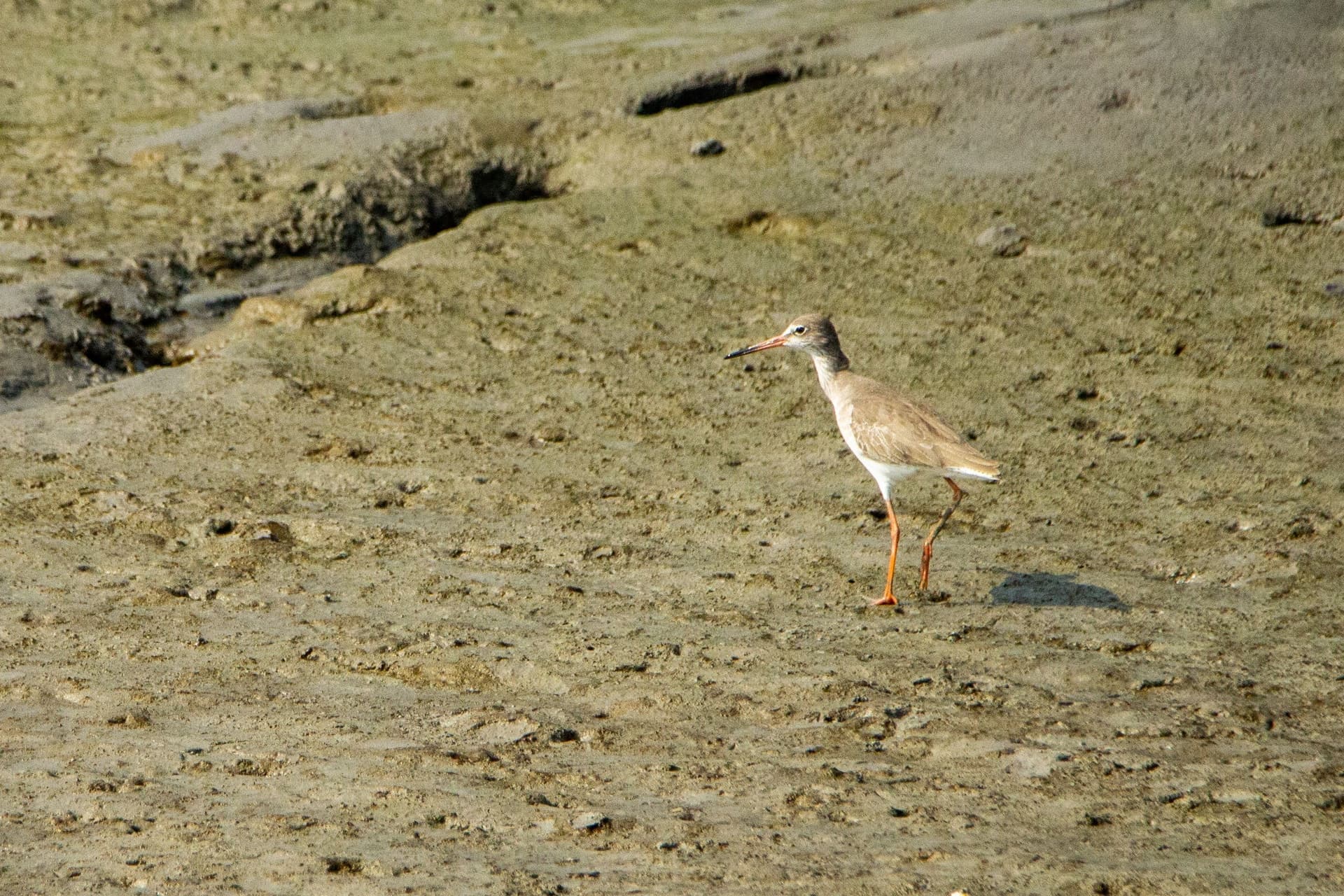
Common Redshank
The mottled brown/grey bird walking on the mudflat with long, bright orange-red legs and a red base to its bill. These are winter visitors to the Sundarbans. They are busy foragers, often seen scurrying along the waterline of the exposed mudflats searching for small invertebrates.
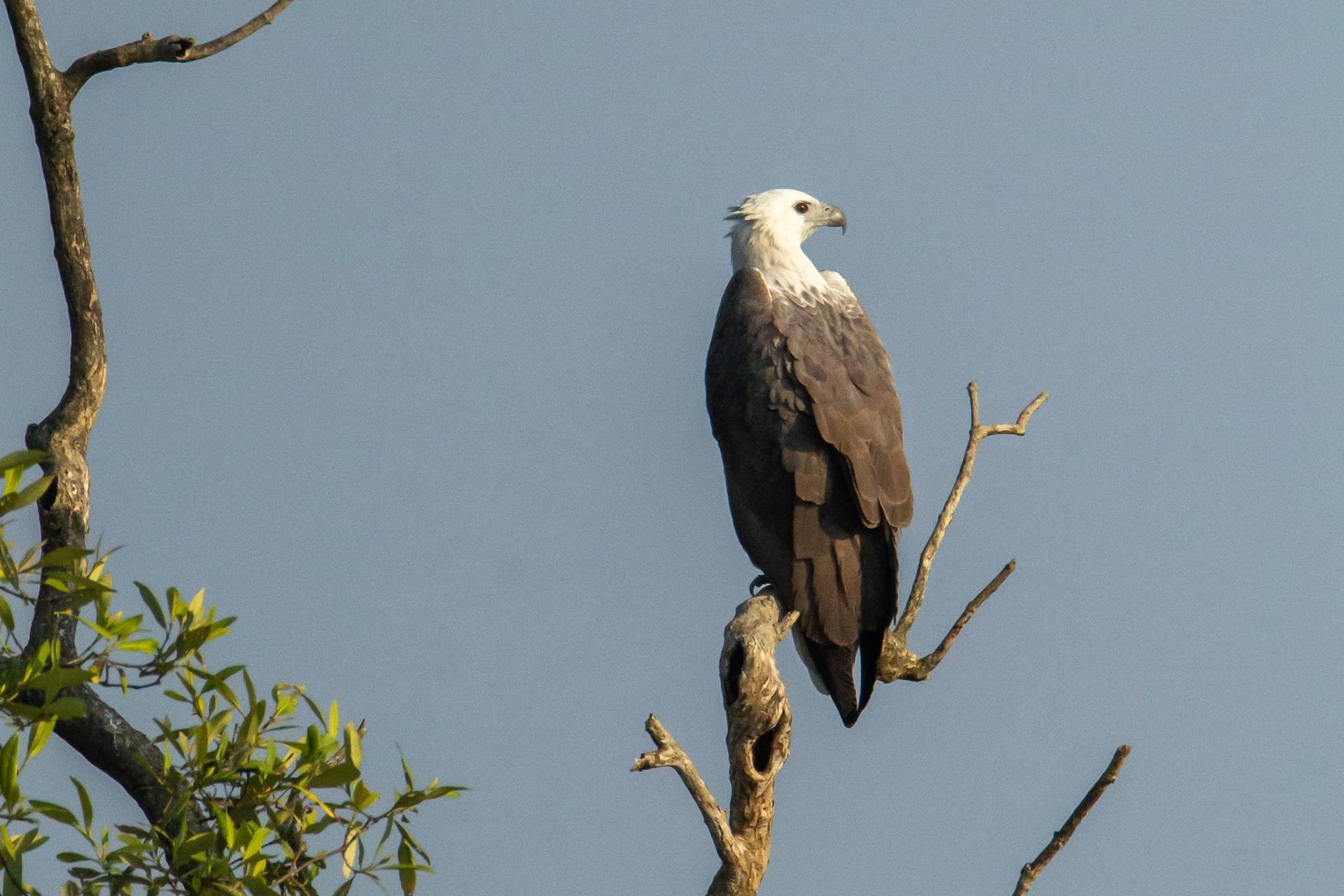
White-bellied Sea Eagle
A majestic profile view of the eagle perched. You can clearly see the clean white head and breast contrasting with the grey wings, identifying it as an adult.
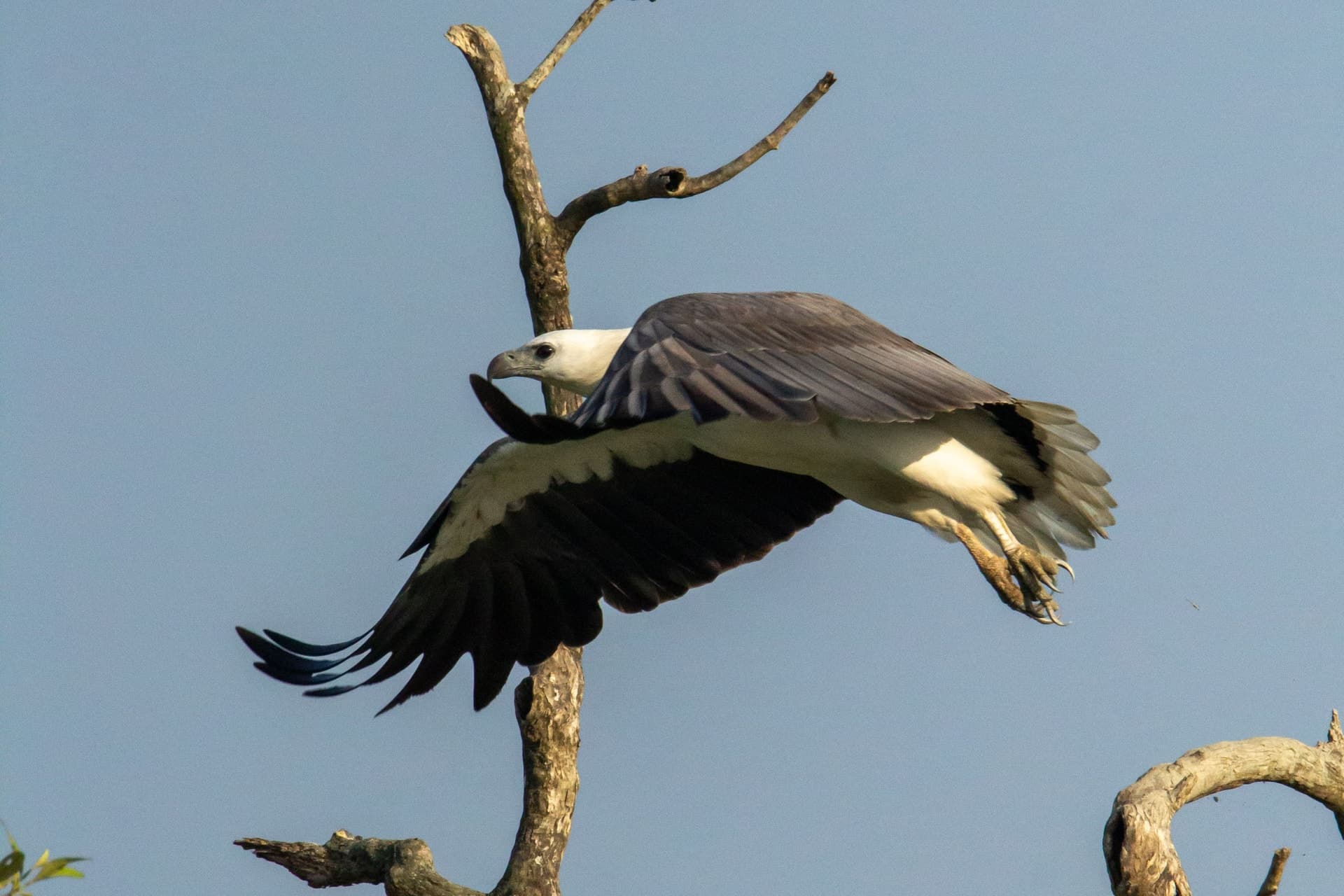
White-bellied Sea Eagle
The raptor in flight shows a stark white head and underparts with dark grey wings. This is a powerful apex predator of the coastal region.
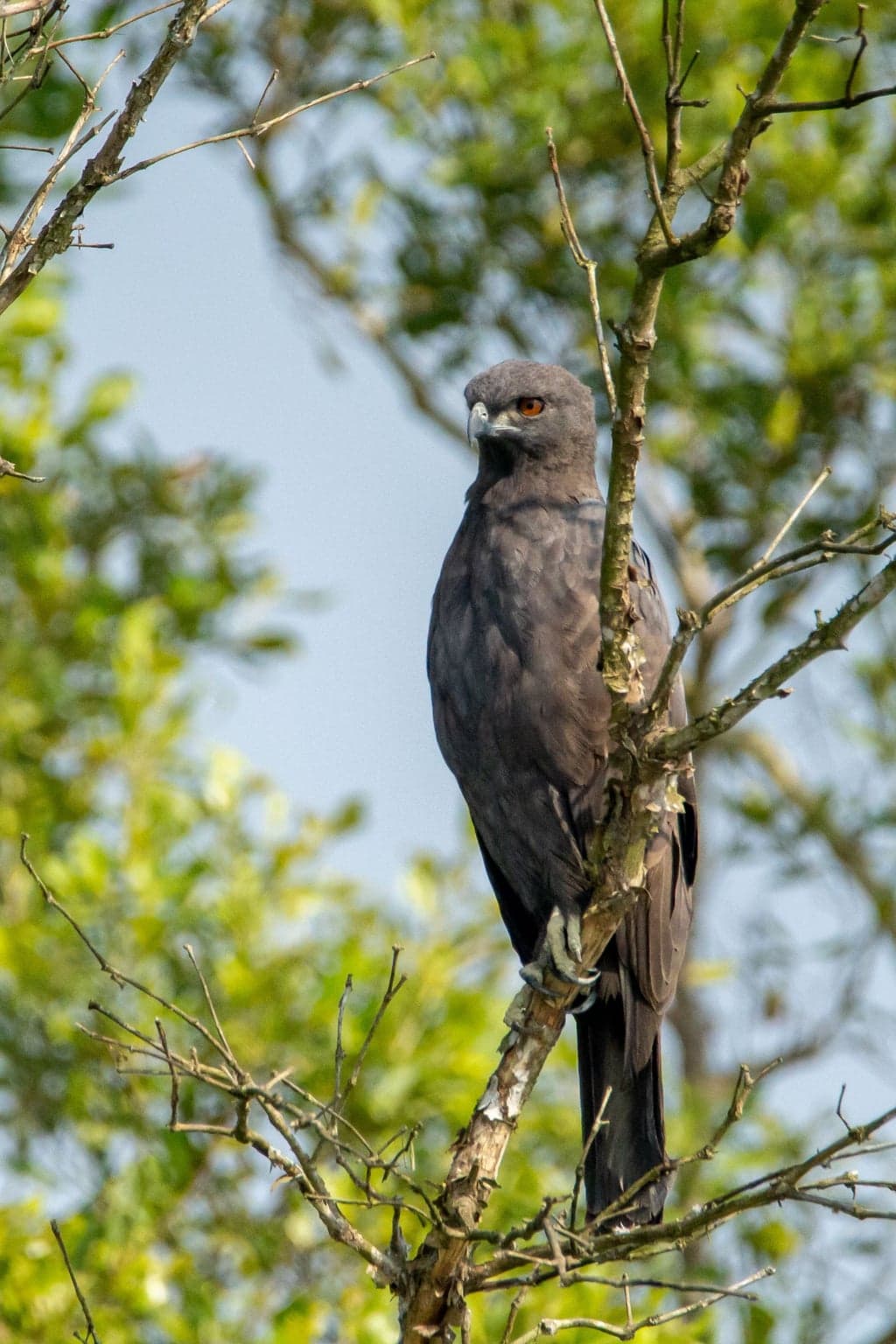
Grey-headed Fish Eagle
The raptor perched in the tree with a grey head/breast and brown wings. It is a near-threatened species often found near slow-moving rivers and lakes.
Quick reference
| Species in story | Brahminy kite · Green bee-eater · Lesser adjutant · Great egret · Common / white-throated / black-capped kingfisher · Shikra · Redshank · Sea eagle · Fish eagle |
|---|---|
| Trip type | Slow boat on tidal creeks — birding focus, not tiger stakeout |
| Access | Licensed tours from Godkhali / Sonakhali / Pakhiralay (ex-Kolkata) |
| Best season | Nov–Feb for migrants and comfort; winter light for raptors |
| From Kolkata | ~3–4 hours to jetty + boat — overnight packages strongly recommended; day trips are feasible but miss the morning hours |
| Day trip vs overnight | Overnight wins — morning creek light at 6–8am is when kingfishers and raptors are active; same-day return means arriving in heat |
| Gear | Telephoto (kingfisher flight needs speed), rain cover, neutral colours |
Common questions