8 Days in Ladakh: A Complete Itinerary (With Tso Moriri Extension)
This itinerary is built from our August 2024 circuit: Leh base, north to Nubra Valley via Khardung La, east through the Shyok valley directly to Pangong Tso, back to Leh over Chang La. Eight days is the minimum we'd recommend for this route — seven if you have no choice, nine or ten if you want to breathe.
The day split below assumes you land in Leh on Day 1 with no disruption. In August 2024, we lost two days to a cancelled flight and a flood in Jaipur before we even arrived. Build at least one buffer day into your booking for reasons that may have nothing to do with Ladakh itself.
Day 1 — Arrive Leh: Do Nothing
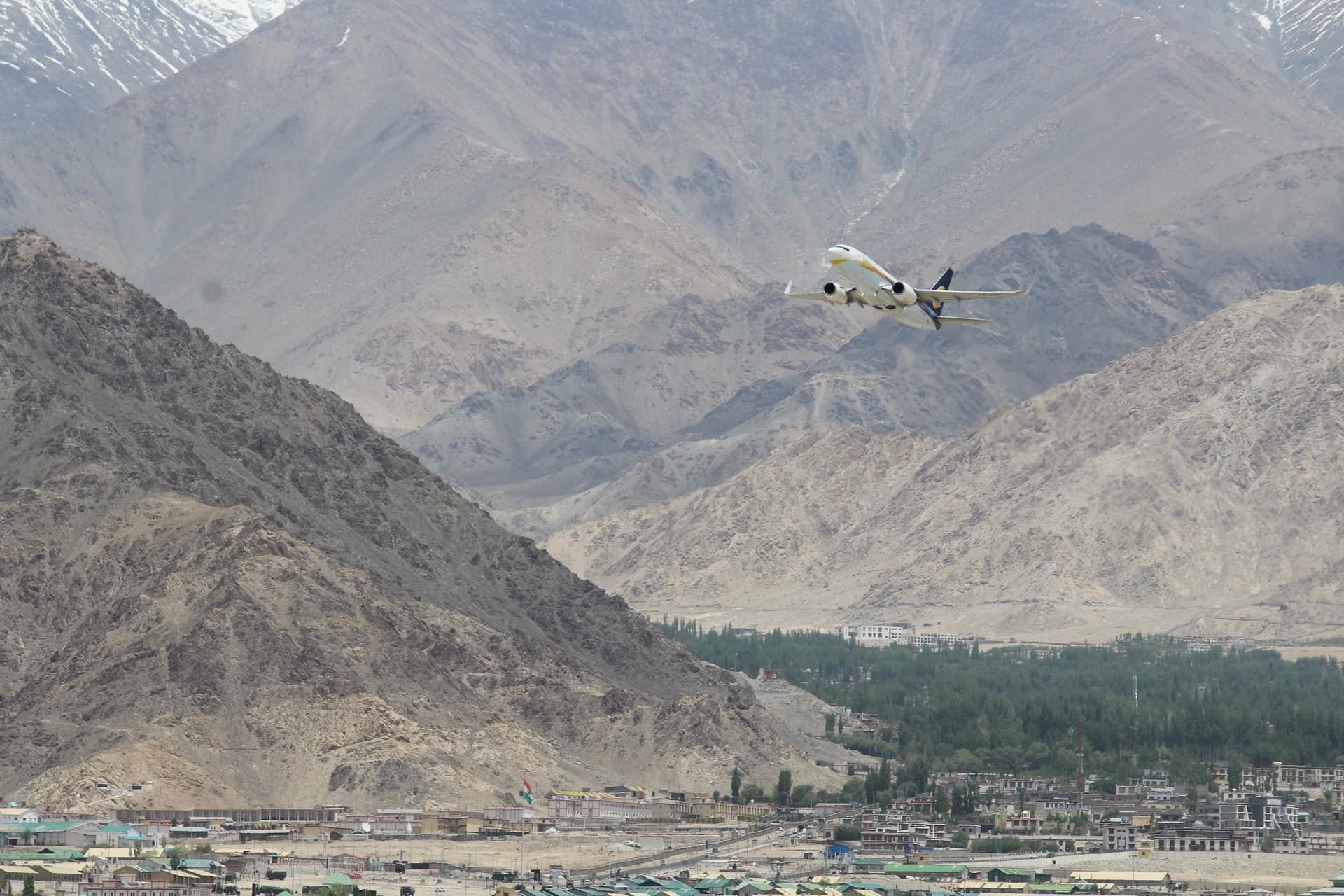
Land at Kushok Bakula Rimpochee Airport. The mountains are visible from the runway — not at a distance but directly above the tarmac, close enough that the scale takes a moment to register. If you're on the right side of the aircraft on the approach, you've been watching them build for the past forty minutes. Either way, take a moment when you step off.
Then check in and stop. This day has one job: acclimatisation.
Leh is at 3,500 metres. Your body, arriving from Bengaluru or Delhi or anywhere at normal altitude, is not ready for what the next seven days will ask of it. The altitude will announce itself — a low-grade headache, a fatigue disproportionate to what you've done, a slightly unreal quality to the afternoon. This is normal. The error most people make is pushing through it with sightseeing. The people who rest on Day 1 feel significantly better by Day 3. The people who don't often have AMS symptoms at the first pass.
Eat lightly. Drink water. Avoid alcohol. Sleep early.
Stay: Ladakh Eco Resort, Spurka (Gangles area) — a quiet property outside the main town, which is exactly what Day 1 asks for. The distance from the market that feels inconvenient on paper is an asset today.
Day 2 — Leh: The Indus Valley and the City
Still an acclimatisation day. Keep it unhurried and stay below 4,000 metres.
Drive east along the Indus valley road — 20 minutes from town and the landscape is already working. Thiksey Monastery is the anchor: it rises in tiers above the valley floor, white and ochre, a cluster of temples and monk residences stacked up a hillside with the Indus and its fields below. The comparison to Potala Palace in Lhasa is made often and it's not wrong. Go early, before the tour groups arrive, and climb all the way to the roof. The view back toward Leh across the valley floor is what you came for.
If you have energy and the altitude isn't fighting you: Hemis Monastery, another 25 minutes east, is the largest gompa in Ladakh and more elaborate than Thiksey. The Hemis Festival — masked dances, monks, the full ceremony — happens here in June or July on the Tibetan lunar calendar. Outside festival season it's quieter and worth the stop for the setting and the collection.
Back to Leh in the afternoon. Shanti Stupa in the evening — the white dome on the hill above the city. The stupa itself is fine; the view of Leh below it as the light goes flat is the reason. Then down into the market. Find De Khambir on the main strip — a bakery and social enterprise that serves traditional Ladakhi breads including gurda, and you'll find yourself going back. Dinner at NAMZA Dining on Zangsti Road or The Tibetan Kitchen on Fort Road.
Stay: Ladakh Eco Resort, Spurka
Day 3 — Leh: Monasteries and the Western Corridor
Morning: Spituk Monastery, just outside Leh on the airport road. Smaller than Thiksey, fewer visitors, perched on a small hill with a view down the Indus. The kind of place where you might be the only person there for a while and where that feels like a gift rather than a disappointment.
Drive south through Choglamsar to Karma Dupgyud Choeling Monastery — less visited than most sites on the Leh circuit, quieter, different in atmosphere from the more famous gompas. Worth the short detour specifically because it won't be on most people's lists.
Afternoon: Hall of Fame in Leh. This is a war memorial — dedicated to the Indian soldiers who died in the 1999 Kargil conflict — not a museum in the conventional tourist sense. Understand what it is before you go. Take the time it asks of you.
Optional if you want to cover Sham: the western Srinagar highway corridor — Sangam viewpoint (Indus-Zanskar confluence), Magnetic Hill, Gurdwara Pathar Sahib — can be done as a half-day drive in this direction before the Choglamsar visit. The confluence of the two rivers, one silt-brown and one clear blue-green, is more surprising in person than it sounds in description.
Evening: market. Gesmo for reliable and unfussy. Dzomsa if you want lighter and more local.
Stay: Ladakh Eco Resort, Spurka — last night before the road begins
Day 4 — Leh → Khardung La → Nubra Valley, Hunder
The first of the long mountain days. Set your alarm for 5:30am. You want to be on the road by 6.
The drive north from Leh climbs steadily through a landscape that becomes progressively more stripped and lunar as you gain altitude. The last villages drop away. The vegetation stops. The road becomes the only colour. Khardung La at 5,359 metres is marked by a cluster of signboards, prayer flags, and a few chai stalls where the wind makes standing still uncomfortable. The air at the top is noticeably thin — you'll feel it in your chest when you get out of the car. Stop briefly, take the photograph, keep moving. Extended time at the top is not comfortable and not necessary.
The descent into Nubra Valley is the reward for everything you just climbed. The valley opens below — wide, green, implausibly agricultural given where it is. Tall Lombardy poplars line the roads. The Shyok river runs through it. Small villages appear. It looks nothing like the rest of Ladakh.
Check into Himalayan Eco Resort in Hunder — those same poplars on the approach road, a quiet property with good access to the dunes. In the afternoon, walk to the sand dunes. The Bactrian camels will be there — two-humped, prehistoric-looking, entirely unbothered. Dunes at 3,000 metres with the Karakoram behind them. It shouldn't work as a landscape. It does.
Drive time: 4–5 hours Leh to Hunder
Stay: Himalayan Eco Resort, Hunder
Day 5 — Nubra Valley: Diskit, Samstanling, and the Valley
A slower day in the valley before tomorrow's long Shyok drive.
Morning: Diskit Monastery, built on a mountainside above Diskit village with a 32-metre Maitreya Buddha statue visible from the road a kilometre away. It's the largest monastery in Nubra and more dramatically sited than the dunes — less photographed, worth more time. Climb to the main temple and look back toward the valley below and the sand dunes in the middle distance.
Late morning: Samstanling Monastery in Sumur, about 10km further up the valley. Smaller and quieter. The monastery compound is active — monks resident, prayer halls open. The scale of the mountains visible from here is a good reminder of where you actually are.
Afternoon back in Hunder. The late afternoon light in Nubra is different from midday — longer shadows, the peaks picking up colour as the sun drops. A second walk to the dunes in this light is worth doing even if you went yesterday.
If you have a third night in Nubra: push north to Turtuk, 90km further toward the Pakistan border. It was opened to civilian tourists only in 2010. The architecture, food, culture, and language are distinct from the Buddhist heartland — a Muslim village that feels like a different country from Leh. The drive there and back eats a full day but it's unlike anything else on the standard circuit.
Stay: Himalayan Eco Resort, Hunder
Day 6 — Nubra → Shyok Valley → Pangong Tso
The longest drive of the circuit. Start early — 6am if possible. This is also the most remote section; there are no towns of any size between Hunder and Pangong and the road quality is variable.
The route goes south-east from Hunder, drops into the Shyok Valley, and follows the river east toward Durbuk before climbing to Pangong. The Shyok road is wide in places and rough in others — the kind of road that requires attention without being dangerous. The valley is largely empty. Long stretches pass without another vehicle. The river runs alongside in shades of grey and green. Stop when you feel like stopping; there's nothing urgent until Pangong.
Durbuk is the last settlement of any size before the lake. Pangong Way Restaurant here — a roadside dhaba that's functional rather than memorable. But you're an hour from Pangong at this point and you've been driving since early morning, and the meal tastes better for where you're eating it.
The road continues climbing toward the lake, and then — around a bend, without warning — it's there. Pangong Tso. It extends to the horizon in a shade of blue that every photograph you've seen has failed to accurately reproduce. Not because the photographs are bad but because the colour shifts, the scale is wrong in two dimensions at once, and the surrounding mountains do something that a frame can't contain. Pull over. Sit with it for a while before you drive to your accommodation.
Stay on the south bank, preferably at the eastern end near Merak rather than at the crowded Spangmik end near the road. The light in the morning from the east end of the lake is worth the extra distance.
Drive time: 5–6 hours Hunder to Pangong via Shyok — allow more
Stay: Lakeside property, Pangong — book well in advance for July–August
Day 7 — Pangong → Chang La → Leh
Get up before sunrise. Go to the water before anyone else is moving. The lake at first light, before the wind comes up and before the other guests emerge, is the quietest thing in Ladakh.
Drive back to Leh over Chang La at approximately 5,360 metres — nearly the same elevation as Khardung La, less visited, a longer windswept plateau on the approach and a more gradual descent on the Leh side. The landscape here is different from the Khardung La road — wider, more open, the passes feeling more genuinely remote. On the final descent toward Leh, the Indus valley reappears below and everything starts to feel familiar again.
Back in Leh by mid-afternoon. Check into Hotel Singge Palace on P. Namgyal Road. The property is five minutes from the market on foot — exactly what you want for the last days. You've been staying in remote properties for the driving section; now you want to walk out the door and be somewhere.
Evening: the Leh market. Walk it properly for the first time. Buy whatever you're going to buy. Dinner wherever looks right.
Drive time: 4–5 hours Pangong to Leh via Chang La
Stay: Hotel Singge Palace, Leh
Day 8 — Leh: The Last Day
No drives. No passes. No planned itinerary.
Morning: back to De Khambir for bread. Walk Fort Road and the main bazaar and the side lanes properly — the market rewards slow movement and has been there longer than any of the accommodation you've stayed at. Spend money on things you'll actually use.
Afternoon: Shanti Stupa if you haven't been yet, or if you want the view one more time. The Leh Palace is worth an hour. Otherwise sit somewhere with a cup of tea and do nothing. The altitude is lower than it's been all week and your body knows it.
Dinner at Sorriso's Pizzeria on the second floor of the Al Hayat Building on Main Bazar Road, if you want something completely different from the past week's momos and thukpa. It works.
Departure note: most morning flights from Leh leave between 6–8am, which means a 4am start or earlier. Sort your bags the night before. Don't leave anything in the hotel safe that you need at the airport.
Itinerary at a Glance
Optional Extension: Tso Moriri — Days 9 and 10
If you have ten days, extend the circuit south from Pangong to Tso Moriri before returning to Leh. This replaces the direct Pangong → Chang La → Leh return on Day 7 with a southern loop that adds two days and visits the least-developed of Ladakh's major lakes.
Day 7 (extended) — Pangong → Tsaga La → Tso Kar → Tso Moriri
Leave the lake early — the same dawn start, but now driving south rather than west. The road toward Tsaga La leaves the Pangong basin and climbs onto the Changthang plateau, a high, largely flat expanse at around 4,500 metres with a quality of emptiness that's different from the mountain landscapes of the northern circuit. You're above the ridgelines now rather than between them. The sky is bigger.
Tsaga La is a rougher pass than Chang La or Khardung La — the road is unpredictable enough that you should discuss current conditions with your driver before committing. In good conditions it's fine in an Innova Crysta; in bad conditions it's a different matter. Your driver will know.
Stop at Tso Kar on the way down. This is a salt lake on the Rupshu plateau, less visited than either Pangong or Tso Moriri, and the best wildlife spot on the standard circuit. Bar-headed geese — the ones that migrate over the Himalayas at 7,000 metres — nest here. Black-necked cranes. Kiang (Tibetan wild ass) in small herds on the surrounding plains. If you sit quietly at the water's edge for an hour, the birds don't particularly care that you're there. In winter, snow leopards move through this area following the bharal herds to lower altitude.
Arrive at Tso Moriri in the evening. The lake is around 26km long and 8km wide at its broadest, at 4,500 metres, and there are no camps along the south bank selling noodles. Korzok village and its monastery on the north bank are the only infrastructure. Book your guesthouse in Korzok well in advance — options are limited, operation is seasonal, and the better places fill early.
Drive time: 6–7 hours Pangong to Tso Moriri via Tsaga La and Tso Kar
Stay: Guesthouse in Korzok, Tso Moriri
Day 8 (extended) — Tso Moriri: The Lake
Spend the morning at the water. Tso Moriri at dawn — no wind yet, surface flat, surrounding peaks reflected — is one of the quieter, more complete experiences that Ladakh offers. Pangong has the drama and the scale; Tso Moriri has the stillness.
The village of Korzok and its monastery are worth a morning hour. The monastery is active, the monks resident. The view from the monastery compound down to the lake has the quality of being exactly where it should be.
This is the lake for people who found Pangong too crowded. It takes more effort to get here. That effort is why it's still this quiet.
Afternoon: rest, walk, sit at the water. Tomorrow is a long drive back.
Stay: Korzok, Tso Moriri
Day 9 (extended) — Tso Moriri → Leh
The return to Leh runs north via Upshi, joining the Manali-Leh highway for the last stretch. Roughly 240km, five to six hours. The road is straightforward after the Tsaga La section — a long valley run with the Indus joining you for the last hour and Leh appearing gradually below.
Back in Leh by mid-afternoon. Check into Hotel Singge Palace.
Drive time: 5–6 hours Tso Moriri to Leh via Upshi
Stay: Hotel Singge Palace, Leh
Day 10 (extended) — Leh: The Last Day
Same as Day 8 in the base itinerary. Market, De Khambir, no drives, no passes. Early start the following morning for the flight.
A Note on Buffer Days
Neither version of this itinerary has slack. If a pass closes, if someone gets AMS, if the morning flight on Day 1 is delayed — the whole sequence shifts. If you can extend to nine or eleven days respectively, add a rest day after arrival and an extra night at Pangong or Tso Moriri. You won't regret the time. You will regret not having it.
The mountains have opinions about your schedule. Build room for them.
Destination Guide
Rajasthan
Jaipur, Jodhpur, Jaisalmer, Udaipur — a destination guide to Rajasthan's desert circuits. Where to base yourself, how long to go, and what the forts actually feel like.