One Day Trips from Bangalore by Car (2026): 4 Routes & Tolls
Bangalore is one of those cities where the best therapy is leaving it for a day. Not a weekend — just a day. Leaving the endless sprint cycles and roadmaps behind, getting out early, and being back before dark with something actually worth telling.
The expressway culture has matured, roads out of the city have improved, and a few genuinely underrated spots have shaken off the crowds — or never got them in the first place.
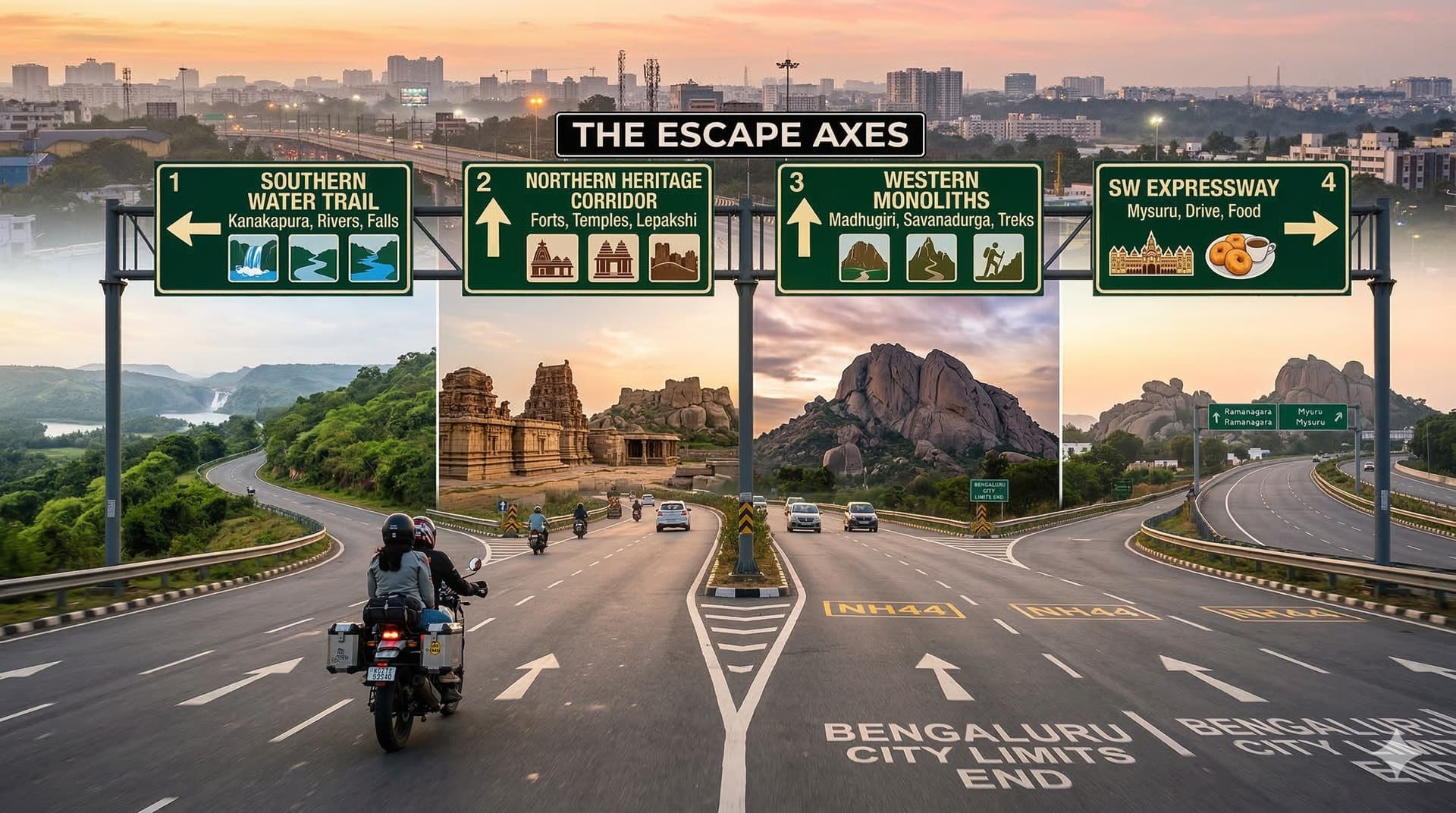
This isn't a checklist of places to rush through. Instead, think of these as four geographical axes radiating out of the city. The goal isn't to hit every stop on a route. It's to embrace a bit of lyaadh—intentional slow living. Pick one main stop, maybe pair it with a secondary detour if you're feeling ambitious, and let the day unfold at a comfortable pace. Whether you're driving out with your wife for a quiet morning or taking the parents somewhere unhurried, these corridors are designed to stack naturally.
A quick note on what's changed for 2026: toll costs on the Mysore Expressway and NH44 have gone up — budget ₹700–850 return depending on your route. Also, the Cauvery Wildlife Sanctuary now requires advance online booking through the Karnataka Forest Department portal. Don't show up on a weekend without one.
If you're reading this in October or November, you've landed in the one window where Route 1 and Route 3 overlap: the Cauvery falls are still running, and the forts have dried out enough to climb.
The Map — Every Stop on These Routes
Axis 1 — The Cauvery Corridor (Kanakapura Road / NH209)
Direction: South / Southwest · Distance: 90–135 km · Best season: August–November (post-monsoon) · Vibe: Water, monsoon moodiness, and riverside peace.
The Cauvery is the spine of this route. Three stops that stack naturally into a full day, all connected by the same river and the same moody post-monsoon light. Leave early, let the highway thin out, and follow the river south. This is the quintessential Bangalore day out — water, forest, and the kind of quiet that the city rarely offers.
Chunchi Falls — 90 km
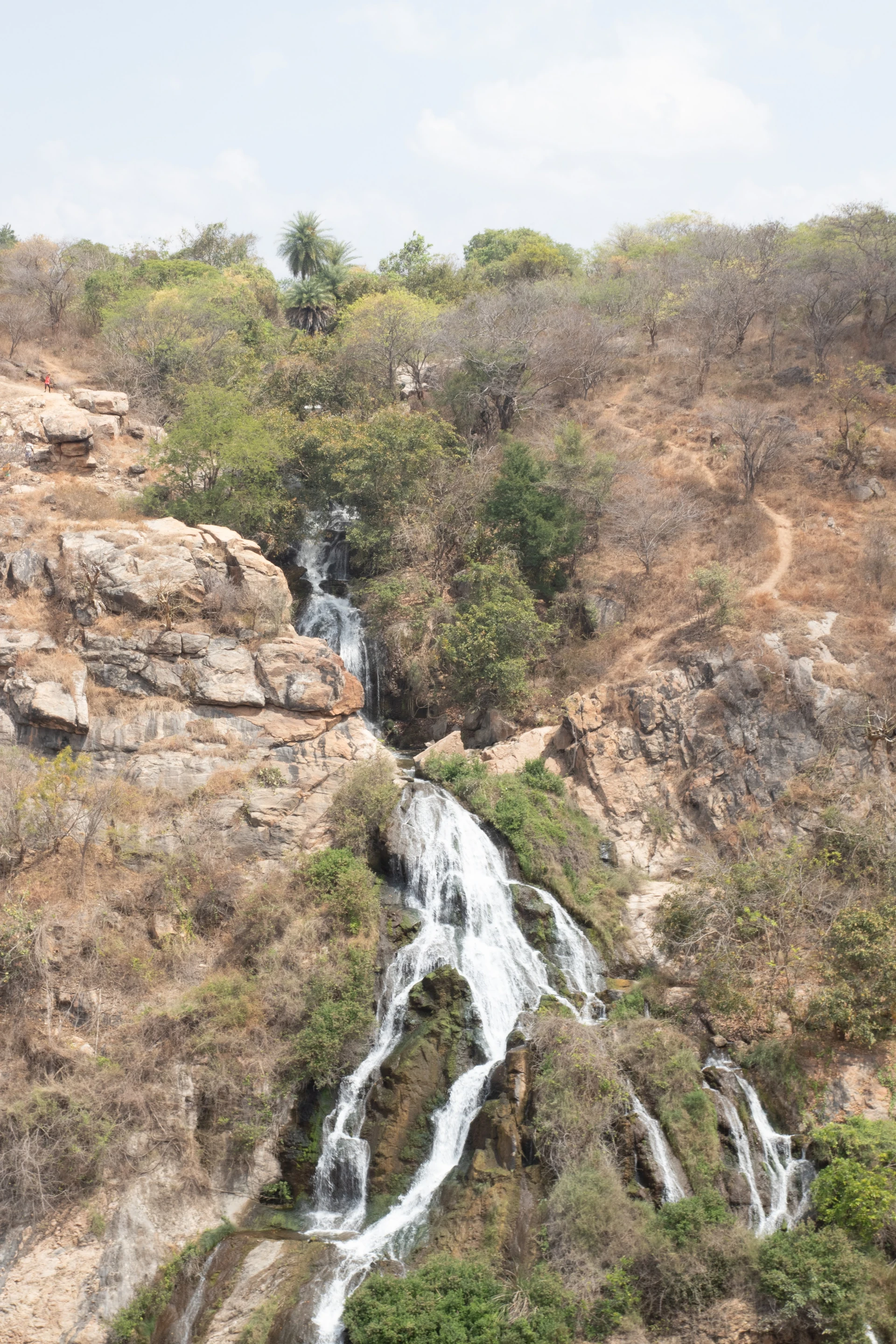
A short walk from the parking to a gorge waterfall on the Arkavathi, a few kilometres before it meets the Cauvery at Sangam. Best in the weeks after the rains peak, when the volume is dramatic. There's a watchtower on the trail with a 360-degree view of the rocky terrain before the falls reveal themselves. The guided trek down to the plunge pool hasn't been operating (last checked March 2026), but the viewpoint trail and watchtower are open — treat it as a stop on the way to Sangam rather than the main event.
Bheemeshwari and Sangam — 103 km
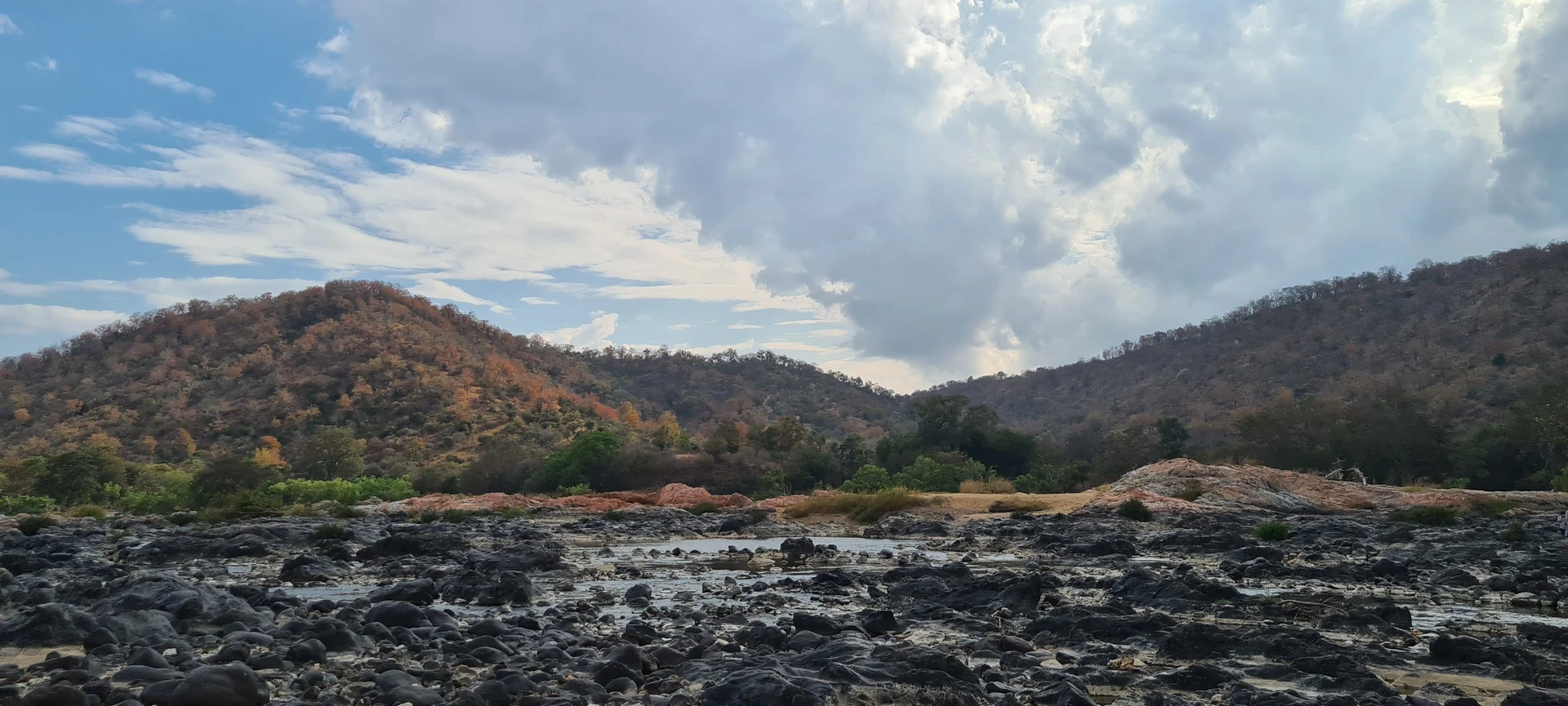
Drive through the Cauvery Wildlife Sanctuary to reach the Sangam — the confluence of the Cauvery and Arkavathi. The sanctuary drive is half the point: watch for hornbills, kingfishers, and if you're lucky, the giant mahseer in the shallows. Coracle rides are available and worth doing.
Shivanasamudra Falls — 135 km
Barachukki and Gaganachukki — the two segments of the falls on either side of the Cauvery's island split. Most dramatic August–October when the river is running full. Can be stacked onto the above two stops on an ambitious day, or kept as a standalone 135 km return trip. Either way, go in the morning when the light hits the falls from the east.
Axis 2 — The Northern Heritage Corridor (NH44)
Direction: North / Northeast · Distance: 61–120 km · Best season: October–March · Vibe: Forts, ancient temples, and rocky hills rising from flat farmland.
The northern plateau around Bangalore has a different texture from the Ghats — drier, boulder-strewn, with rocky hills rising abruptly from flat farmland. Heading strictly north up the Hyderabad highway offers the best roads and a string of heritage stops that range from zero-effort to full-day climbs.
Devanahalli Fort (40 km):
Just past the airport. A land fort, so no climbing is involved. You can simply sit on a bastion and exist in a 500-year-old space. Twelve semi-circular bastions and a history running from the Vijayanagara rulers to the British.
Nandi Hills — 61 km
The classic, and still worth it — with conditions. Go on a weekday, arrive before 7 AM, or don't bother. The Tipu Sultan summer retreat, the cliff views over the plains, and the descent through eucalyptus forest are all excellent. On the way back, stop at Bhoga Nandeeshwara temple at the base of the hill — it's one of the oldest temples in Karnataka, completely unhurried, and most people drive past it without a second glance. That's the point.
Lepakshi — 120 km
Just across the Karnataka–Andhra Pradesh border, the Veerabhadra Temple at Lepakshi is a Vijayanagara-era masterpiece. The hanging pillar that appears to float above the floor, the monolithic Nagalinga, and the painted ceilings are all extraordinary. Budget an hour and a half inside. On the return, a small detour to Gudibande Fort makes for a complete heritage loop — a cross-border temple and a fort trail in a single day. (Haven't done Lepakshi justice with a dedicated visit yet — it's firmly on the list. Carry your ID; it's in Andhra Pradesh.)
Combo option: Antharagange sunrise → Nandi Hills → Lepakshi = a full 12-hour loop, entirely north and northeast of the city.
Start time: 4 AM (Antharagange) or 5:30 AM (Nandi Hills) · Return by: 5 PM
Axis 3 — The Fort Trail
Direction: North / Northwest · Distance: 60–130 km · Best season: October–March (Avoid during monsoons) · Vibe: Exposed granite, physical challenges, and deep rural quiet.
Bangalore is, in a very real sense, a fort city — most people just don't know it. The Navadurga were nine hilltop fortifications built by Kempe Gowda I in the 16th century as a defensive ring around the city — and they're still out there, strung across the plateau in every direction. Most see barely any visitors. Some I've done; some are still on my list. What follows are the ones worth building a day around, across a range of difficulty levels.
Gudibande Fort — 92 km · Easy
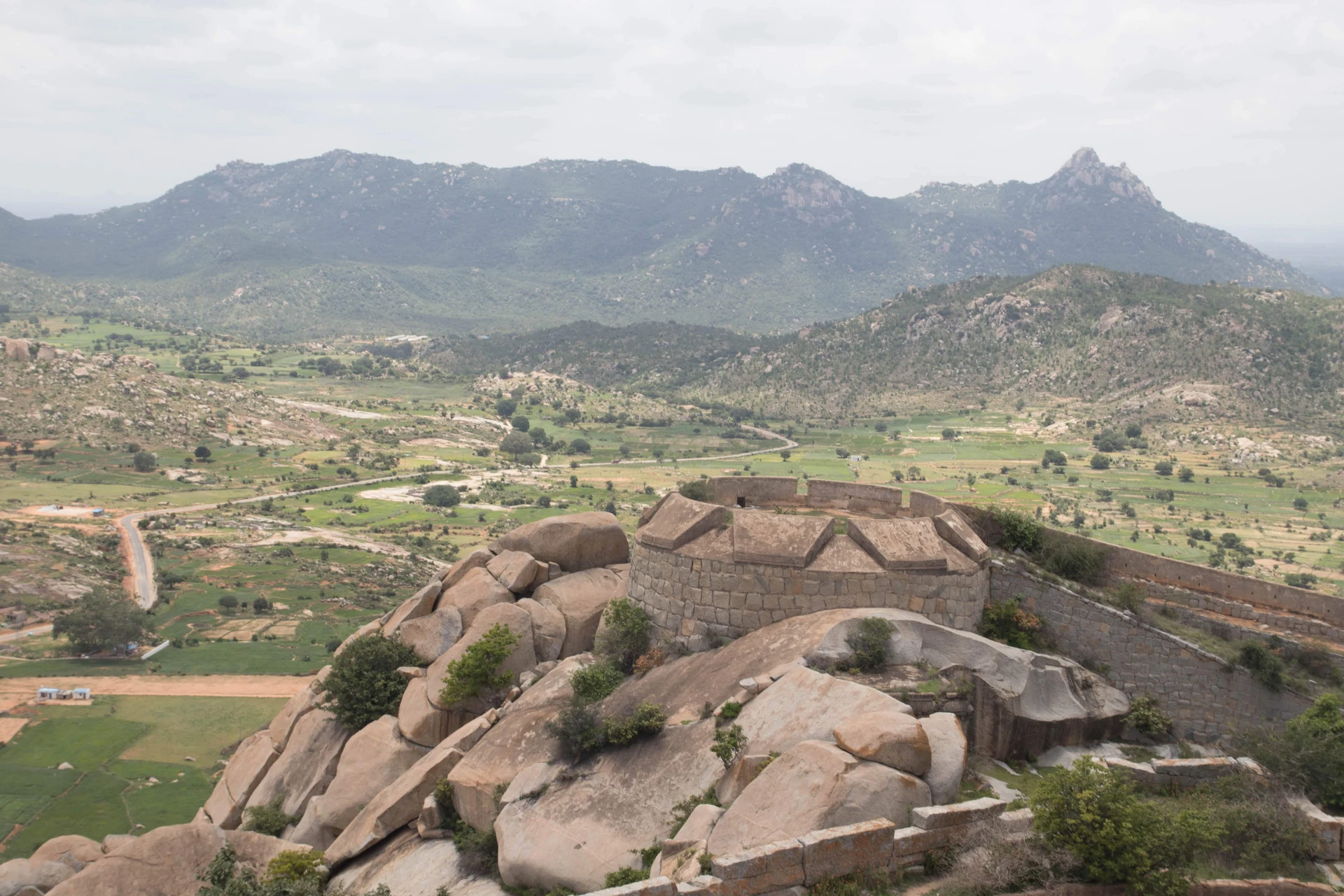
A compact, multi-level hill fort that Gudibande's chieftain built in the 17th century — reportedly with Madhugiri in mind. A gentler climb, good views from the top, and Bhairasagara Lake perfectly framed below. Walk down after, find a spot by the water, eat. The lake is excellent for birds — egrets, painted storks, kingfishers if you're there quietly. My personal favourite for a relaxed fort day.
Madhugiri Fort — 100 km · Hard
The second largest monolith in Asia. The fort climbs the face of the rock in stages, and the upper reaches are exposed and vertiginous — this is the most physically demanding hike on this list. Budget 2–3 hours for the ascent and descent. Go in the cool morning hours. The views from the top over the flat farmland are quietly stunning. I first came here on a reckless overnight bike trip in 2015 — ten of us, zero preparation, sleeping on the rocks. Saw the bear warning signs only after sunrise. Deserves a proper return in daylight, which I keep owing it.
Savanadurga — 60 km · Very Hard
Called "the fort of death" in Kannada. Widely regarded as the largest monolith in Asia (yes, larger than Madhugiri — the two trade the claim depending on source). Near-vertical ascents, minimal footholds, sections that genuinely require hands-and-feet scrambling. I haven't completed this one yet, which is embarrassing to admit, but the exposed rock face has kept me honest. The forest below and the views of Manchanabele Dam from the top are the reward for anyone who earns it.
Devanahalli Fort — 40 km · No trek required
Tipu Sultan's birthplace, 40 km up NH44 — just past the airport. A land fort, so no climbing involved. What I love about it is the complete absence of crowds and the ability to simply sit on a bastion and exist in a 500-year-old space. I visited in 2019 and was so absorbed I forgot to take photos — not a single one. Twelve semi-circular bastions, two decorated gateways, and a history that ran from the Vijayanagara rulers through Hyder Ali through the British. The signage is actually good. Worth reading before you explore.
Makalidurga — 58 km · Moderate
One I haven't done yet — and it's been on the list longer than I'd like to admit. What makes it distinctive is the approach: it's one of the rare railway treks near Bangalore, where the trail runs alongside a line through the countryside before the climb begins. A Vijayanagara-era fort, now largely in ruins, with an eerie silence at the top. On my list for the next cool season.
Note: Pick one fort for a day.
Start time: 5:30 AM for hill forts, 7 AM for Devanahalli · Return by: 4–5 PM
Axis 4 — The Expressway Drive (Mysore)
Direction: Southwest · Distance: 145 km · Best season: Year-round (avoid long weekends)
The Bangalore–Mysore Expressway is one of the finest stretches of road you'll drive in peninsular India — smooth, wide, and flanked by the flat Deccan opening up into greener country as you approach Mysuru. The goal isn't to "do" Mysore. It's to enjoy the drive, arrive with an appetite, eat well, walk a little, and get back before the city swallows the afternoon.
The game plan:
- 6 AM departure — light traffic, cool air, golden hour on the highway
- Maddur stop (~70 km in) — Kamat Yatrinivas for Maddur vada and filter coffee. Non-negotiable. This is as much a ritual as the destination itself
- Mysore by 8:30–9 AM — Devaraja Market is best in the morning. Flower garlands, silk, sandalwood, fresh produce. Walk and absorb before the tour buses arrive
- Brunch — Vinayaka Mylari for breakfast dosas if you time it right; a proper Mysore thali if you're later
- Optional: St. Philomena Church — Gothic structure with almost no crowds on a weekday morning — or a slow drive past the Palace exterior
- Leave by 12:30 PM — back in Bangalore before the Sunday afternoon crawl begins
The honest pitch: Mysore in a day isn't about ticking sights. It's one of the best drives you can do from Bangalore, and the city rewards an early, unhurried morning.
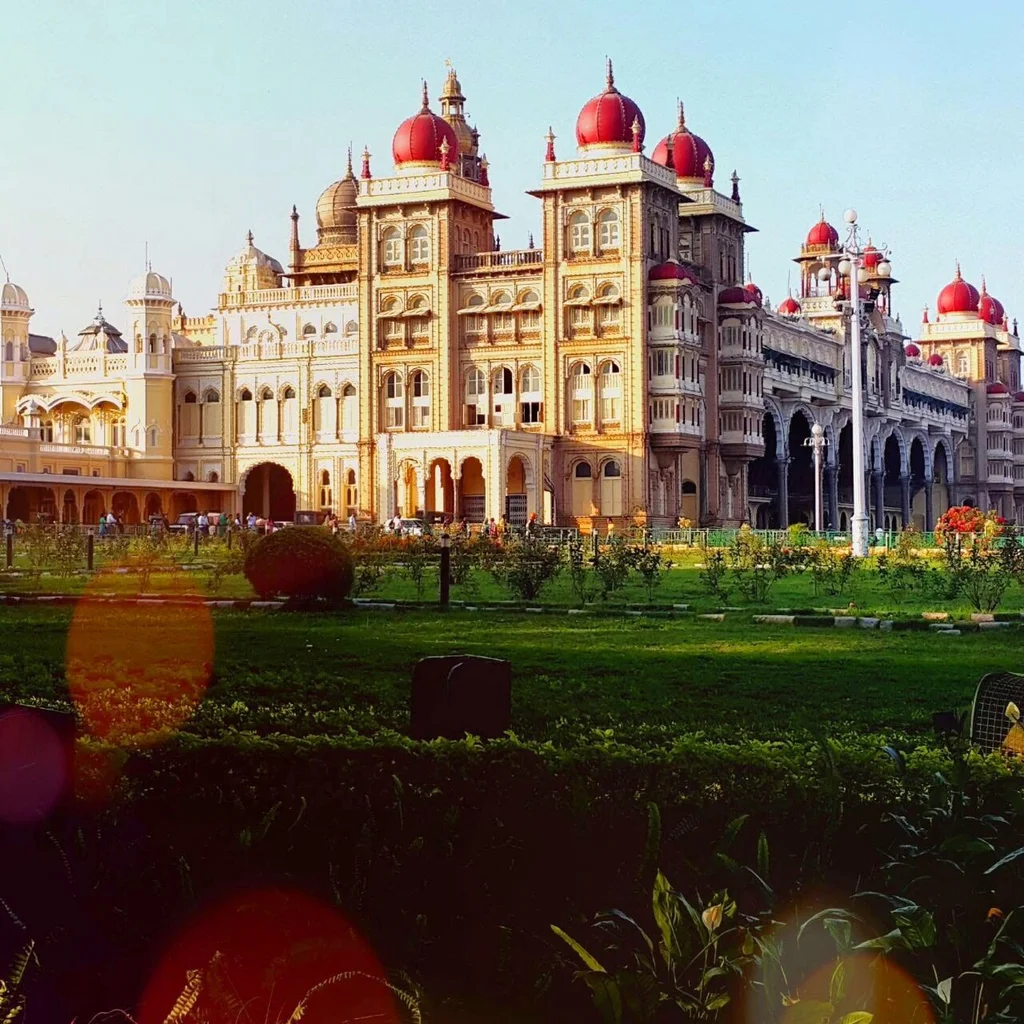
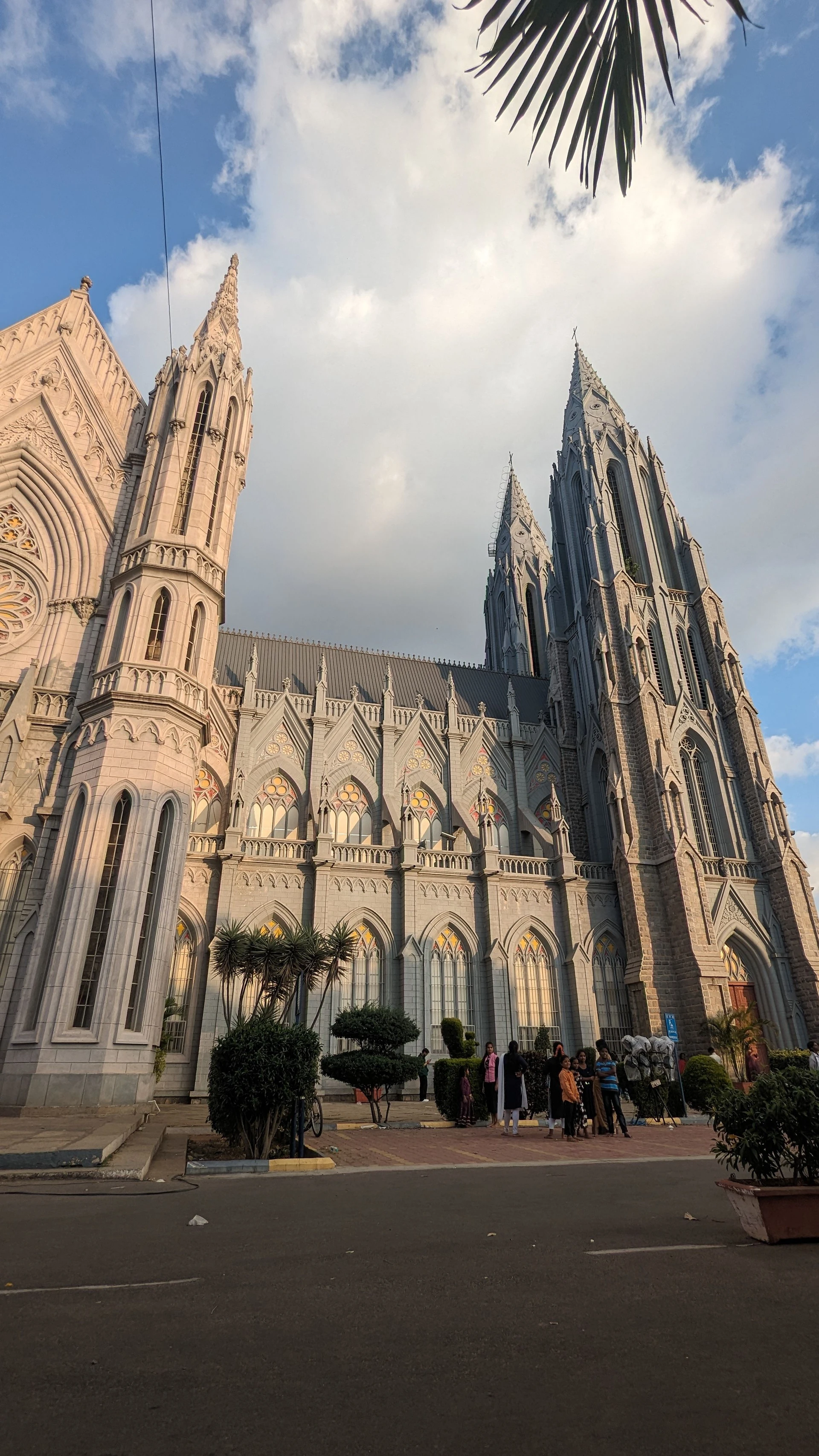
Start time: 6 AM · Return by: 2–3 PM
Offbeat Options — If You've Done the Obvious
The four routes above cover the strong, repeatable options. These are for when you want something different — a place most of the weekend crowd doesn't know about, or a destination so close it feels almost too easy to be worth it. It isn't.
Ramanagara — 50 km
The boulders where Sholay was filmed. That's the shorthand, and it does the landscape a disservice. The granite outcrops around Ramanagara are genuinely extraordinary — tiered rock formations rising from flat farmland, with a system of caves and a hawk eagle nesting population that makes this an underrated birdwatching spot. The rock climbing community has known about this place for years; everyone else drives past it on the way to Mysore. Stop here instead of waiting for Maddur.
Manchanabele Dam and the Big Banyan Tree — 36–45 km
Two things within 10 km of each other, both absurdly close to the city. The Manchanabele reservoir is where you go when you want moving water and green countryside without a three-hour drive. The road there passes through small hills that feel improbably rural for something this close to Bangalore. On the return, the Dodda Aalada Mara — a 400-year-old banyan tree that spreads across nearly 3 acres and is supported by over 4,000 aerial roots — is the kind of thing you'd make a special trip for if it were further away. Combine both in a half-day and you're back for a late lunch.
Kendatti Quarry, Kolar — 80 km
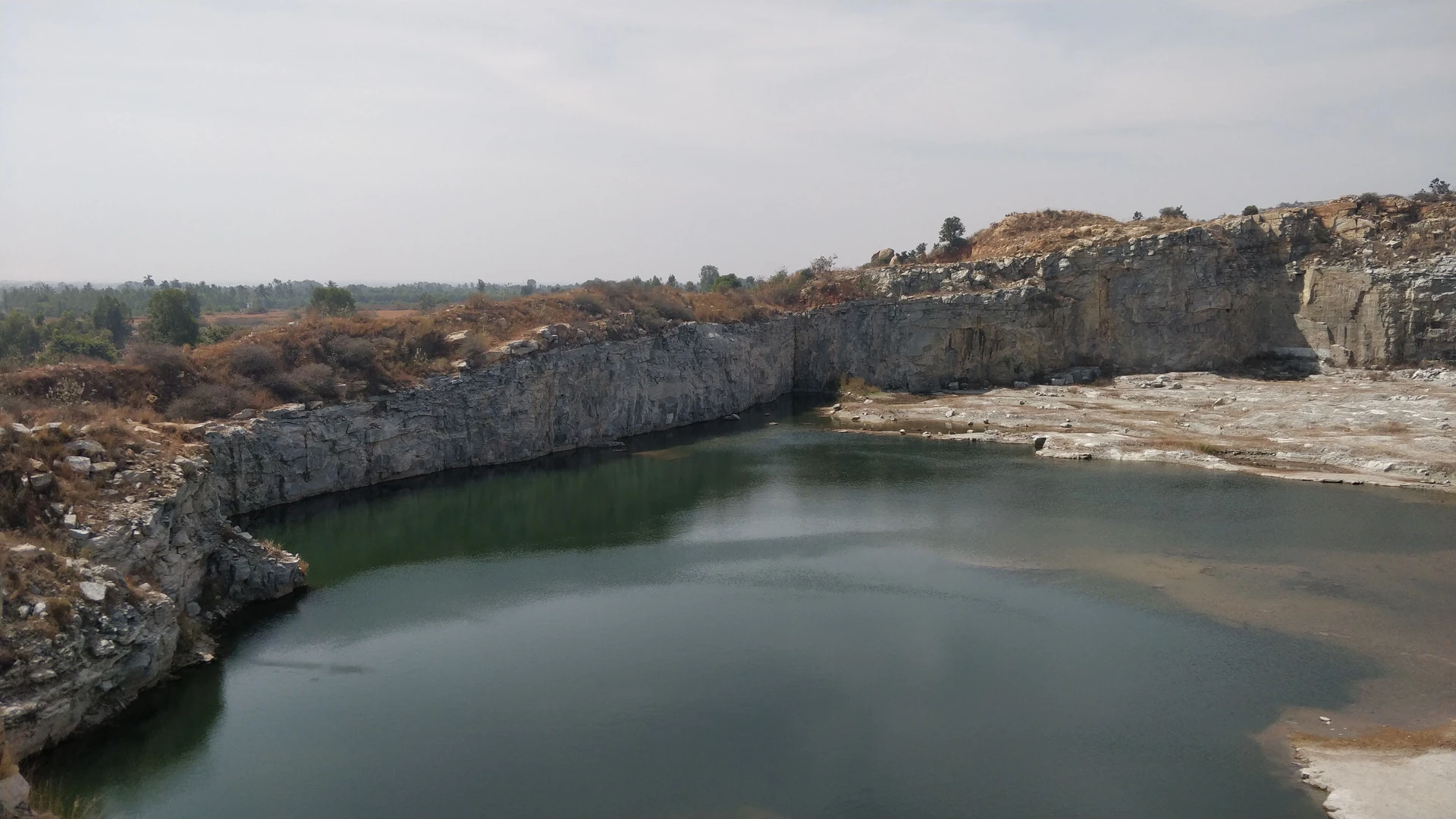
An abandoned stone quarry that collected water and turned an improbable shade of blue-green. Accessible off the Kolar highway, past the gold fields area. The white quarry rock against the blue water earned it the nickname "Chota Ladakh", which is overselling it — it's a quarry, not Pangong Tso. But the landscape is genuinely striking and the complete absence of any tourist infrastructure is, at this point in 2026, a feature rather than a bug. Good for an early morning ride before the weekend crowds find it.
Bhoga Nandeeshwara Temple — 61 km (base of Nandi Hills)
Most people drive straight past this to get to Nandi Hills. That's the mistake. Bhoga Nandeeshwara is one of the oldest active temples in Karnataka — built across three distinct structures spanning the Ganga, Hoysala, and Vijayanagara periods, each representing a different aspect of Shiva. The complex is large, largely uncrowded even on weekends, and the architecture changes tone as you walk through it — different centuries, different hands, the same unbroken continuity of worship. Combine with Nandi Hills or just do this on its own for a half-day with real substance.
Savandurga + Manchanabele Reservoir — 60 km
The big monolith and the dam it overlooks, in one loop. If Savanadurga's upper face feels too exposed, the forest trail around the base is worth an hour on its own — dense canopy, almost no signage, and a surprising amount of birdlife for something this close to the city. The Manchanabele reservoir at the foot is visible from the ridge and easily added as a second stop before heading back.
Hesaraghatta Lake & Grasslands — 40 km
The last surviving grassland around Bangalore — 300 acres of open country, the Arkavathi river, and a lake that's been supplying the city since 1894. Close enough to feel almost too easy, far enough that the countryside opens up on the drive out. Good for cyclists, birdwatchers, and anyone who wants nature without a trek. Best in monsoon and post-monsoon when the grassland turns and the lake fills. The drive itself is scenic — skip Nandi Hills on a crowded weekend and come here instead.
Hoysaleswara Temple, Halebidu — 210 km
The longest day on this list, but the one that earns the most. The Hoysaleswara Temple at Halebidu is 12th-century Hoysala stone carving at its densest — continuous friezes of elephants, horses, dancers, and mythology wrapping the entire temple exterior, without a single repeat motif in 900 years of survival. Not a half-day stop: give it two to three hours minimum, because the detail only reveals itself at close range. Pair it with Belur's Chennakesava Temple 16 km away for a complete Hoysala circuit — though of the two, Halebidu is the one I keep going back to; Belur is beautiful but busier and louder. Leave by 5 AM, be at the temple by 9, back in Bangalore by evening. If 420 km in a day sounds like too much, stay two nights in Chikmagalur and take the temples on the drive home. The full write-up is here.
Quick Reference — All Routes at a Glance
What each route is really about
A few general notes for 2026
- Toll costs have gone up on the Mysore Expressway and NH44 — budget ₹700–850 return for car tolls depending on your route
- Forest entry at Bheemeshwari and the Cauvery Sanctuary requires online booking through the Karnataka Forest Department portal — book at least a day ahead in season
- Monsoon caveat for forts: Madhugiri, Savanadurga, and the upper sections of Gudibande become genuinely dangerous when wet. Save the fort routes for October onwards
- Nandi Hills parking fills by 7 AM on weekends. If you miss the early slot, skip it and do Bhoga Nandeeshwara temple instead — worth a standalone visit
- Devanahalli Fort is the rare fort that works any day of the week and at any time of morning — the lack of a trek means no weather caveat applies
Planning a longer trip?
A good day out is its own thing — but if any of these routes makes you want to stay longer, the Weekend Trips from Bangalore hub covers the full picture: every destination mapped by season, the 2026 long weekend calendar, and links to individual destination guides. Route 1 naturally extends into a Coorg or Kabini weekend. Route 3 extends into the full Navadurga circuit. Route 4 into Ooty or Wayanad if you have three days.
Destination Guide
Rajasthan
Jaipur, Jodhpur, Jaisalmer, Udaipur — a destination guide to Rajasthan's desert circuits. Where to base yourself, how long to go, and what the forts actually feel like.